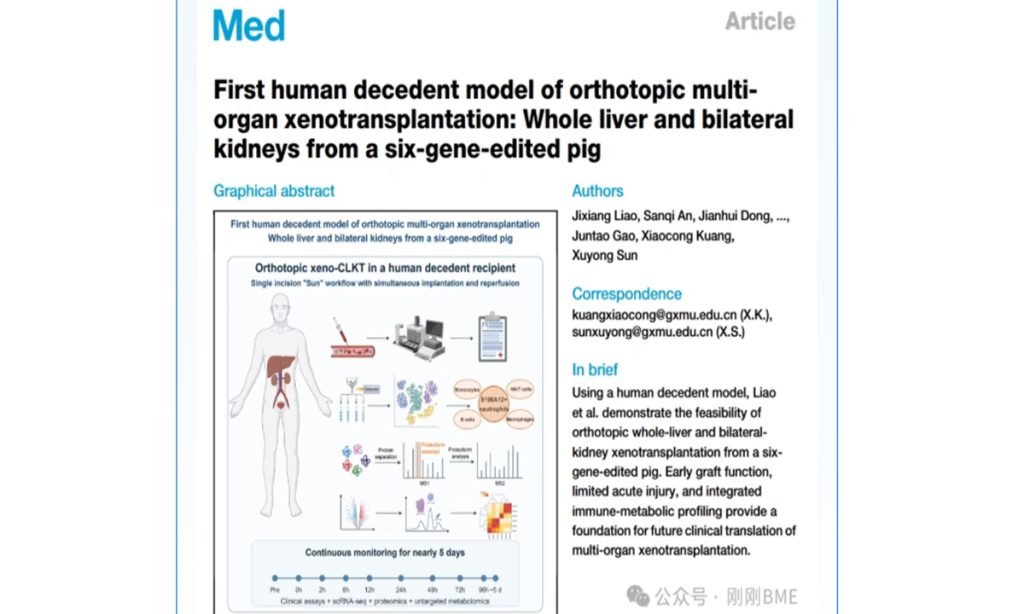
A Chinese medical team has reportedly performed the world's first combined xenotransplantation of a gene-edited pig liver and two pig kidneys into a human body, marking a huge milestone in the exploration of multi-organ xenotransplantation.
According to a post on the official WeChat account of the Second Affiliated Hospital of Guangxi Medical University on Monday, the procedure was carried out by a medical team led by Professor Sun Xuyong from the hospital and involved an orthotopic transplant, meaning the organs were placed in their normal anatomical positions. The recipient was a 53-year-old brain-dead man, and the surgery was performed with the consent of his family.
The team used gene-edited Bama miniature pigs from Guangxi as the source of the donor organs. The donor pigs underwent six precise genetic edits, including the removal of key genes that can trigger hyperacute rejection in humans and the insertion of human genes related to blood clotting and immune compatibility, the Xinhua News Agency reported on Wednesday.
During five days of systematic monitoring, the transplanted organs showed encouraging physiological signs, with generally normal blood supply as well as observed bile secretion and urine production, according to the post.
The research was published in Med, a Cell Press journal, on May 29, 2026, and was later featured by Nature, drawing wider attention from the global academic community, media reported.
Leonardo Riella, a physician-scientist at Harvard University and Massachusetts General Hospital who led the team behind the world's first living-recipient pig kidney transplant in 2024, said multi-organ xenotransplantation is more complex than single-organ transplantation, but the study showed that it is technically feasible.
Set to be held in the US, Canada and Mexico from June 11 to July 19, this year's World Cup tournament will see 48 teams contesting for the first time in the tournament's history. Although the Chinese men's national soccer team did not qualify for the World Cup, the country's presence will be palpable.
With less than a week before kickoff, this year's World Cup has yet to generate strong buzz in China, possibly due to time zone differences and other factors. But there is no such lag for Chinese companies, which are already engaging with the event at a higher and more advanced level.
China's footprint at this year's World Cup highlights a shift from low-cost manufacturing to stylish, original designs, alongside the contribution of Chinese referees and officiating technologies. This evolving role is driven by innovation and advanced technology. Guy-Laurent Epstein, UEFA events marketing director, told the People's Daily that Chinese companies are no longer mere commercial sponsors buying ad space, but are instead bringing cutting-edge technological innovations directly into UEFA's tournament systems.
Upgraded innovation
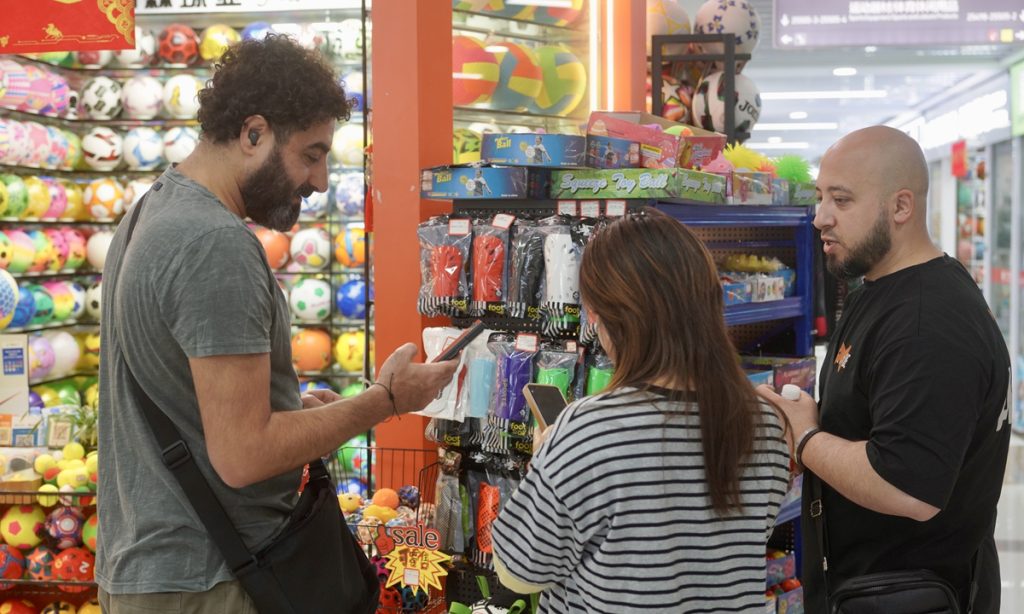
In Yiwu, the world's supermarket in East China's Zhejiang Province, brightly colored commemorative soccer balls stand out vividly. Chen Shaomei, manager of Minsa Sports in the Yiwu International Trade Market showed the Global Times their popular overseas bestseller - a commemorative soccer ball designed with the signature colors of the three host countries: the US, Canada, and Mexico.
"This is our self-designed, self-manufactured, and self-branded commemorative ball," Chen told the Global Times on Sunday.
This is the sixth World Cup that Chen has participated in as a merchant. Chen's company has been deeply engaged in the ball industry for many years, with 90 percent of its products exported overseas.
Chen said Chinese manufacturing, including that of Yiwu, has moved beyond competing primarily on price and now stands out through creative design and higher-quality advantages. "Our greatest strength lies in our unique designs," he noted.
Beijing-based sports and e-commerce retail company All Star Partner secured official World Cup licensing rights for multiple popular national teams. Jin Ye, chief operating officer of the company, told the Global Times on Sunday that truly vibrant and enduring products must integrate team culture, fans' emotions, and real-life usage scenarios.
"Fans cannot express their passion only inside the stadium - they showcase their identity while shopping, traveling, going to school, commuting, attending parties, and sharing on social platforms. Therefore, we are developing more lifestyle-oriented products such as casual T-shirts, hats, bags, plush pendants, cups, neck pillows, canvas shoes, and more, allowing national team IPs to truly become part of everyday life," Jin said.
In the past, when people thought of Chinese companies participating in international sports events, they mainly associated them with manufacturing and supply chain capabilities. However, soon Chinese enterprises will not only be capable of producing products, but also of participating in design, brand expression, and user engagement - thereby influencing the commercialization strategies of international IPs in the Chinese and broader Asian markets in return, Jin noted.
The export sports enterprise Kelme, leveraging its strong technological innovation advantages, will be the official jersey sponsor for the national teams of Jordan and Bosnia and Herzegovina, according to Fujian Daily.
"We use new functional sports fabrics that give the jerseys multiple advantages, including moisture absorption, quick drying, and excellent breathability. The entire jersey weighs less than 140 grams, making it lightweight, form-fitting, and skin-friendly. Professional players have praised it as 'breathing armor,'" said Yang Yuanchang, deputy director of the international marketing department of the company, Fujian Daily reported.
Hu Qimu, a professor at the Maritime Silk Road Institute of Huaqiao University, told the Global Times on Sunday that these creative products not only enrich the supply of the World Cup, but also serve as a vivid reflection of the country's industrial transformation and upgrading.
"From relying primarily on price competition in the past to now shifting toward creative design and independent branding, Chinese enterprises have enhanced their competitiveness through continuous innovation," Hu said.
High-tech support
Beyond this presence, some Chinese technology companies are building a solid "technological foundation" for the tournament.
As FIFA's Official Technology Partner, Lenovo is providing AI equipment, services, and solutions for this World Cup. According to a statement sent to the Global Times on Sunday, the company said that during the event, its 3D Digital Human Visualization Solution will be officially applied to the refereeing system and event broadcasting.
The system uses 3D modeling and next-generation generative AI technology to create 3D virtual avatars for the players of this tournament. Particularly in offside replay segments, they offer both on-site and online audiences more intuitive visual interpretations, while accurately replicating each player's body dimensions and features, greatly enhancing the credibility and transparency of refereeing decisions, said the company.
As the "media heart" of this World Cup, the 2026 FIFA World Cup International Broadcast Centre, located in Dallas, the US, has selected Hisense as its dedicated display equipment provider.
The company told the Global Times that Hisense's technology accurately reproduces every detail of the on-field action, which will assist Video Assistant Referees in making precise decisions and supporting high-quality event broadcasting.
Hu noted that the participation model of Chinese companies in major sporting events has evolved from an early focus on seeking exposure to applying their technologies in real overseas scenarios.
International media outlets including Reuters have also observed that Chinese companies are undergoing a major transformation in their role at top-tier international sporting events, evolving from peripheral merchandise suppliers into key providers of core technological infrastructure, the People's Daily reported.
Hu noted that Chinese enterprises are not only achieving brand promotion and business expansion through sports marketing, but are also leveraging their capabilities to provide high-quality products and drive improvements in event organization.
As Chinese companies participate more deeply in top-tier international events, the future international sports arena is likely to see more "Chinese technology" and "Chinese solutions," the expert added.
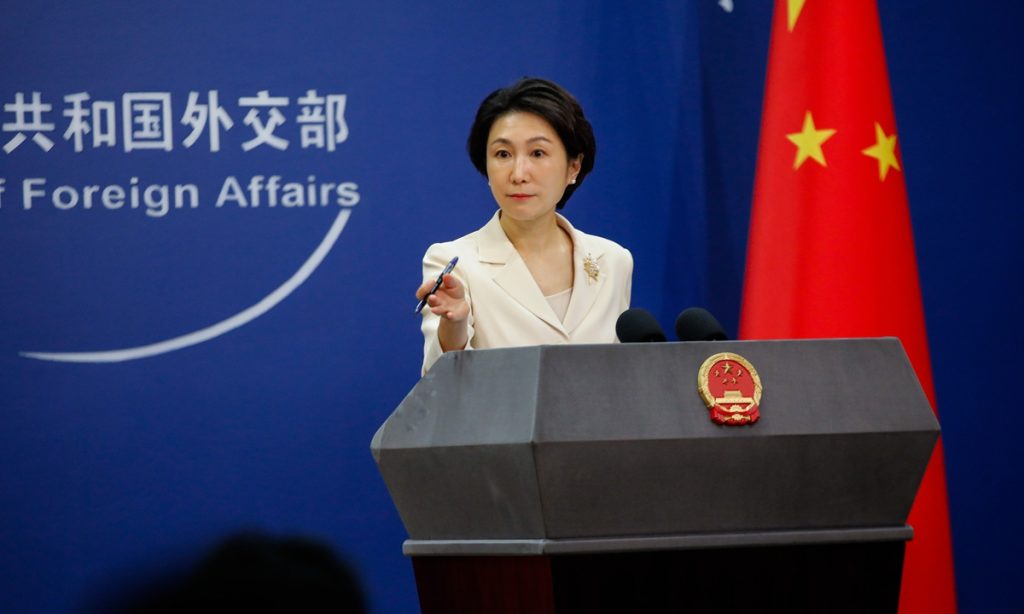
Chinese Foreign Ministry spokesperson Mao Ning said on Wednesday that China is deeply concerned about the current Middle East situation, stressing that a renewed outbreak of hostilities serves the interests of no party and urging all relevant parties to cherish the opportunity for peace, honor their ceasefire commitments, maintain the momentum of negotiations, and adhere to political and diplomatic means to resolve disputes.
Mao made the remarks when asked to comment on reports that the US Central Command said on social media on June 2 (US Eastern Time) that US forces had intercepted multiple ballistic missiles and drones launched by Iran and carried out what it described as a "self-defense" strike on Iran's Qeshm Island. Reports also said that Iran subsequently launched attacks on US military bases in the Middle East, while air-defense sirens sounded across several Gulf countries, further escalating tensions in the region.
In response, Mao also called for an early realization of a comprehensive and lasting ceasefire and for creating the necessary conditions to restore peace and stability in the Gulf region and the broader Middle East.
China's Shenzhou-22 crewed spaceship undocked from the space station combination at 2:44 p.m. (Beijing Time) on Friday, and will commence the return mission of sending the Shenzhou-21 astronauts Zhang Lu, Wu Fei and Zhang Hongzhang back to Earth, according to the China Manned Space Agency (CMSA).
The spaceship is scheduled to return to the Dongfeng landing site in north China's Inner Mongolia Autonomous Region later.
The CMSA said that prior to the separation, the Shenzhou-21 crew, with the assistance of the ground staff, completed various tasks such as setting the status of the space station combination, processing and transmitting the experimental data, and transferring remaining supplies. The Shenzhou-21 crew also carried out handover work and exchanged in-orbit work experience with the Shenzhou-23 crew who entered the space station on May 25.
China launched the Shenzhou-21 spaceship on Oct. 31, 2025 to send the Shenzhou-21 crew to its space station for rotation with Shenzhou-20 crew. However, the Shenzhou-20 crew later found that Shenzhou-20 spaceship's return capsule viewport window suffered a suspected impact from space debris during its mission and was unfit for crew return mission.
On Nov. 14, 2025, the Shenzhou-20 crew returned safely aboard the Shenzhou-21 spacecraft. On Nov. 25, 2025, China launched the Shenzhou-22 spaceship to provide a return vessel for the Shenzhou-21 crew.
From November 6 to November 18, the Global Times Institute (GTI) conducted a public opinion survey using a commercial online sample database. The survey was administered in 16 languages, including Chinese, English, Spanish, French, Arabic, and Russian, across 20 countries: China, South Korea, Japan, the Philippines, Indonesia, India, Saudi Arabia, Turkey, Russia, Italy, Germany, France, the UK, the US, Australia, South Africa, Egypt, Kenya, Brazil, and Argentina. The survey targeted residents aged 18 to 70 and collected approximately 17,000 valid responses. This marks the 12th global public opinion survey conducted by the Global Times and covered topics such as global hotspots, development and security, China-US relations, and respondents' perceptions of China. In 2024, the international situation remains turbulent. Data from the survey indicates that the Russia-Ukraine and Israel-Palestine conflicts rank as the top global concerns, with over 90 percent of respondents expressing their interest in these issues. Outside the US, more than 80 percent of respondents expressed interest in the US presidential elections.
Major concerns for the global affairs
When asked whether global security and peace are currently under threat, 31 percent of respondents overall chose "significant threat," while another 30 percent chose "some threat," with the combined total exceeding 60 percent. Compared to the previous year, the proportion of respondents perceiving a "significant threat" dropped by approximately 9 percentage points, indicating a decline in public feelings of insecurity.
In four countries - Italy, France, Brazil, and Kenya - over 40 percent of respondents felt "significant threat." In Turkey, the proportion was close to 40 percent.
When asked about specific risks or crises facing the world today, respondents identified the top three concerns as an economic crisis, international wars, and terrorism. The economic crisis, which ranked first, was selected by 57 percent of respondents, the same proportion as in 2023, while nearly half of respondents identified international wars as a concern.
Respondents also shared their concerns in brief written responses on the survey. In Australia, an individual born in the 1980s expressed worries about the cost of living. In Germany, a respondent born in the late 1980s identified the latest developments in generative artificial intelligence as a risk. A South Korean student born after 2000 voiced concern about the nuclear-contaminated wastewater dumped by Japan. In the US, respondents from the 1970s, 1980s, and 1990s cited "inflation" as a pressing issue. Meanwhile, a respondent in the UK, born in the 1980s, expressed concern over the "decline of the west into madness."
Sun Degang, director of the Middle East Studies Center at Fudan University, told the Global Times that "currently, many of the world's conflicts are closely related to the hegemonic policies of the US, particularly those in the Middle East. The masses have sharp eyes and recognize that the US' biased policies in favor of its allies have exacerbated conflicts in the region. In 2023, numerous protests concerning the Israel-Palestine conflict erupted on US campuses. From a humanitarian standpoint, people called for a ceasefire in Gaza, supported Palestinian statehood, and urged the US to provide humanitarian aid."
When asked about the development trends in the Middle East in 2025, public opinion was highly divided. A total 36 percent of respondents believed the situation would worsen while 30 percent thought it would ease, and 25 percent expected it to remain unchanged.
According to Sun, differences in predictions about the Middle East's future largely stem from geographical factors. "Countries located closer to conflict hotspots tend to have more pessimistic populations. For example, Turkey, situated at the intersection of the Russia-Ukraine and Israel-Palestine conflicts, has a stronger public perception of risk. In contrast, countries farther from these hotspots, such as India and China, tend to have relatively more optimistic predictions." China the preferred partner for economic and trade cooperation in the US
Regarding expectations for great powers' leadership, the survey asked, survey data shows that China rose from fifth place in 2018 to second place in 2024, with its selection rate increasing by 6 percentage points. Among the eight countries, Germany experienced the most significant decline in selection rate, while the UK and France also saw decreases.
Sun analyzed "In 2023, China facilitated reconciliation between Saudi Arabia and Iran. In 2024, it helped 14 Palestinian political factions reach the 'Beijing Declaration' and proposed a peaceful resolution to the Russia-Ukraine conflict. These significant diplomatic mediation efforts have demonstrated to the international community that China is not a threat to global security but rather a defender of security and a provider of international public goods. This has enhanced China's international image and increased overseas recognition of its leadership in global governance."
When asked which country's economic and trade cooperation has the greatest impact on their own country's economic growth, overall data shows that the US and China significantly lead over other countries, with both receiving nearly 30 percent of the selections, a proportion close to each other. The selection rates for other countries are all below 10 percent. In both the US and China, nearly 30 percent of respondents chose the other country. In the US, China is clearly the preferred partner for economic and trade cooperation, ahead of other countries. In China, Russia is the top choice for economic and trade cooperation, 3 percentage points higher than the second-ranked US.
Customs data released on December 10 showed that in the first 11 months of this year, China's total goods trade import and export value reached 39.79 trillion yuan, a year-on-year increase of 4.9 percent, with overall foreign trade running smoothly. Among these, China's import and export trade with regions and countries such as the ASEAN, the EU, Latin America, the US, Russia, India, South Korea, and Canada all saw an increase compared to the same period in 2023.
Li Haidong, a professor at the China Foreign Affairs University, told the Global Times that when US citizens judge their preferred economic and trade cooperation partners, they often base their decisions on personal life experiences. Everyday items such as household goods and clothing in the US rely on exchanges with China and other developing countries. When China-US trade relations are close, the prices of daily necessities are usually lower.
"However, when the US initiated a trade war, and imposed tariff barriers against China, the prices of many goods rise, causing inconvenience to people's personal lives. Therefore, the public hopes for better economic and trade relations between the US and China. This also reflects the positive potential of China-US relations at the grassroots level," he said.
Survey data shows that more than three-quarters of the public express concerns that domestic political, economic, and social issues in the US will influence its government's foreign policy, thereby negatively impacting the world.
Over half of the respondents expressed a high level of concern. The survey further probed American respondents on the potential harm of anti-China and anti-Asian sentiments within the US. The survey reveals that nearly half (49 percent) of American respondents believe these sentiments are likely or definitely harmful to the US, while only 16 percent believe they are not.
Li analyzed that the US attempts to shift its domestic troubles onto other countries, solving its own problems by making other nations share the burden of its crises. "Furthermore, the US imposes tariffs to exploit other countries' earnings during the process of economic globalization, aiming to resolve its economic, employment, and manufacturing issues. In the long run, this treatment of internal problems by external means approach not only fails to solve America's internal issues but may also negatively affect the global economy," he said.
What kind of China-US relationship does the world expect? In 2024, 42 percent of respondents expect the relationship between the two countries to "ease," an increase of 10 percentage points from 2023. In all countries surveyed, more than half of respondents expect China-US relations to either remain stable or ease in the coming year.
At the same time, over half (56 percent) of respondents believe that China-US cooperation is more beneficial for world peace and development, with this proportion exceeding half in all 16 countries surveyed.
When asked about the independence of their own country's foreign policy and actions toward China, about a third of respondents believe their countries are either leaning toward independent policymaking or are significantly aligning with the US.
In eight countries including the UK, France, Italy, Australia, and Argentina, a relative majority of respondents believe their country's policy and actions toward China are either strongly or excessively aligned with the US. Japan and South Korea have the highest agreement rates, with over 60 percent agreeing. Hope for better relations with China
Overall, nearly 60 percent of respondents hope their country's relationship with China will become closer and friendlier. In 15 countries, a majority of respondents expressed hope for improved relations with China in the future. Among them, more than 70 percent of respondents in South Africa, Egypt, Kenya, Brazil, and Indonesia shared this sentiment, while over 60 percent in Saudi Arabia and Russia felt the same. In Germany and Australia, nearly half of the respondents also hoped for better future relations with China.
More than half of the respondents expressed willingness to visit China personally to learn more about the country. Among them, the willingness to visit was highest in three African nations: 90 percent in Kenya, 80 percent in South Africa, and over 70 percent in Egypt. Additionally, nearly 60 percent of respondents in India and Russia were also open to visiting.
In 2024, China successfully launched the Chang'e-6 lunar probe. Across the 19 countries surveyed (excluding China), nearly 70 percent of respondents indicated they had followed the event.
Regarding China's development, the survey reveals that 40 percent of respondents expressed "admiration." In six countries - South Africa, Egypt, Kenya, Brazil, Argentina, and Indonesia - over half of the respondents shared this sentiment. Kenya ranked the highest, with more than 70 percent expressing admiration, followed by Indonesia at over 60 percent.
When asked whether China's continuous development and progress pose more opportunities or threats to their own country, 36 percent of respondents overall chose "more opportunities." In 10 countries, including Indonesia, India, and Turkey, a relative majority of respondents viewed China's development as "more opportunities."
In six countries - Saudi Arabia, Russia, Egypt, South Africa, Kenya, and Brazil - over half of respondents shared this view. Similarly, nearly half of respondents in Argentina agreed. Kenya had the highest proportion, with nearly 70 percent seeing China's development as an opportunity, while South Africa and Egypt followed at approximately 60 percent.
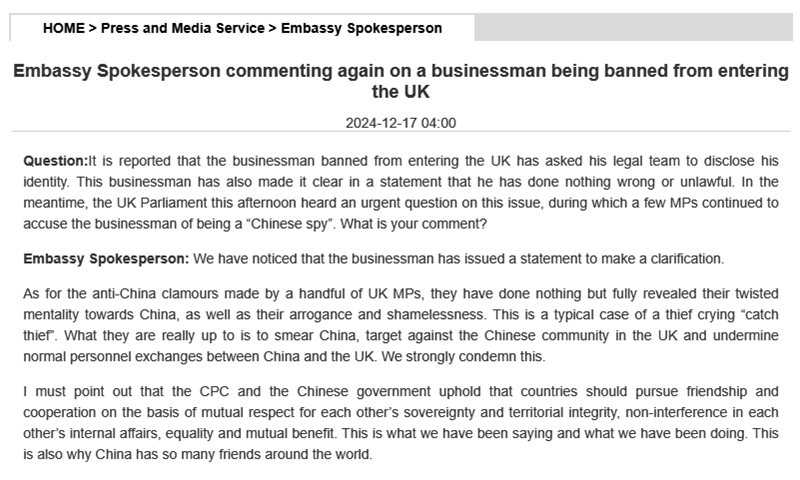
The Chinese Embassy in the UK on Tuesday urged the UK side to immediately stop creating trouble, stop anti-China political manipulations, and stop undermining normal personnel exchanges between the two countries after a Chinese businessman is reportedly being banned from entering the UK.
It is reported that the businessman banned from entering the UK has asked his legal team to disclose his identity. This businessman has also made it clear in a statement that he has done nothing wrong or unlawful. In the meantime, the UK Parliament (on Monday afternoon) heard an urgent question on this issue, during which a few Members of Parliament continued to accuse the businessman of being a "Chinese spy," according to the Chinese Embassy.
The businessman has been banned from Britain on "national security" grounds, according to media reports.
"I have done nothing wrong or unlawful and the concerns raised by the Home Office against me are ill-founded," the businessman said in a statement issued by his lawyers on Monday, Reuters reported.
Chinese Embassy in the UK said in the statement on Tuesday that: "As for the anti-China clamours made by a handful of UK MPs, they have done nothing but fully revealed their twisted mentality toward China, as well as their arrogance and shamelessness. What they are really up to is to smear China, target against the Chinese community in the UK and undermine normal personnel exchanges between China and the UK."
It must be pointed out that the CPC and the Chinese government uphold that countries should pursue friendship and cooperation on the basis of mutual respect for each other's sovereignty and territorial integrity, non-interference in each other's internal affairs, equality and mutual benefit. "This is what we have been saying and what we have been doing. This is also why China has so many friends around the world," the statement said.
Chinese Embassy's statement also urged the UK to have a right perception of China, see the historical trend clearly, and handle its relations with China on the basis of mutual respect, non-interference in each other's internal affairs, equality and mutual benefit.
"We urge the UK side to immediately stop creating trouble, stop anti-China political manipulations, and stop undermining normal personnel exchanges between China and the UK," it noted.
Citing four sources with knowledge of the matter, Reuters reported on Monday that "Britain's Labour government has pared back an audit of relations with China, preparing the way for a less critical report that could help Prime Minister Keir Starmer focus on improving economic ties."
On Monday, when he was questioned about the case, UK Prime Minister Keir Starmer said he was pleased with what he called progress on ties with China. The PM was cited by the Guardian as saying "Of course, we have to challenge where we must, but it's better to engage to challenge than to stay aside, as it were, important to cooperate where we can on issues like climate change, which need that cooperation. So I'm very pleased with the engagement and the progress that we've made."
In response to Paraguay's announcement on Thursday to expel a Chinese diplomat under the excuse of "interference in internal affairs," Chinese Foreign Ministry spokesperson Lin Jian said on Friday that the accusations and demands made by relevant Paraguayan departments against members of the Chinese delegation to the UNESCO session in Paraguay are baseless and unjustified, seriously violating international practices. China firmly opposes such actions.
Lin said that recently, at the invitation of the Paraguayan government, the Chinese government delegation attended the 19th session of the Intergovernmental Committee for the Safeguarding of the Intangible Cultural Heritage of UNESCO. As a member of the United Nations and UNESCO, and as the host of this session, Paraguay's accusations and demands against members of the Chinese delegation are baseless and unjustified, seriously violating international practices.
Lin emphasized that there is only one China in the world, and the island of Taiwan is an inseparable part of the Chinese territory. The one-China principle has been affirmed by UN General Assembly Resolution 2758 and is widely recognized as a fundamental norm in international relations, as well as a consensus within the international community. Reaffirming and upholding the one-China principle is legitimate and transparent anywhere in the world, and there is no issue of "interference in internal affairs."
A Chinese diplomat's visa was canceled by Paraguay, and he was ordered to leave, the South American country's foreign ministry said on Thursday, according to the Reuters.
China on Tuesday urged the US not to take China's goodwill for granted and work to ensure that the hard-won positive dynamics will stay in the China-US counternarcotics cooperation, noting that China remains ready to continue counternarcotics cooperation with the US on the basis of equality, mutual benefit and mutual respect.
The remarks by a spokesperson of the Chinese Foreign Ministry were made in response to that US President-elect Donald Trump said on social media that he "had many talks with China about the massive amounts of drugs, in particular Fentanyl, being sent into the United States—But to no avail… and drugs are pouring into our country." The US will be charging China an additional 10 percent tariff on all Chinese imports.
The spokesperson noted that China is one of the world's toughest countries on counternarcotics both in terms of policy and its implementation. Fentanyl is an issue for the US. In the spirit of humanity, China has given support to the US's response to this issue. As early as in 2019, China officially scheduled all fentanyl-related substances and is the first country in the world ever to do so.
China has carried out extensive and in-depth counternarcotics cooperation with the US, which has been highly productive. This is a clear fact for all to see, the spokesperson stressed.
President-elect Donald Trump threatened on Monday to impose sweeping new tariffs on Mexico, Canada and China as soon as he takes office as part of his effort to crack down on illegal immigration and drugs. He said he would impose a 25 percent tax on all products entering the country from Canada and Mexico, and an additional 10 percent tariff on goods from China, as one of his first executive orders, the Associated Press reported.
"Until such time as they stop, we will be charging China an additional 10% Tariff, above any additional Tariffs, on all of their many products coming into the United States of America," he wrote on his Truth Social site.
In response to the remarks, a Chinese embassy spokesperson in Washington told the Global Times in an emailed reply that "About the issue of US tariffs on China, China believes that China-US economic and trade cooperation is mutually beneficial in nature. No one will win a trade war or a tariff war."
The counternarcotics authorities of China and the US have resumed regular communication since the San Francisco Summit. The Chinese side has notified the US side of the progress made in US-related law enforcement operations against narcotics. China has responded to US request for verifying clues on certain cases and taken action, the spokesperson told the Global Times.
All these prove that the idea of China knowingly allowing fentanyl precursors to flow into the US runs completely counter to facts and reality, the spokesperson noted.
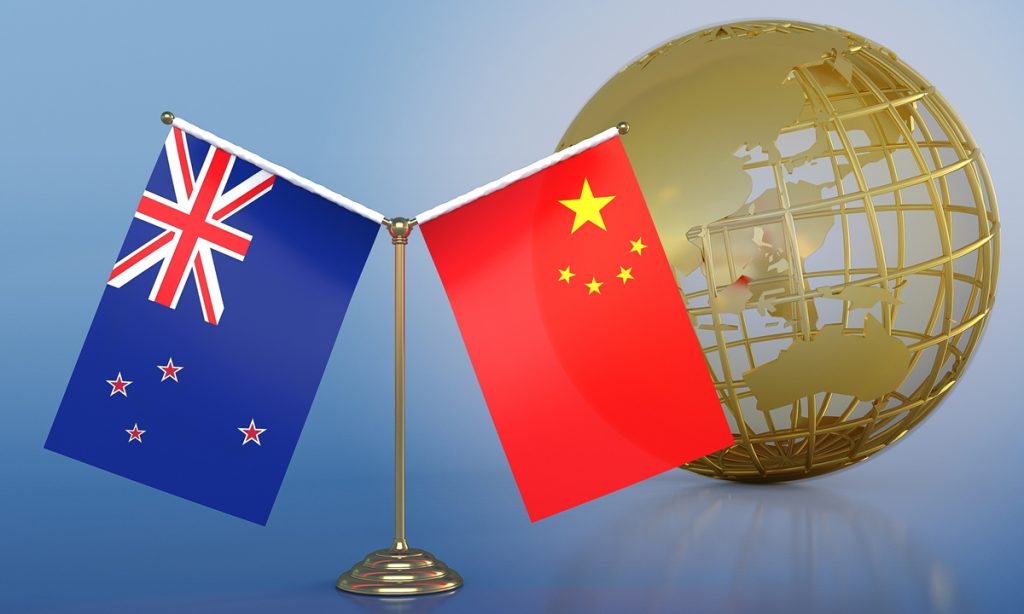
Chinese ambassador to New Zealand Wang Xiaolong reiterated in a recent interview that there will be negative consequences for the bilateral relationship if Wellington were to join AUKUS.
Expressing significant concerns about the trilateral security pact between Australia, the US and the UK, Wang said in an interview with Radio New Zealand released on Wednesday that AUKUS entails the transfer of weapons-grade nuclear materials from a nuclear weapon state to a non-nuclear weapon state for the first time in history. "If that is allowed to happen, it will raise serious questions about the integrity of the [nuclear] Non-Proliferation Treaty regime," Wang said.
"Inevitably, that [joining AUKUS] will have a negative impact on the [China-New Zealand] relationship," the Chinese envoy said, noting that "trust is one of the most precious but also one of the most fragile commodities. It may take years to build up; it just might take seconds to be destroyed."
"We would advise against anything that threatens to erode that very important trust between us," Wang said.
The Chinese Embassy in New Zealand has confirmed the interview content to the Global Times on Wednesday.
Since diplomatic ties were established in 1972, China and New Zealand have achieved remarkable progress in various fields of cooperation. This mutually beneficial relationship has not only brought tangible benefits to both sides but also made positive contributions to the stability and development of the Asia-Pacific region.
"That's why China cautions against any factors that could undermine this foundation of friendly cooperation," Chen Hong, director of the New Zealand Studies Center at East China Normal University, told the Global Times on Wednesday.
New Zealand has always been able to maintain an independent foreign policy in international affairs, showing strong strategic resilience in balancing ties with major powers. However, the current New Zealand government appears to be gradually straying from this position on certain issues, Chen said.
In the interview, the Chinese envoy called AUKUS the product of a "zero-sum Cold War mentality," while expressing the hope that New Zealand will take into account its own long-term best interests, the potential implications for regional security, and the impact on the relationship between China and New Zealand, according to the interview.
On another occasion while speaking at the Wellington-based think tank Diplosphere, the Chinese ambassador said "We don't believe in exclusive blocs or alliances targeted at other countries. As has been shown by history, rather than bringing peace and security, such blocs or alliances almost always lead to greater divisiveness, confrontation and even conflict or war," per the release from the embassy's WeChat account on Wednesday.
"AUKUS is a military bloc aimed at containing China's development. Its explicit purpose is to weaken China's influence in the Asia-Pacific region through military deterrence and technological blockades. The two core pillars of AUKUS involve the provision of nuclear-powered submarines and the sharing of advanced military technologies, both of which pose direct threats to China," Chen noted.
"Therefore, any country that joins AUKUS will inevitably be perceived as positioning itself against China. For New Zealand, this would mean a severe impact on its comprehensive strategic partnership with China, even altering the very nature of this relationship," Chen continued.
New Zealand has previously said it is "information-gathering" on future cooperation with the AUKUS grouping but has made no commitments, per a Reuters report on Wednesday.
The three AUKUS partners said in September that they were "in discussions with Canada, Japan and New Zealand about potential collaboration on defense technology projects," another Reuters report said.
Chen believes that the voices calling for joining AUKUS in New Zealand stem primarily from a growing domestic push from far-right anti-China forces to "take sides", as well as external pressures from countries such as the US.
What's more, while the New Zealand government may seek to gain access to advanced US military technologies by joining the grouping, Chen said this expectation is "quite unrealistic" - as the US maintains strict controls on technology exports and sharing, so even if New Zealand joins AUKUS, the technology it could access is likely to be highly limited.
If Wellington were to join AUKUS, the losses would outweigh the gains - first, as a "safe haven" of the South Pacific traditionally far from international conflicts, the strategic risks will dramatically increase, second, it will inflict significant damage on trade and investment relations with China, furthermore, it will have a long-term negative impact on the stability of the Asia-Pacific region, Chen said.
The spat between the US and the World Anti-Anti-Doping Agency (WADA) continues after the 2024 Paris Olympics, with a recent media report saying the Biden administration is holding up the annual US payment to WADA to press the organization as it "chose not to discipline elite Chinese swimmers who tested positive for a banned drug."
According to a New York Times report, the White House has told WADA that it needed to have "more accountability and transparency" and that it must submit to a wide-ranging outside audit of its operations.
A WADA spokesperson told the Global Times in an email on Thursday that WADA has not received any notification from the US Government that it has decided to voluntarily withhold its annual contribution for 2024.
The agency also said "WADA is unaware of any conditions that the US Government wishes to attach to its payment… no provision exists within WADA's governance model whereby a government may unilaterally withhold its contribution based on its own set of conditions."
The Biden administration made its 2023 payment for $3.4 million in August of last year. The payment for this year was expected to be paid around the same time, but so far relevant US official has yet to sign off on having the money sent.
Shang Ximeng, a research fellow at the Center for International Sport Communication and Diplomacy Studies at the Beijing Foreign Studies University, told the Global Times that the US has repeatedly threatened WADA with default or refusal to pay the annual dues, but as a signatory to the WADA Code, the US is obligated to pay it.
She noted that the US has not only played these kinds of tricks in international anti-doping cooperation, but has frequently threatened to do the same with respect to other international cooperation.
Li Haidong, a professor at the China Foreign Affairs University, said the US' political manipulation has not only weakened WADA's authority, but also slandered China's anti-doping efforts, and undermined the global efforts in the regard.
US' attempts to hijack international organizations exposed its hegemonic mindset and politicizing sports for political purposes, Li noted.
In April this year, along with USWADA, The New York Times hyped that some Chinese swimmers tested positive for trimetazidine (TMZ) before the Tokyo Olympic Games in 2021, accusing WADA of shielding Chinese athletes and failing to hold them accountable.
WADA has commissioned an independent review into the reported incident after refuting these claims, labeling them as "misleading and potentially defamatory media coverage." The agency said that following the TMZ contamination incident in swimming in 2021, the China Anti-Doping Agency (CHINADA) promptly initiated a comprehensive and meticulous investigation, and based on its results, it was determined that the TMZ positives among these athletes resulted from inadvertent ingestion of contaminated food without their knowledge, and therefore no further doping charges were brought against those athletes, according to previous reports from the Global Times.
In September 9, the independent Swiss prosecutor Eric Cottier backed WADA's handling of the issue in his final investigation report, saying that WADA had not been complacent nor shown bias toward China, according to a Reuters report.
WADA was established in 1999 as an international independent agency to lead a collaborative worldwide movement for doping-free sport.