China, Russia eye deepening cooperation in tourism sector

The Moscow City Tourism Committee hosted more than 100 representatives of China's travel industry, city authorities, and business partners, to showcase the Russian capital's tourism potential, including its summer campaigns, and presented Moscow's updated promotional strategy for the Chinese market in Beijing on the sidelines of the 2026 Beijing Fragrant Hills Tourism Summit of the World Tourism Cities Federation on Tuesday.

The promotion session was aimed at helping tourism industry professionals and Chinese tourists understand Moscow's rich and unique tourism resources, further stimulating the potential for cooperation between Moscow and Beijing. Moscow tourism authorities affirmed that China remains one of Moscow's most important international tourism partners.
During the session, Xu Zhentao, deputy director of the Beijing Bureau of Culture and Tourism, said in his opening remarks that Beijing and Moscow are traditional sister cities with a long history of fruitful exchanges in the fields of culture and tourism.

Xu said Russia remains the largest source of inbound tourists for Beijing. In 2025, Beijing received 504,900 tourists from Russia, and from January to April, the city received 303,700 tourists, representing a year-on-year increase of 138.5 percent, according to official data.

"The 30-day visa-free policy between China and Russia continues to generate benefits. More and more Russians are choosing to visit Beijing. Meanwhile, Moscow, with its rich history, culture and unique urban charm, is attracting an increasing number of Chinese tourists," he elaborated.

In recent years, under the China-Russia comprehensive strategic coordination, tourism cooperation between Beijing and Moscow has continued to deepen and become more practical, Xu added, saying that the two cities have held festivals and celebrations, sent art troupes to each other, while strengthening cultural ties and deepening friendship.

He also shared that in the second half of the year, Beijing will also send a delegation to Russia to participate in the 3rd edition of the Theater Boulevard International Open Festival, featuring online performances, cultural and tourism exhibitions, and business matchmaking, aiming to further promote tourism cooperation between the two cities.

In 2024, mayors of Beijing and Moscow inked a program of cooperation between the two cities for the 2024-2026 period, charting the future course for their sister-city relationship.

In February 2026, the Moscow City Tourism Committee and the Beijing Municipal Bureau of Culture and Tourism signed a Memorandum of Understanding on cooperation in the tourism sector. Both cities vowed to step up efforts to strengthen collaboration in key areas such as tourism promotion, industry exchange, route development, and talent cultivation, to improve the regular cooperation mechanism, and upgrade the quality of tourism cooperation.
Evgeny Kozlov, Chairman of the Moscow City Tourism Committee, told the Global Times that in the first quarter of 2026, Moscow welcomed 130,000 visitors from China - a 30 percent increase compared to the same period in 2025.

At the same time, the chairman observed that the profile of Chinese travelers also undergoes changes, with a growing number of independent travelers aged 18-35 seeking authentic urban experiences beyond standardized excursions.

Kozlov said that to meet the demand, Moscow has prepared hundreds of tour guides who speak Chinese and many restaurants have provided menus in Chinese. The committee has been updating the contents with recommendations on where to go, must-see places in its social media accounts in Chinese, offering convenience for Chinese tourists in all aspects.

He also shared that by autumn, Moscow and Beijing are planning joint exhibitions among museums.

Moscow is working on feasibility research to expand cultural events in other cities in China as well, Kozlov said.
Andrey Povalyaev, minister-counsellor of the Russian Embassy in China, said in his remarks that direct flights between major cities make travel to Moscow truly convenient.

June is a special time in Moscow. The city is truly transformed: summer evenings paint the sky in soft golden hues, music echoes along the embankments, and Moscow's famous boulevards are immersed in verdant vegetation. This is the season of festivals, exhibitions, and open-air concerts, Minister-Counsellor Povalyaev said.

In summer, Moscow lives with the utmost openness, generosity, and a special passion and scope. Today, Moscow is offering rich cultural programs, superb cuisine, cutting-edge urban infrastructure, and one of the world's best public transportation systems, said Povalyaev.

He added that the capital continues to change - new museums and galleries are emerging, urban spaces and parks are being developed, and historic districts are being renovated.

"I am confident that today's meeting will give new impetus to tourism ties between our countries and capitals. Moscow is always open to Chinese guests and is ready to show itself in all its glory with genuine hospitality," Povalyaev concluded.

Chinese team achieves world's first combined pig liver and kidney transplant in human

A Chinese medical team has reportedly performed the world's first combined xenotransplantation of a gene-edited pig liver and two pig kidneys into a human body, marking a huge milestone in the exploration of multi-organ xenotransplantation.

According to a post on the official WeChat account of the Second Affiliated Hospital of Guangxi Medical University on Monday, the procedure was carried out by a medical team led by Professor Sun Xuyong from the hospital and involved an orthotopic transplant, meaning the organs were placed in their normal anatomical positions. The recipient was a 53-year-old brain-dead man, and the surgery was performed with the consent of his family.

The team used gene-edited Bama miniature pigs from Guangxi as the source of the donor organs. The donor pigs underwent six precise genetic edits, including the removal of key genes that can trigger hyperacute rejection in humans and the insertion of human genes related to blood clotting and immune compatibility, the Xinhua News Agency reported on Wednesday. 

During five days of systematic monitoring, the transplanted organs showed encouraging physiological signs, with generally normal blood supply as well as observed bile secretion and urine production, according to the post. 

The research was published in Med, a Cell Press journal, on May 29, 2026, and was later featured by Nature, drawing wider attention from the global academic community, media reported. 

Leonardo Riella, a physician-scientist at Harvard University and Massachusetts General Hospital who led the team behind the world's first living-recipient pig kidney transplant in 2024, said multi-organ xenotransplantation is more complex than single-organ transplantation, but the study showed that it is technically feasible. 

Chinese companies play major role in 2026 World Cup with innovation

Set to be held in the US, Canada and Mexico from June 11 to July 19, this year's World Cup tournament will see 48 teams contesting for the first time in the tournament's history. Although the Chinese men's national soccer team did not qualify for the World Cup, the country's presence will be palpable.

With less than a week before kickoff, this year's World Cup has yet to generate strong buzz in China, possibly due to time zone differences and other factors. But there is no such lag for Chinese companies, which are already engaging with the event at a higher and more advanced level.

China's footprint at this year's World Cup highlights a shift from low-cost manufacturing to stylish, original designs, alongside the contribution of Chinese referees and officiating technologies. This evolving role is driven by innovation and advanced technology. Guy-Laurent Epstein, UEFA events marketing director, told the People's Daily that Chinese companies are no longer mere commercial sponsors buying ad space, but are instead bringing cutting-edge technological innovations directly into UEFA's tournament systems.

Upgraded innovation

In Yiwu, the world's supermarket in East China's Zhejiang Province, brightly colored commemorative soccer balls stand out vividly. Chen Shaomei, manager of Minsa Sports in the Yiwu International Trade Market showed the Global Times their popular overseas bestseller - a commemorative soccer ball designed with the signature colors of the three host countries: the US, Canada, and Mexico.

"This is our self-designed, self-manufactured, and self-branded commemorative ball," Chen told the Global Times on Sunday.

This is the sixth World Cup that Chen has participated in as a merchant. Chen's company has been deeply engaged in the ball industry for many years, with 90 percent of its products exported overseas.

Chen said Chinese manufacturing, including that of Yiwu, has moved beyond competing primarily on price and now stands out through creative design and higher-quality advantages. "Our greatest strength lies in our unique designs," he noted.

Beijing-based sports and e-commerce retail company All Star Partner secured official World Cup licensing rights for multiple popular national teams. Jin Ye, chief operating officer of the company, told the Global Times on Sunday that truly vibrant and enduring products must integrate team culture, fans' emotions, and real-life usage scenarios.

"Fans cannot express their passion only inside the stadium - they showcase their identity while shopping, traveling, going to school, commuting, attending parties, and sharing on social platforms. Therefore, we are developing more lifestyle-oriented products such as casual T-shirts, hats, bags, plush pendants, cups, neck pillows, canvas shoes, and more, allowing national team IPs to truly become part of everyday life," Jin said.

In the past, when people thought of Chinese companies participating in international sports events, they mainly associated them with manufacturing and supply chain capabilities. However, soon Chinese enterprises will not only be capable of producing products, but also of participating in design, brand expression, and user engagement - thereby influencing the commercialization strategies of international IPs in the Chinese and broader Asian markets in return, Jin noted.

The export sports enterprise Kelme, leveraging its strong technological innovation advantages, will be the official jersey sponsor for the national teams of Jordan and Bosnia and Herzegovina, according to Fujian Daily.

"We use new functional sports fabrics that give the jerseys multiple advantages, including moisture absorption, quick drying, and excellent breathability. The entire jersey weighs less than 140 grams, making it lightweight, form-fitting, and skin-friendly. Professional players have praised it as 'breathing armor,'" said Yang Yuanchang, deputy director of the international marketing department of the company, Fujian Daily reported.

Hu Qimu, a professor at the Maritime Silk Road Institute of Huaqiao University, told the Global Times on Sunday that these creative products not only enrich the supply of the World Cup, but also serve as a vivid reflection of the country's industrial transformation and upgrading.

"From relying primarily on price competition in the past to now shifting toward creative design and independent branding, Chinese enterprises have enhanced their competitiveness through continuous innovation," Hu said.

High-tech support

Beyond this presence, some Chinese technology companies are building a solid "technological foundation" for the tournament.

As FIFA's Official Technology Partner, Lenovo is providing AI equipment, services, and solutions for this World Cup. According to a statement sent to the Global Times on Sunday, the company said that during the event, its 3D Digital Human Visualization Solution will be officially applied to the refereeing system and event broadcasting.

The system uses 3D modeling and next-generation generative AI technology to create 3D virtual avatars for the players of this tournament. Particularly in offside replay segments, they offer both on-site and online audiences more intuitive visual interpretations, while accurately replicating each player's body dimensions and features, greatly enhancing the credibility and transparency of refereeing decisions, said the company.

As the "media heart" of this World Cup, the 2026 FIFA World Cup International Broadcast Centre, located in Dallas, the US, has selected Hisense as its dedicated display equipment provider.

The company told the Global Times that Hisense's technology accurately reproduces every detail of the on-field action, which will assist Video Assistant Referees in making precise decisions and supporting high-quality event broadcasting.

Hu noted that the participation model of Chinese companies in major sporting events has evolved from an early focus on seeking exposure to applying their technologies in real overseas scenarios.

International media outlets including Reuters have also observed that Chinese companies are undergoing a major transformation in their role at top-tier international sporting events, evolving from peripheral merchandise suppliers into key providers of core technological infrastructure, the People's Daily reported.

Hu noted that Chinese enterprises are not only achieving brand promotion and business expansion through sports marketing, but are also leveraging their capabilities to provide high-quality products and drive improvements in event organization.

As Chinese companies participate more deeply in top-tier international events, the future international sports arena is likely to see more "Chinese technology" and "Chinese solutions," the expert added.

Renewed hostilities serve the interests of no party: Chinese FM on reports of recent US, Iranian military actions

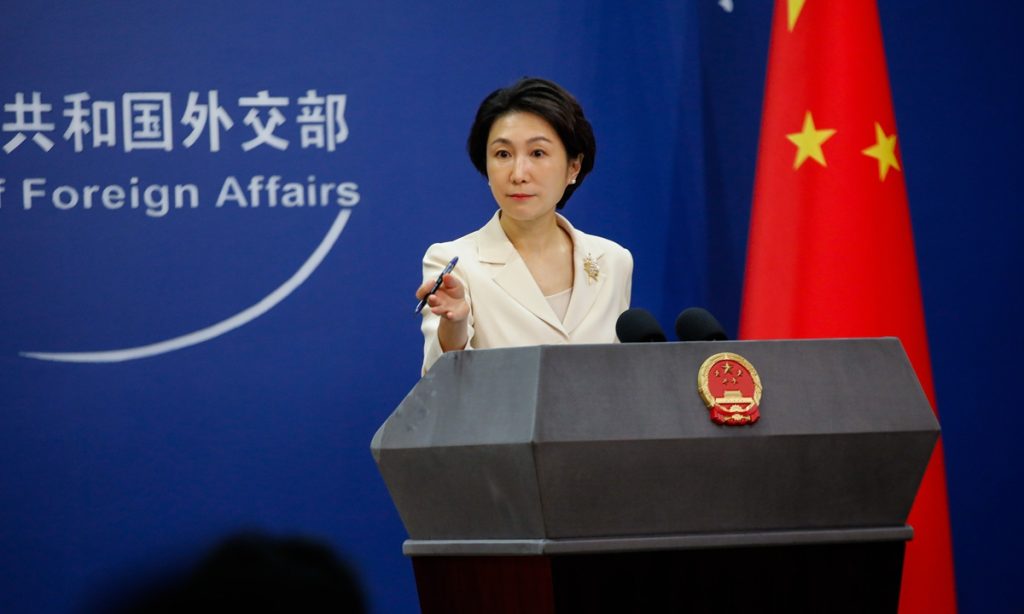
Chinese Foreign Ministry spokesperson Mao Ning said on Wednesday that China is deeply concerned about the current Middle East situation, stressing that a renewed outbreak of hostilities serves the interests of no party and urging all relevant parties to cherish the opportunity for peace, honor their ceasefire commitments, maintain the momentum of negotiations, and adhere to political and diplomatic means to resolve disputes.

Mao made the remarks when asked to comment on reports that the US Central Command said on social media on June 2 (US Eastern Time) that US forces had intercepted multiple ballistic missiles and drones launched by Iran and carried out what it described as a "self-defense" strike on Iran's Qeshm Island. Reports also said that Iran subsequently launched attacks on US military bases in the Middle East, while air-defense sirens sounded across several Gulf countries, further escalating tensions in the region. 

In response, Mao also called for an early realization of a comprehensive and lasting ceasefire and for creating the necessary conditions to restore peace and stability in the Gulf region and the broader Middle East.

Shenzhou-22 spaceship undocks from space station combination

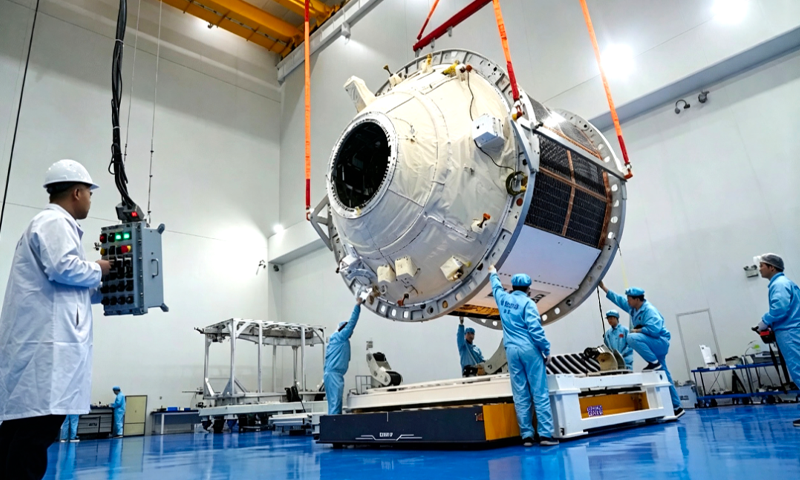
China's Shenzhou-22 crewed spaceship undocked from the space station combination at 2:44 p.m. (Beijing Time) on Friday, and will commence the return mission of sending the Shenzhou-21 astronauts Zhang Lu, Wu Fei and Zhang Hongzhang back to Earth, according to the China Manned Space Agency (CMSA).

The spaceship is scheduled to return to the Dongfeng landing site in north China's Inner Mongolia Autonomous Region later.

The CMSA said that prior to the separation, the Shenzhou-21 crew, with the assistance of the ground staff, completed various tasks such as setting the status of the space station combination, processing and transmitting the experimental data, and transferring remaining supplies. The Shenzhou-21 crew also carried out handover work and exchanged in-orbit work experience with the Shenzhou-23 crew who entered the space station on May 25.

China launched the Shenzhou-21 spaceship on Oct. 31, 2025 to send the Shenzhou-21 crew to its space station for rotation with Shenzhou-20 crew. However, the Shenzhou-20 crew later found that Shenzhou-20 spaceship's return capsule viewport window suffered a suspected impact from space debris during its mission and was unfit for crew return mission.

On Nov. 14, 2025, the Shenzhou-20 crew returned safely aboard the Shenzhou-21 spacecraft. On Nov. 25, 2025, China launched the Shenzhou-22 spaceship to provide a return vessel for the Shenzhou-21 crew. 

China looks forward to promoting new strategic partnership with Canada: FM

Visiting Chinese Foreign Minister Wang Yi said on Friday that China looks forward to working with Canada to jointly advance the China-Canada new strategic partnership.

Wang made the remarks during talks with former Canadian Prime Minister Jean Chretien.

Wang, also a member of the Political Bureau of the Communist Party of China Central Committee, said that Chretien initiated the "golden decade" of China-Canada relations during his tenure as prime minister.

The improvement in China-Canada relations meets the aspirations of both peoples, Wang said, adding that China looks forward to working with Canada to jointly advance the China-Canada new strategic partnership.

Highlighting China's rapid development, Chretien said that the economies of Canada and China are highly complementary.

He expressed his willingness to make contributions to friendly exchanges between the two nations.

Xi urges greater national achievements, contributions to humanity's peace, development

President Xi Jinping on Monday said the Chinese people will score more remarkable achievements and make greater contributions to the noble cause of peace and development of humanity.

Xi, also general secretary of the Communist Party of China (CPC) Central Committee and chairman of the Central Military Commission, made the remarks while addressing a reception held at the Great Hall of the People in Beijing to celebrate the 75th anniversary of the founding of the People's Republic of China (PRC).

China's National Day falls on Oct. 1.

Li Qiang presided over the reception. Zhao Leji, Wang Huning, Cai Qi, Ding Xuexiang, Li Xi and Han Zheng attended the event together with around 3,000 Chinese and foreign guests.

In his address, Xi, on behalf of the CPC Central Committee and the State Council, first paid high tribute to the people of all ethnic groups in China, to the officers and soldiers of the Chinese People's Liberation Army and the People's Armed Police Force, and to other political parties and personages without party affiliation.

Xi extended sincere greetings to compatriots in the Hong Kong and Macao special administrative regions, in Taiwan, as well as overseas Chinese. He also expressed heartfelt gratitude to friendly countries and international friends who care about and support the development of the PRC.

On the new journey in the new era, the central task of the Party and the country is building China into a strong country and achieving national rejuvenation on all fronts by pursuing Chinese modernization, said Xi.

Advancing this unprecedented great cause steadily is the best way to celebrate the anniversary of the PRC, he stressed.

Xi emphasized that, to advance Chinese modernization, it is imperative to always uphold the core role of the Party in exercising overall leadership and coordinating the efforts of all sides, unswervingly follow the path of socialism with Chinese characteristics, deepen reform across the board and expand opening up, uphold a people-centered approach, and remain committed to peaceful development.

Xi stressed the importance of fully, faithfully and resolutely implementing the policy of One Country, Two Systems, under which the people of Hong Kong administer Hong Kong and the people of Macao administer Macao, both with a high degree of autonomy.

He also called for efforts to ensure and advance long-term prosperity and stability in Hong Kong and Macao.

"Taiwan is an integral part of China's territory," said Xi, urging efforts to deepen economic and cultural exchanges and cooperation across the Taiwan Strait and resolutely oppose separatist activities aimed at "Taiwan independence."

Noting that people of all countries live on the same Earth and share a common destiny, Xi called for efforts to promote the building of a community with a shared future for humanity.

After 75 years of strenuous efforts, the Chinese modernization has unfolded promising prospects, said Xi, while also cautioning against potential risks and challenges on the road ahead.

"We must remain mindful of potential dangers and be well-prepared," said Xi, urging efforts to resolutely overcome uncertainties and unexpected risks and challenges.

China sends plateau barley and rapeseed to space with nation's first reusable satellite

Some 16 varieties of highland barley and rapeseed totaling 520 grams have been sent into space for breeding experiments with the successful launch of China's first reusable satellite the Shijian-19, Xizang media reported on Saturday, noting that the move marks new progress in the construction of a key laboratory for plateau space breeding.

The Shijian-19 was placed into its preset orbit via a Long March-2D carrier rocket that lifted off at 6:30 pm on Friday from the Jiuquan Satellite Launch Center in Northwestern China, according to the China National Space Administration.

Space breeding utilizes extreme space environments such as microgravity and strong radiation to induce genetic mutations in the seeds. The seeds will be returned to Earth after a period of time, for the selection and breeding of new plant varieties. This process usually induces  better-performing seeds. 

The world's first key laboratory for plateau space breeding was established in Cona, Southwest China's Xizang Autonomous Region in May 2024 under the coordination of research teams in East China's Anhui Province and Northwest China's Shaanxi Province with the local Cona government. The lab is committed to contributing to the development of new agricultural productivity in Xizang and enhancing border security and prosperity, the Xizang Daily reported on Saturday.

This project is dedicated to space breeding work for local agricultural varieties in the plateau region, promoting the breeding research of local barley, Tibetan medicine, chili peppers, rapeseed, and other varieties. It also focuses on researching germplasm resources suitable for high-altitude, cold, and arid areas, including forage, ecological grass, Tibetan medicine, and fruits and vegetables. 

Currently, the first phase of the plateau space forage selection and experimental base has been completed, with 30 acres planted with six varieties of space forage. As of early July this year, it has entered the stage of field management for experimental data monitoring. Subsequent research projects will be gradually established starting from 2025. 

High-tech manufacturing drives China's Jan-Aug industrial profit growth despite high-base

China's industrial profits maintain growth from January to August, marking 0.5 percent increase year-on-year, driven by high-tech manufacturing, despite the challenges including extreme weather and a high-base effect.

The high-tech manufacturing sector, which includes lithium-ion batteries, semiconductors, and related equipment, led this growth with a 10.9 percent year-on-year increase during the same period, according to data released by the National Bureau of Statistics (NBS) on Friday.

China's industrial profits continue to maintain the growth trend observed since the beginning of the year, with new momentum industries represented by high-tech manufacturing experiencing rapid growth, said NBS statistician Yu Weining.

The industrial profit growth rate has dropped during the period, due to insufficient effective market demand and the severe impacts of natural disasters, including heat waves and floods in certain regions, coupled with a notably higher comparison base in August, Yu said.

Excluding factors such as high bases and extreme weathers, the slowing in industrial profit growth suggested the necessity to actively boost domestic demand, Tian Yun, an economist based in Beijing, told the Global Times.

As China is rolling out a series of policy support to boost its economy, more favorable fiscal policies are anticipated to be introduced in the fourth quarter, Tian said.