Exclusive: From ‘light-fearing’ to ‘light-harnessing’: Chinese team sets new world record with 28.04 percent efficient solar cells
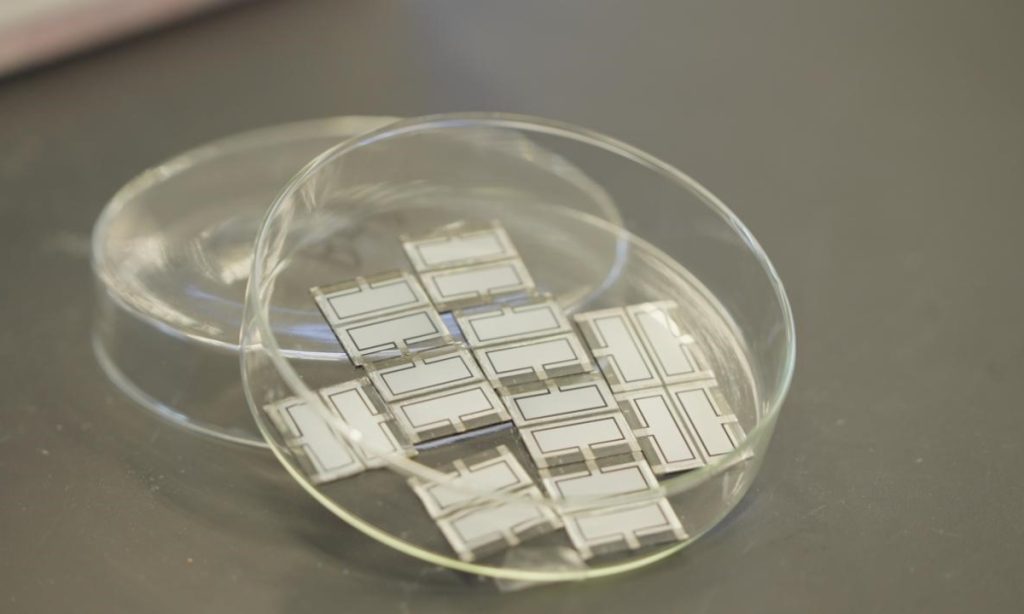
Light is the source of energy for solar cells, but it can also become a factor accelerating performance degradation. For wide-bandgap subcells in perovskite-organic tandem solar cells, which have long been troubled by light-induced phase segregation, Chinese researchers have developed a new strategy to overcome this challenge.

On July 13 Beijing time, the international journal Nature published the latest research achievement from a team led by academician Li Yongfang and research fellow Meng Lei from the Institute of Chemistry under the Chinese Academy of Sciences.

The breakthrough marks a significant step forward in overcoming a bottleneck limiting the commercialization of next-generation photovoltaic technologies. With high efficiency, lightweight structure and flexibility, perovskite-organic tandem solar cells are expected to expand solar power applications beyond traditional panels, including building-integrated photovoltaics, portable energy devices, drones and future space power systems, the Global Times learned from the research team. 

In an exclusive interview with the Global Times, Li and Meng shared insights into the technological breakthrough, remaining challenges on the path toward industrialization, and the team's efforts to bring this emerging solar technology closer to real-world applications.

The team proposed a "full-stage regulation" strategy that suppresses harmful phase separation throughout the entire lifecycle of perovskite materials - from fabrication to operation. The perovskite-organic tandem solar cell achieved a certified steady-state photoelectric conversion efficiency of 28.04 percent, setting a new world record.

The key challenge facing wide-bandgap perovskite materials is halide phase segregation. The upper perovskite layer needs both iodine and bromine ions to maximize absorption of ultraviolet and visible light, but these ions tend to separate during crystallization.

"Once phase segregation occurs, the voltage of the solar cell continuously declines like air leaking from a tire, causing persistent performance degradation," Meng Lei told the Global Times.

The research team introduced a photo-convertible additive molecule called TDB, which works as a "microscopic coordinator." During fabrication, it helps iodine and bromine ions mix uniformly. During operation, it transforms into TAB, which strengthens interactions with defect sites and suppresses ion migration.

"The key technological challenge was to make high-bromine-content wide-bandgap perovskite materials transform from 'light-fearing' to 'light-harnessing'," Meng said.

The wide-bandgap perovskite single-junction cell achieved an open-circuit voltage of 1.42 volts and a fill factor of 85.13 percent. Combined with an organic solar cell, the tandem device reached a laboratory efficiency of 28.80 percent and a certified steady-state efficiency of 28.04 percent.

"By the time the paper was published, this efficiency had set a new world record for perovskite-organic tandem solar cells," Li Yongfang told the Global Times.

Besides efficiency, perovskite and organic solar cells may reshape photovoltaic manufacturing. They can be produced through solution processing technologies such as roll-to-roll printing and slot-die coating, creating possibilities for lightweight and flexible energy materials. However, commercialization still faces challenges including large-area film uniformity, flexible device packaging reliability, and production consistency.

The technology also shows potential for space applications. Li said its high specific power and flexibility could help reduce the weight and volume of spacecraft power systems.

"Systematic space environment simulations and in-orbit verification will be needed to evaluate their performance in radiation resistance, vacuum stability and long-term operation," Li said.
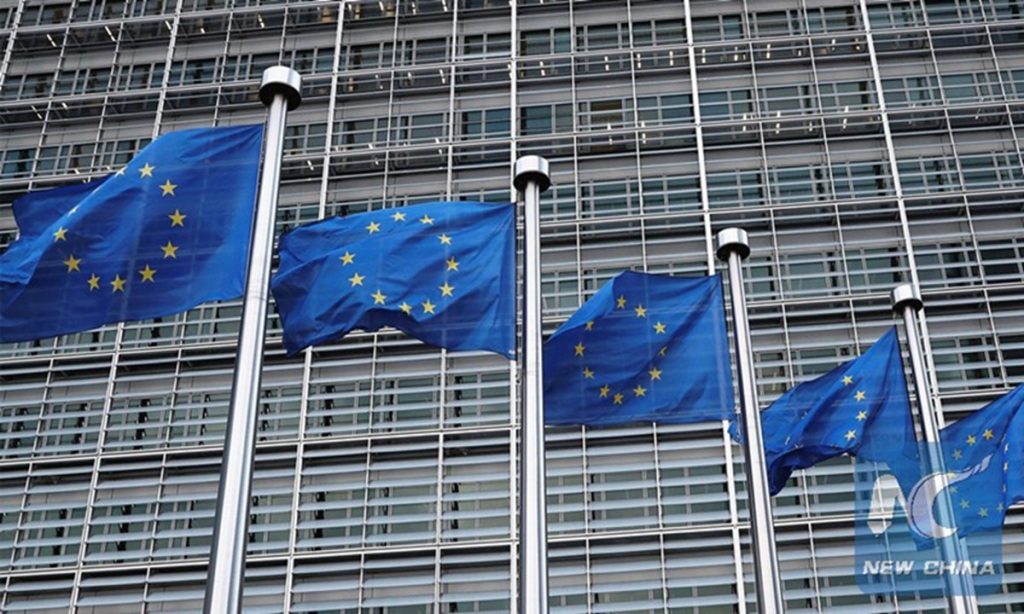
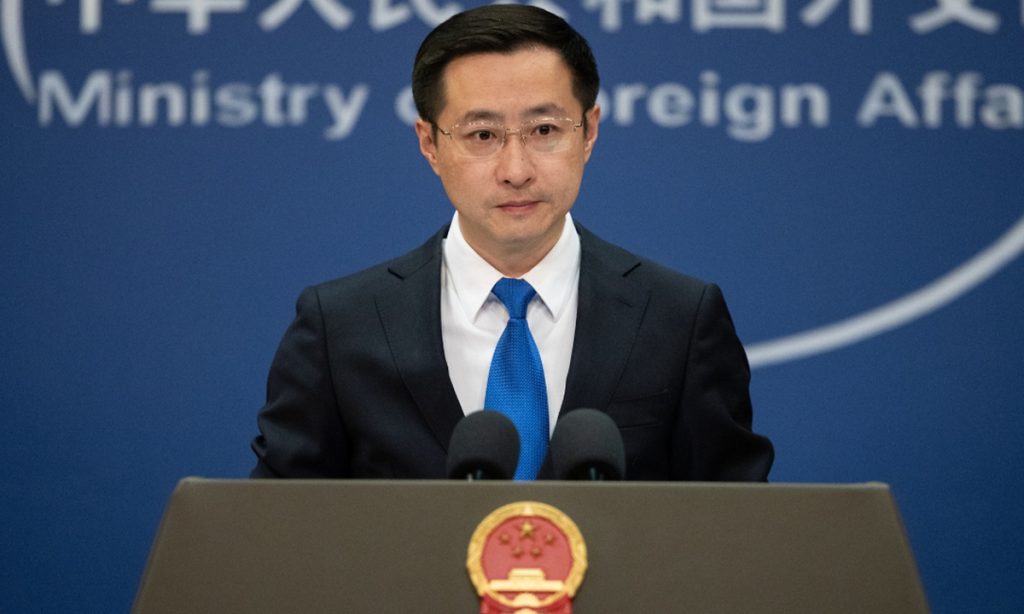
EP delegation wraps up China visit with Shanghai leg; engagement sends pragmatic signal amid trade strains: expert

Having concluded its itinerary in Beijing, the eight-member delegation of the European Parliament (EP) Committee on Foreign Affairs (AFET), headed by Chair David McAllister, embarked on Shanghai leg of its visit on Thursday. Amid growing geopolitical volatility and intensifying economic and trade tensions, the delegation is expected to further engage in in-depth exchanges with Chinese sides on issues of shared interest, with a view to boosting mutual understanding and stabilizing EU-China relations.

Shanghai serves as the second and final stop of the delegation's three-day China visit from July 21 to 23. As outlined on the official website of the EU, members of the European Parliament (MEPs) will hold a series of meetings with representatives of the municipal authorities and local tech companies. They will focus on the technological dimension of EU-China relations including tech sovereignty and competition, as well as the global governance of artificial intelligence.

In Beijing, the EU delegation met with Chinese Foreign Minister Wang Yi and Li Hongzhong, vice chairman of the National People's Congress (NPC) Standing Committee on Tuesday. 

As official releases issued by both sides note, Liu Haixing, head of the International Department of the Communist Party of China Central Committee, held discussions on Wednesday with the delegation. The group additionally held exchanges with researchers at the Chinese Academy of Social Sciences over the evolving EU-China relationship and areas of cooperation. 

During the meeting with the cross-party EP delegation on Tuesday Chinese foreign minister Wang Yi said that China and Europe should stick to the overarching positioning of ties as a partnership, refrain from politicizing economic and trade issues and overstretching the concept of security in exchanges, and work for an upward and dynamic balance of trade from a long-term perspective. 

According to Xinhua, McAllister said the EU attaches great importance to its relations with China, welcomes the resumption of exchanges between the legislative bodies of the two sides, and stands ready to boost dialogue with China, deepen mutual understanding, and advance cooperation, to promote the sound and steady development of EU-China relations.

The delegation marks the first of its kind sent by the Committee on Foreign Affairs to China, as well as another delegation to China this year sent by the EP following a previous nine-member delegation, led by the chair of the Internal Market and Consumer Protection Committee Anna Cavazzini from March 31 to April 2, marking the first parliamentary delegation to China in eight years.

Zhao Junjie, senior fellow at CASS Institute of European Studies, called the trip a positive signal for EU-China relations. He noted a pragmatic shift in the EP over the past six months: more lawmakers now recognize blanket criticism of China cannot solve Europe's own woes. Amid Europe's tough economic outlook, China's strategic and economic significance keeps growing, as proven by successive visits by European leaders.

This visit and exchanges by the AFET delegation demonstrate the EU side's willingness to engage China more openly and step up more dialogue. It will help normalize exchanges between the EP and China, enable European lawmakers to build a fuller picture of China, allow them to play a constructive role after returning home, and steer the EU's China policy toward greater rationality and pragmatism, Zhao said. 

China-EU trade and economic relations have encountered headwinds recently. Amid the EP delegation's China visit, a spokesperson of China's Ministry of Commerce (MOFCOM) on Wednesday expressed strong dissatisfaction and serious concern over the EU's "discriminatory measures to restrict and suppress the normal operations of Chinese e-commerce enterprises," after the European Commission (EC) announced a fine of 550 million euros ($627 million) on AliExpress on Monday. 

Also in this week, addressing recent trade-related "concerns" raised by French President Emmanuel Macron and German Chancellor Friedrich Merz, Chinese foreign ministry spokesperson Lin Jian said on Tuesday, that the root cause of the EU's problems on trade and economy does not lie with China, and instead, China can be a partner for the EU in addressing the problems.

Zhao further stated that the EP, a key variable in bilateral ties, has displayed a willingness to improve exchanges and boost political trust, yet China-EU relations will inevitably navigate constant ups and downs going forward. "While competition and tensions persist, both sides strive to manage disagreements and foster mutual trust, with pragmatic cooperation still taking precedence."

Agencia EFE reported on Wednesday that Nicolás Pascual de la Parte, a member of the EP within the visiting delegation, told reporters in Shanghai the EU had no intention of waging a trade war against China and sought to resolve bilateral economic and trade frictions through negotiations. 

"Three days of intensive discussions have shown that Europe and China will not see eye to eye on every issue. But anyone who wants to shape the future must be prepared to listen, speak plainly and, at the same time, build bridges. That is precisely what diplomacy is all about," Engin Eroglu, the Chair of the EP's China Delegation who is on the visit to China, said in an X post on Wednesday. 

China ready to work with US to deliver on leaders’ AI consensus, FM says after Trump mentions possible AI talks

Responding to reports that US President Donald Trump said the Chinese and US leaders would discuss issues related to artificial intelligence (AI), Foreign Ministry spokesperson Lin Jian said at a regular press conference on Friday that head-of-state diplomacy plays an irreplaceable strategic guiding role in China-US relations.

China is willing to work with the US to implement the important consensus reached by the two heads of state in the field of AI, Lin said.

Taiwan residents rally against DPP food safety failures, urging livelihood protection

A large-scale rally was held in Taipei on Saturday to protest the Democratic Progressive Party (DPP) authorities' failure to safeguard food safety and disregard for people's livelihoods.

Tens of thousands of Taiwan residents braved the sweltering heat and took to Ketagalan Boulevard in front of the island's leadership office.

A major food safety scandal recently surfaced in Taiwan, where soybean salad oil was found to contain excessive levels of carcinogens, triggering grave concerns and panic on the island.

Nearly a month has passed since the tainted oil scandal broke out. However, the DPP authorities have dragged their feet on responses, shirked accountability and attempted to withhold information.

Many families turned out, with elders and children arriving at the scene together to voice their discontent with the authorities.

Protesters held placards reading "Failed food governance, cover-ups over public health" and "Collapsed food safety brings suffering to the people," while crowds chanted slogans like "Restore food safety" and "Lai Ching-te must apologize."

Taipei Mayor Chiang Wan-an noted that over 1,380 schools across Taiwan have been affected, with more than 100,000 students and teachers harmed in Taipei alone. He urged Taiwan leader Lai Ching-te to listen to the people's voices and properly address the tainted oil scandal.

Cheng Li-wun, chairwoman of the Chinese Kuomintang party, also joined the protest. She called on the public to safeguard food safety together and oust the shameless DPP authorities.

Many political parties and civic groups on the island voiced support for the rally.

Shortly before 8 p.m., the host announced that more than 200,000 people had turned out for the rally.

China calls on US, Iran to follow through on MoU, avoid resorting to force: FM on renewed exchange of strikes between Washington and Teheran

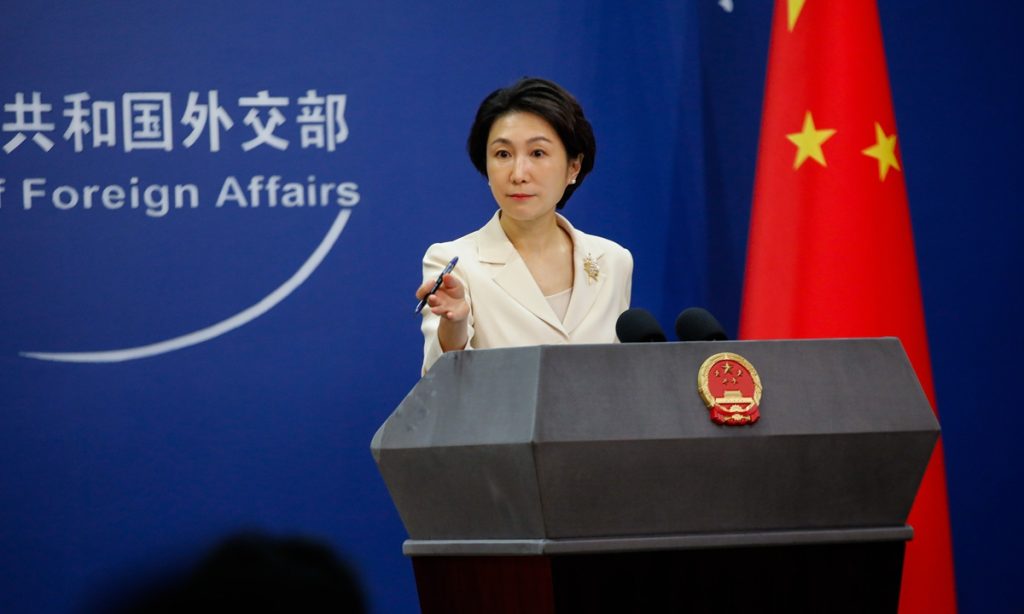
China is closely following the latest developments in the Middle East. Reigniting the conflict does not serve any party's interests. Military means cannot solve the fundamental issue, Chinese Foreign Ministry spokesperson Mao Ning said on Wednesday in response to a question about China's comments on the renewed fighting between the US and Iran.

"We call on the US and Iran to follow through on their memorandum of understanding, resolve disputes through dialogue and negotiation, and avoid resorting to force," Mao said at a regular press conference.

US President Donald Trump said Wednesday that he considers the tentative ceasefire with Iran to be "over," telling reporters alongside NATO Secretary-General Mark Rutte at the alliance's annual summit in Ankara, Turkey, that the agreement had become "a waste of time," Fox News reported.

The interim ceasefire agreement signed between Washington and Tehran under the mediation of Pakistan was intended to provide a 60-day window for negotiations on a permanent agreement, but indirect ⁠talks in Qatar ended with no sign of headway and the US military unleashed a new wave of strikes against Iran on Tuesday, Reuters reported.

The US military "completed" a new round of strikes on Iran, hitting over 80 targets, according to a statement late Tuesday from US Central Command. The US also reimposed sanctions on Iranian oil sales in retaliation for attacks on commercial ships near the Strait of Hormuz, CNN reported.

In response, Iran's Islamic Revolution Guard Corps attacked 85 US military sites in Bahrain, Kuwait, in a new round of escalation of regional tensions. Iran's top joint military command said that its armed forces will give a "crushing response" to US attacks and will not allow US interference in the management of the Strait of Hormuz, according to the Xinhua News Agency.

Sun Degang, director of the Center for Middle Eastern Studies at Fudan University in Shanghai, told the Global Times on Wednesday that tensions between the US and Iran appear to have escalated once more, as the two sides may have fallen back into a pattern of reciprocal confrontations that have lingered between them for a long time.

It is possible that one major driver behind this latest wave of bilateral friction stems from their protracted disputes over the Strait of Hormuz, Sun said, noting that Iran tends to hold the view that it should take the lead in deciding security and navigation rules for the waterway, whereas the US seemingly hopes to preserve its military presence and regional influence across the Persian Gulf. "There may exist a fairly prominent divergence in their respective strategic aspirations," the expert said.

Chinese military spokesperson slams Japan for weaponizing, militarizing space

A Chinese military spokesperson on Thursday denounced Japan for accelerating the weaponization and militarization of space.

Chen Xi, a spokesperson for the Ministry of National Defense, made the comments in response to a media query regarding Japan's passing of an amendment to rename the Japan Air Self-Defense Force to Japan Aerospace Self-Defense Force and establish a Space Operations Wing accordingly.

In recent years, Japan has openly included space as an operational domain and revealed its ambition of a space military build-up, Chen said. He added that over the past five years, Japan's military spending in relevant fields has increased tenfold, while its operational forces have expanded more than 30-fold.

These moves have accelerated the weaponization and militarization of space and fueled a space arms race, which is more proof that neo-militarism in Japan has become a real threat, he noted.

Chen urged all peace-loving people to be on high alert regarding the dangerous moves of the Japanese side in space and resolutely contain accelerated remilitarization pushed by right-wing forces in Japan, so as to safeguard a common home for humanity.

Xi meets premier of DPRK cabinet

General Secretary of the Communist Party of China Central Committee and Chinese President Xi Jinping met with Pak Thae Song, premier of the Cabinet of the Democratic People's Republic of Korea (DPRK), in Beijing on Friday.

Pak is also a member of the Presidium of the Political Bureau of the Central Committee of the Workers' Party of Korea and vice president of the State Affairs Commission of the DPRK.

DPP authorities turn deaf ear to infringement of China's rights and interests by Japan and the Philippines: FM slams claim over CCG’s recent patrols

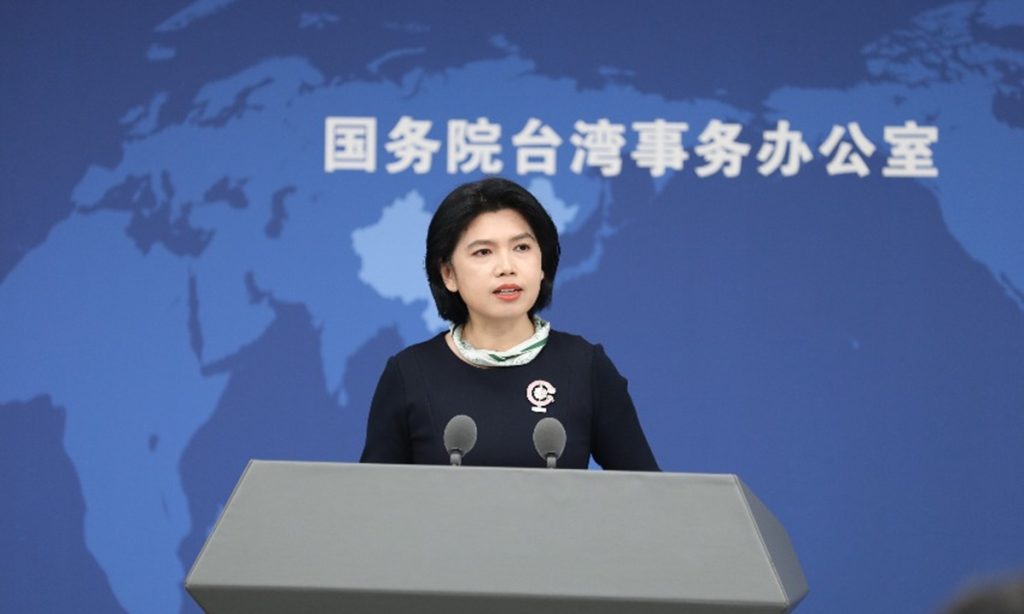
The DPP authorities have turned a deaf ear to the infringement of China's rights and interests by Japan and the Philippines, while turning a blind eye to the damage done to the interests of people on the island. Instead, they have seized the opportunity to aggressively spread the fallacies of "Taiwan independence" separatism and incite anti-China sentiment, said Zhu Fenglian, a spokesperson for the State Council Taiwan Affairs Office, on Thursday. They have become accomplices of external forces in undermining the overall interests of the Chinese nation, and such despicable and shameless acts will inevitably be rejected by compatriots on both sides of the Taiwan Straits, she noted. 

Zhu made the remarks when asked to comment on Taiwan regional leader Lai Ching-te's recent claim that the Chinese mainland coast guard's recent law enforcement patrols in waters east of Taiwan island had “undermined peace and stability in the Indo-Pacific region and the rules-based international order.”

Zhu noted there is but one China in the world, and Taiwan is part of China. China has exclusive economic zone and continental shelf in the waters east of Taiwan island. Japan and the Philippines have unilaterally initiated “maritime delimitation negotiations” in the relevant waters by bypassing China, which seriously violates international law and the basic norms governing international relations, gravely infringes upon China's maritime rights and interests, and is completely illegal and invalid. 

The Chinese mainland coast guard's law enforcement patrols in the relevant waters are a lawful exercise of jurisdiction in accordance with the law and a legitimate move to safeguard China's territorial sovereignty and maritime rights and interests. They are also a necessary response to Japan and the Philippines' unilateral initiation of “maritime delimitation negotiations” in the area that bypass China and infringe upon China's maritime rights and interests, Zhu said.

China's Qingzhou cargo craft test vehicle unveils in-orbit results related to future space hospital and biological cultivation in space

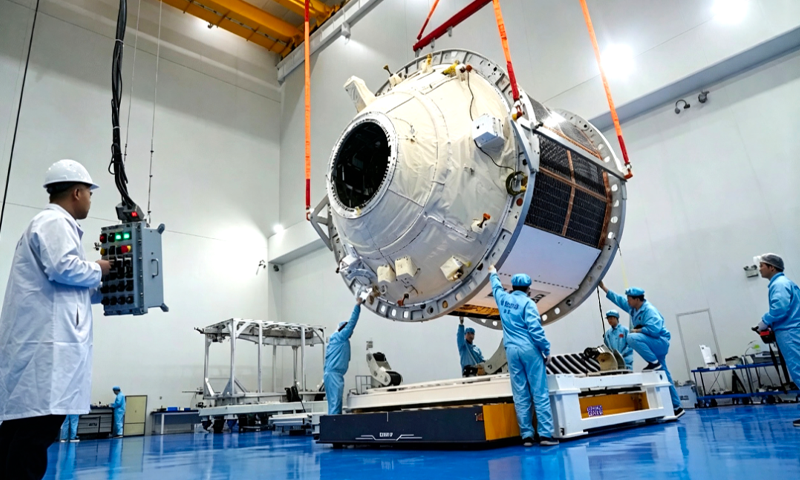
The second batch of in-orbit test results from the Qingzhou cargo spacecraft test vehicle was released on Monday, covering fields including precise measurement in space, cost-saving and efficiency-enhancing technologies for space missions, future space hospital, and biological cultivation in orbit, which provide technical support for the application of new space technologies, according to CCTV News.

The test vehicle was launched into orbit on March 30 aboard a Lijian-2 Y1 carrier rocket. Developed by the Innovation Academy for Microsatellites of the Chinese Academy of Sciences (IAMCAS), the vehicle has a total mass of 4.2 tons, carries one ton of scientific payloads, and has a three-year in-orbit operational life, according to the Xinhua News Agency in April.

Among the latest in-orbit test results, the cost-saving and efficiency-enhancing technologies for space missions focus on developing support equipment for maintaining spacecraft in orbit and supporting astronauts' daily work and living in the space environment, according to CCTV News on Monday.

The test vehicle carried an upgraded vapor-compression space refrigerator, a key piece of equipment designed to preserve astronauts' food and temperature-sensitive biological samples for future space missions. During the in-orbit tests, the refrigerator overcame the challenge of gas-liquid separation and stable compressor operation in microgravity, providing a cost-effective solution to cold-chain logistics aboard the space station and future extraterrestrial refrigeration applications.

A comprehensive healthcare support system will be indispensable if humans are to live in space for extended periods or eventually establish space bases. This is the central focus of the future space hospital project, the report noted.

According to CCTV News, space biological cultivation has been a key priority for China's life science research conducted on the Tiangong space station over the past two years. A host of in-orbit experiments involving zebrafish, hornwort, and space mice have been completed previously. Multiple technical verifications in relevant fields were carried out during the on-orbit tests aboard the test vehicle this time.

Chinese researchers have also developed an electromyography monitoring device that addresses the limitations of conventional astronaut muscle monitoring, which relies on manual operation and cannot provide continuous measurements. Equipped with a domestically developed neural chip, the device demonstrated for the first time in orbit the feasibility of continuously collecting and transmitting weak muscle electrical signals in real time.

In addition, the handheld blood cell analyzer eliminates dependence on large medical equipment and ground instruction, providing critical technical support for establishing a real-time human health assessment and support system under complex space environments.

Chang Liang, chief designer of the Qingzhou cargo spacecraft, stated that the test flight is intended to conduct comprehensive in-orbit testing for the flight model spacecraft and verify a host of key technologies including sealed cabin and propulsion systems. All these tests have laid a solid technical foundation for the flight model of the Qingzhou cargo spacecraft.

It is expected that the flight model of the Qingzhou cargo spacecraft will be launched in early 2027 and officially dock with the Tiangong space station, Chang said. Moving forward, it will act as an important supplement to Tianzhou cargo spacecraft, undertaking relatively low-cost cargo transportation and other missions for China's space station. At present, the development of the flight model of the Qingzhou cargo spacecraft is steadily advancing, per CCTV.