Severe heatwave continues to grip much of Europe, sparking discussion among netizens of China's innovative products and governance capabilities

As a severe heatwave continues to grip much of Europe, extreme temperatures are disrupting daily life across major countries, with transport infrastructure strained, cultural landmarks adjusting operating hours, and urban spaces increasingly turning into heat shelters under record-high temperatures.

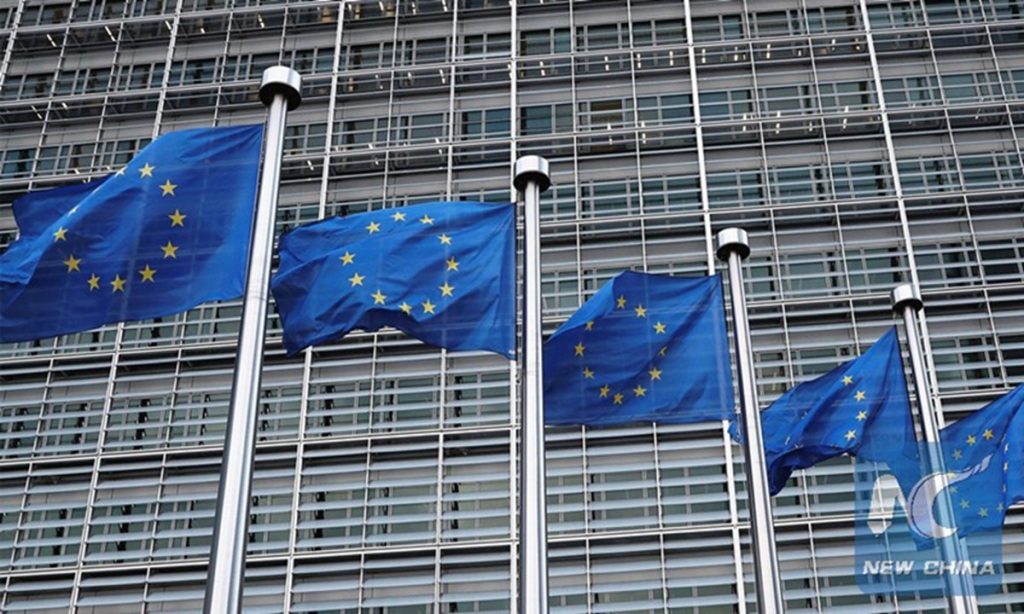
The controversy escalated after media reports said that in the European Commission's Brussels headquarters, air-conditioning was reduced on lower floors while senior offices remained cooled, prompting internal criticism and accusations of a "feudal" arrangement.

The incident has become a symbolic flashpoint in a broader argument over inequality, climate policy, and Europe's preparedness for increasingly frequent extreme heat events, which triggered heated discussions on international social media platforms, with some netizens beginning to draw comparisons between China and Europe and hailing the country's achievements in infrastructure construction and governance capabilities.

While a French expert said the heatwave illustrates the importance of long-term industrial planning and pragmatic cooperation with China, a Chinese expert said it also highlights China's governance philosophy of "putting the people at the center," noting that what Europe needs now is not just an air conditioner, but also the country's accumulated experience in urban infrastructure development.

Heated stress

In Germany, sections of its famous A2 motorway were forced to close after concrete road surfaces buckled under extreme heat, according to German daily Bild. France also reportedly forced the early closure of the Eiffel Tower and the Louvre Museum, two of Paris's most visited tourist attractions, as authorities grappled with soaring temperatures that have disrupted daily life across the country. In Italy, tourists visiting Rome's Colosseum were seen enduring prolonged exposure to intense heat with limited shade relief in surrounding public areas.

BBC also Wednesday reported that an event due to be held in central London about how the world can adapt to extreme heat has been cancelled due to soaring temperatures. The soaring temperatures have led to hundreds of school closures, or partial closures, across London and southern England.

On Chinese social media platform Xiaohongshu, trendy videos show residents demonstrating extreme heat effects at home in France, including attempts to cook food such as bacon and eggs using rooftop or balcony surfaces under direct sunlight.

Footage on social media shows shoppers in a French store elbowing their way through the crowd and clambering over one another to snatch portable air conditioners and fans from the shelves. Within seconds, the display had been stripped nearly bare, per the New York Post.

Leading Chinese air conditioner manufacturers are working around the clock to keep up with soaring demand for portable split air conditioners in Europe.

Chinese air conditioner manufacturer Midea told the Global Times on Saturday that the company's air conditioner plant in Shunde, South China's Guangdong Province, is currently working around the clock to ramp up production of its PortaSplit models.

The units are being rushed to Europe via China-Europe freight trains in a bid to catch what remains of the peak summer season, the company said in a statement.

In addition to Midea, major Chinese home appliance brands including Gree and TCL have also ramped up production of similar portable air conditioners, according to media reports.

Gree told the Global Times in a Sunday statement that this year, the company's actual air-conditioning sales from January to June increased by more than 40 percent year-on-year in these markets. Portable air conditioners, which are easy to install, have been in extremely high demand, and distributors across Europe have already nearly run out of stock of portable units.

Using Chinese cooling appliance to help address the local heat stress, Geoffroy Boulard, mayor of Paris' 17th arrondissement released a video on X on Wednesday, showing that he has begun deploying China-made air conditioners to public schools as France faces an intense heatwave that has pushed classroom temperatures to as high as 44 C.

The mayor said in the video that there would be 50 air conditioners to by deployed in schools. The video showed that the air conditioners were productions of Chinese company Haier.

"The growing demand for Chinese air conditioners in Europe reflects real consumer needs rather than political ideology. People choose products that are affordable, innovative and available," Pierre Picquart, an expert in geopolitics and human geography from the University of Paris-VIII, told the Global Times on Sunday. "This is not only about air conditioners. It illustrates the importance of long-term industrial planning, innovation and the ability to anticipate future demand."

Time magazine, in an article titled "Why Is Europe so ill-equipped to handle heatwaves?" pointed out that "Europe is warming twice as fast as the rest of the world - it's the fastest warming continent in the world and the second fastest region after the Arctic." However, "old buildings were not designed to include cooling, and the region's once-mild climate meant there was no need for air conditioners (AC)."

Bao Yuanyuan, a chief forecaster at China's National Meteorological Center, told the Global Times that the reason Europe's heatwaves have generated stronger social attention and impact lies primarily in the region's poor infrastructure resilience.

Most residential buildings, offices and even metro systems in central and western Europe were originally designed for cold protection rather than heat adaptation, and air-conditioning penetration remains low. As a result, when temperatures exceed 40 C, indoor environments in many European buildings can easily develop a "heat-trapping greenhouse" effect, Bao said.

The gap between the more frequent extreme heat and lack of AC or cooling systems escalated sharply inside EU institutions during the peak of the heatwave.

According to POLITICO Europe, on Saturday, the European Commission shut down air-conditioning in the lower floors of its Brussels headquarters while upper floors - including offices used by senior officials - remained cooled.

The report cited internal staff frustration, with one employee describing the arrangement as "feudalism," highlighting perceived inequality in access to basic comfort during extreme heat.

In France, the air-conditioning issue has become a political fault line. According to the NYT, in France, far-right politicians who have advocated cutting net zero initiatives hope to gain from the heatwave, using it to accuse the government of failing to make the country more resilient, but also as a cultural issue against the hard left, which has often opposed the use of air-conditioning on environmental grounds.

The French government, however, has repeatedly pushed back against the notion that widespread air-conditioning is a good solution, as it could further increase outdoor temperatures by releasing heat into the streets, POLITICO Europe reported on Thursday.

Jiang Feng, a senior researcher at Shanghai International Studies University and president of the Shanghai Regional Studies Association, told the Global Times that European left- and right-wing politicians are locked in disputes. Each side deliberately steers the issue in a direction that benefits itself, making the rapid resolution of real problems increasingly complex. It is very difficult for the governments to quickly make decisions and implement them on the ground — the idea of "just getting it done" has become extremely challenging. This has become a highly prominent political phenomenon in Europe today.

The scorching summer heat only makes people physically uncomfortable, but the white-hot political situation fills people with indignation. This basically sums up Europe's current dilemma of "double heat," Jiang noted.

China's cool in comparison

Against the backdrop of scotching heat in Europe while limited access to the air-conditioning appliance, the heatwave has triggered widespread online discussion on international social media platforms, where comparisons between Europe and China have become increasingly visible.

On social media platforms such as X, users have highlighted differences in everyday heat resilience. Many posts point out that in China, air conditioning is widely available in residential buildings, offices, public transport and commercial infrastructure, allowing cities to maintain relatively stable indoor temperatures during extreme heat events.

While such commentary is informal and varied, a recurring narrative is that China's rapid urbanization has produced a more scalable cooling infrastructure in major cities, particularly in megacities facing increasingly frequent heatwaves.

X user Aubin DIDON wrote in her post on Sunday that "China has equipped its residential complexes with misting systems. Activated during heatwaves, they lower the air temperature in outdoor spaces by 3 to 6 degrees Celsius. In the West, you're told that you must learn to live with the heatwave and that air conditioning is bad."

"China has an ingenious way of keeping the temperature down outdoor evaporative mist cooling systems spray ultra-fine water droplets into the air that evaporate quickly, absorbing heat," Mario Nawfal wrote on X.

X-user Ketul Parmar wrote in the post that "Europeans can't afford Air Conditioners, so they have to sleep in public places. What kind of developed states is there? China which according to Europeans a developing country is much better."

Even more to the point, X user Christineza said that "Europeans don't want a trade war with China, they want ACs made by a Chinese company, desperately."

Chen Hong, Director of Country and Region Studies Institute, School of Foreign Languages, East China Normal University, who just returned to China after a trip to Sweden, shared with the Global Times on Sunday that "although I didn't experience extreme heat, temperatures still reached 30 C. What struck me deeply was that many hotels had clearly inadequate air conditioning - some didn't even have proper air conditioning at all. This forms a sharp contrast with many cities in China."

In China, large-scale cooling facilities have become a standard part of modern urban infrastructure — whether in hotels, shopping malls, high-speed rail, subways, schools, or hospitals. People take it for granted and rarely pay special attention to it. But in Europe, one realizes that this is actually a very important public service capability, he explained.

"Europe should look beyond ideological debates and strengthen its own long-term competitiveness while developing pragmatic cooperation with China," Pierre Picquart noted.

"What Europe needs is not just an air conditioner, but also China's accumulated experience in urban infrastructure development. This includes power grid construction, energy-efficient building renovations, cooling systems for public transportation, and urban governance capabilities for dealing with extreme weather," Chen said.

Intl travelers immerse in Dragon Boat Festival traditions, gaining deeper appreciation of Chinese culture

From joining dragon boat race to making the sticky zongzi, a traditional Chinese food made of glutinous rice wrapped in bamboo leaves, international tourists across China joined local residents in celebrating the Dragon Boat Festival in 2026, offering a glimpse into how centuries-old traditions continue to resonate with people from around the world today.

In Foshan, South China's Guangdong Province, a dragon boat drifting course famous for its sharp turns and high degree of difficulty not only attracted domestic visitors but also welcomed its first overseas team.

According to CCTV News, the captain of New Zealand's Four Seasons Dragon Boat Team said his knees and calves were sore after the race, "but it actually felt pretty good." "We're getting better and better. This is something very unusual for us, and it's amazing. We really love it," he said.

The excitement was shared by many other overseas visitors who found themselves drawn to both the festive atmosphere and the local culture for Dragon Boat Festival, which falls on June 19 this year, with the holidays spanning until Sunday.

A British tourist who has visited China multiple times, said the country's diverse festivals have become one of the main reasons he keeps returning. He noted that China has a rich culinary culture and a wide variety of festivals, each with its own characteristics. Especially in southern China, Guangdong is a very special place with a profound history and a very open environment.

Another international dragon boat tournament held in Guangzhou, capital city of Guangdong, brought together more than 3,800 athletes from 105 teams representing 20 countries and regions to compete on the Pearl River.

According to chinanews.com, by the end of Saturday, the Guangzhou Baiyun border inspection station processed more than 20,000 inbound foreign travelers during the holiday period, a 35 percent increase year-on-year. The top three source countries were Malaysia, Singapore and Russia. Among them, around 9,700 eligible foreign travelers entered Guangzhou through visa-free and transit visa exemption policies.

AP News also reported on the enthusiasm surrounding the festival, noting that "the more than 2,000-year-old holiday is best known for its sporting events, but its origins are rooted in ancient beliefs about health, protection and harmony with nature."

While AP focused on the festival's history and cultural significance in the long-form report, CNN focused on a more futuristic scene: humanoid robots joining dragon boat races in China.

The coverage prompted discussions among overseas audiences. "You touch on something that most in the West are only marginally aware of. There were once scores of cultural groups in China, each with their own traditions and unique culture," a netizen using the name JackO wrote in the comments section of the AP's report.

Beyond headline-grabbing dragon boat races, many foreign visitors encountered Chinese traditions in more intimate and unexpected ways.

Finn, a tourist from the Netherlands, experienced this firsthand while traveling in Dali, Southwest China's Yunnan Province during the holidays. He unexpectedly came across a Dragon Boat Festival activity at a local museum, where visitors could wear traditional Chinese attire and make five-colored bracelets.

Traditionally woven from blue, red, white, black and yellow threads, the bracelets symbolize praying for good fortune and wishing for peace and good health, making them one of the festival's iconic cultural symbols.

"At first, I wasn't sure whether the bracelet had some kind of religious meaning because many local people wearing them were dressed in traditional Chinese clothing," Finn told the Global Times.

"Later, local residents warmly placed the bracelet on my wrist and offered me their blessings. That's when I learned it was related to the festival and represented wishes for peace and safety," he said.

For US tourist Omar, meanwhile, what stood out most was not a particular activity, but the sense of continuity he observed across different cities.

"In my country, people from different religious backgrounds celebrate different festivals in different ways. But in recent days, I visited Southwest China's Chengdu, Shanghai and Beijing, and I found that people everywhere eat zongzi for the holidays. It seems to have become a shared custom," Omar told the Global Times.

He said he was also surprised by the affordability of food in China, which, in his view, helps make it easier for traditional customs to be preserved and passed down through generations.

"People are incredibly warm and friendly. In Beijing, I saw someone sitting on a bench by the roadside eating zongzi. I was simply curious, and they ended up giving me an entire bag," he said.

Jun Zhengping says ‘war criminal flag’ prohibited under FIFA rules, World Cup not shrine of militarism over Japanese fans’ display of ‘rising sun’ flag

A "rising sun" flag - long seen by many as a symbol of lingering Japanese militarism - appeared in the stands during the Japan vs. Tunisia match, also the 1,000th match in World Cup history, which sparked backlashes in countries including China and South Korea and prompted Jun Zhengping, a commentary studio with the People's Liberation Army Daily, to publish an article condemning such acts as "World Cup stadium is not a shrine for militarism."

The "rising sun" flag is a symbol of Japan's wartime aggression and colonial rule, as it was used by the Imperial Japanese Army before and during World War II when they invaded countries in Asia Pacific including China, South Korea and the Philippines.

According to relevant FIFA regulations, any political, offensive, or discriminatory items are prohibited inside stadiums, including flags, banners, slogans, and clothing. Japanese fans had attempted to bring the "rising sun" into stadiums during the 2022 Qatar World Cup, and security staff immediately intervened and prevented Japanese fans from waving the flag inside the stadium, per media reports.

On Monday, the official video account of the Jun Zhengping Studio released a commentary titled "World Cup stadium is not a shrine for militarism."

At the 2026 FIFA World Cup in the US, Canada, and Mexico, the "rising sun" flag - stamped with the mark of Japanese militarism - has repeatedly appeared inside and around stadiums during Japan's matches. This "war criminal flag," once stained with the blood of aggression, is what the FIFA regulations explicitly prohibited, the commentary said.

Some Japanese fans have deliberately used the "rising sun" flag as a cheering prop, openly violating event management rules. This not only reflects a disregard for the history of aggression, but also hurts the feelings of people in victim countries, exposing the ambiguity and leniency in Japanese society toward its militarist past, the commentary noted.

Football stadiums leave no room for remnants of militarism. Any form of cheering behavior that violates rules and disrespects history should be firmly opposed, according to the commentary.

Translators' Voices: China's green transition shows ability to combine long-term vision with practical implementation

Editor's Note:

The year 2026 marks the start of the 15th Five-Year Plan period (2026-30). The outline of the 15th Five-Year Plan dedicates a chapter to "accelerating the green transition across the board and building a Beautiful China."

From the guiding philosophy that "lucid waters and lush mountains are invaluable assets," to the strategic guidance of China's "dual carbon" goals, and further to the systematic arrangements for comprehensive green transition, China has, under the guidance of Xi Jinping Thought on Ecological Civilization, accelerated its green and low-carbon transition and continued to improve the quality of its ecological environment.

The book series Xi Jinping: The Governance of China includes a number of President Xi's important ideas on ecological conservation. These ideas profoundly reflect the inheritance, enrichment and development of the theoretical framework for ecological civilization construction, as well as the continuity, elevation and focus of its goals and tasks.

Volume V of the book series includes "The Beautiful China Initiative" as a dedicated topic, systematically expounding the thinking and arrangements for building a Beautiful China.

In the 25th installment of the special series "Decoding the Book Xi Jinping: The Governance of China," the Global Times, along with the People's Daily Overseas Edition, continues to invite Chinese and foreign scholars, translators of Xi's works, practitioners with firsthand experience, and international readers to focus on the theme of "accelerating the green transition across the board and building a Beautiful China." Together, they explore the vivid practices through which China, under the guidance of Xi Jinping Thought on Ecological Civilization, applies the concept of green development throughout the process of economic and social development, and discuss its major practical significance and contemporary value.

In the 25th article of the "Translators' Voices" column, the Global Times (GT) reporters Wang Wenwen and Liu Xuandi interviewed José Medeiros da Silva (Medeiros da Silva), a Brazilian professor at Zhejiang International Studies University. Medeiros da Silva was a member of the translation team of the Portuguese edition of Xi Jinping: The Governance of China.

GT: In the book series Xi Jinping: The Governance of China, President Xi put forward important thoughts on ecological civilization, among which the "two mountains" concept that "lucid waters and lush mountains are invaluable assets" has become a guiding principle for China's ecological civilization development. How do you understand the profound meaning of this concept? What kind of path to modernization has China taken under its guidance?

Medeiros da Silva: The "two mountains" concept is one of the most representative expressions of Xi Jinping Thought on Ecological Civilization. At its core lies the recognition that economic prosperity, quality of life, and lasting social development ultimately depend on preserving the natural conditions that sustain life. More than an environmental policy, it represents a shift in perspective: Ecological protection is no longer viewed as a constraint on growth but as an essential condition for achieving higher-quality development.

This understanding has become one of the foundations of China's efforts to build an ecological civilization. On this basis, the country has been pursuing a path of modernization that seeks to move beyond the traditional divide between economic development and environmental protection, integrating high-quality growth, rural revitalization, green transition, technological innovation, and common prosperity. The goal is not simply to expand material wealth but to build a more balanced, sustainable, and harmonious society. In this sense, China's modernization seeks to demonstrate that economic development, social well-being, and ecological protection can advance together in ways that are mutually reinforcing.

I was able to observe this integration firsthand during a visit to Anji County in East China's Zhejiang Province. As I walked through its landscapes, I was reminded of traditional Chinese shanshui paintings, where mountains, rivers, and human beings exist in a state of harmony. In Anji, this aesthetic sensibility takes on a contemporary and tangible form. Common prosperity is not merely an ideal. It is visible in the villages' architecture, in the quality of life enjoyed by local residents, and in the way the local economy has been reorganized around natural resources. The experience allowed me to see how cultural heritage, ecological stewardship, and modernization can coexist and strengthen one another. It also showed that such achievements require not only goodwill, but also strategic vision, political commitment, and sustained investment over time.

For this reason, I believe that the "two mountains" concept transcends the Chinese context. At a time marked by climate change, accelerating biodiversity loss, and the challenges of sustainable development, it offers a valuable point of reference for countries seeking to reconcile economic growth with environmental protection - not as opposing goals, but as complementary dimensions of the same development project. Its most enduring contribution may be its demonstration that building a sustainable future requires not only technological progress, but also a deeper transformation in the way we understand the relationship between humanity and nature. Ultimately, it calls for reflection on the broader path of human civilization in the 21st century.

GT: In Volume V of Xi Jinping: The Governance of China, President Xi stated that "green growth should be a defining feature of high-quality development, and new quality productive forces are intrinsically green." How do you understand the dialectical relationship between high-quality development and high-standard environmental protection reflected in this statement? What implications does it offer for other countries pursuing modernization and green transformation?

Medeiros da Silva: President Xi's statement suggests that environmental concerns are no longer a peripheral issue, but have become an integral part of the very logic of innovation, productivity, and value creation.

The dialectical relationship embedded in this statement operates on two complementary levels. First, it affirms that quality and sustainability are inseparable. A development model that degrades ecosystems, depletes natural resources, or transfers environmental costs to future generations can hardly be considered truly high-quality development. Second, it points to a transformation in the very foundations of production. New quality productive forces are driven by scientific innovation, artificial intelligence, digitalization, clean energy, and low-carbon technologies. These forces not only reduce environmental impacts, but also transform sustainability into a source of innovation, responsibility, advanced productive capacity, and long-term prosperity.

This helps explain why China treats green development as a core component of its modernization strategy. Investments in renewable energy, the circular economy, smart infrastructure, and advanced technologies are not viewed as concessions to environmentalism, but as key drivers of a more resilient, innovative, and future-oriented economy. In this sense, the green transition is not merely an environmental agenda. It is also a strategy for industrial upgrading, strengthening productive capabilities, and creating new sectors with higher added value.

For other countries, China's experience offers a valuable point of reference - not as a model to be mechanically replicated, but as an invitation to develop their own approaches, capable of combining innovation, ecological responsibility, and shared prosperity. In an increasingly interconnected world, this perspective broadens the possibilities for cooperation and mutual learning in addressing the common challenges facing humanity.

GT: 2026 marks the start of China's 15th Five-Year Plan period (2026-30). The outline of the plan lists "major new strides in advancing the Beautiful China initiative" as one of the major objectives for economic and social development during this period. How do you view China's integration of ecological civilization and green development goals into its long-term national development planning? How would you assess the importance of such policy continuity and implementation in achieving coordinated progress between economic growth and environmental protection?

Medeiros da Silva: The integration of ecological civilization and green development goals into the 15th Five-Year Plan shows how mature these issues have become within China's modernization process. They have become structural components of the country's broader development strategy. I find it particularly significant that the construction of a Beautiful China has been placed among the central objectives of economic and social planning for the period from 2026 to 2030.

What impresses me most is China's ability to combine long-term vision with practical implementation. The country has demonstrated a remarkable capacity to translate broad strategic objectives into public policies, investments, institutional mechanisms, and progressively achievable goals. Five-year plans play a crucial role in this process because they translate long-term national aspirations into concrete priorities, policy frameworks, and measurable objectives.

From this perspective, the incorporation of the green transition and the Beautiful China Initiative into the 15th Five-Year Plan illustrates the interconnected nature of several key concepts shaping contemporary China, including ecological civilization, green development, common prosperity, and new quality productive forces. Rather than isolated ideas, these concepts form an integrated framework that seeks to guide the construction of a more innovative, balanced, and sustainable society.

Perhaps one of the most important contributions of China's experience is the demonstration that building an ecologically sustainable society depends not only on setting ambitious goals, but also on maintaining strategic direction and continuity of purpose over time. When it comes to the relationship between development and nature, decades matter more than political cycles.

GT: In Volume V, President Xi pointed out that "a sound ecosystem is essential for civilization to prosper. We must work together to promote harmonious coexistence between humanity and nature, build a community of all life on Earth, and create a clean and beautiful world for us all." In your view, what significance does Xi Jinping Thought on Ecological Civilization hold for addressing current global sustainable development challenges and advancing global ecological civilization?

Medeiros da Silva: As Xi often emphasizes, there is only one Earth in the universe. The idea of building a community with a shared future for humanity - a vision that emphasizes the interconnected destinies and responsibilities of all peoples - invites us to recognize an increasingly evident reality: The major ecological challenges of our time transcend national borders and affect all of humanity, albeit in different ways.

Climate change, biodiversity loss, land degradation, water scarcity, and ocean pollution are not challenges that any single country or civilization can solve alone. They require new forms of cooperation, dialogue, and shared responsibility. In this context, the value of a national experience lies not only in its domestic achievements. It also lies in its capacity to contribute to a broader reservoir of ideas, reflections, and practical solutions available to humanity as a whole.

I see the aspiration to build a clean and beautiful world not merely as an environmental goal, but as a civilizational horizon. Its deeper significance lies in its potential to foster collaboration, mutual learning, and more harmonious coexistence among nations. In an increasingly interconnected world, a community of life on Earth should not be understood as the project of any single nation, but as a shared undertaking of humanity as a whole.

China launches first operational 24-hour typhoon rapid intensification forecast model

Chinese scientists have developed a machine learning-based typhoon rapid intensification forecasting model which has been deployed and tested in operational use at the National Meteorological Center and the Hong Kong Observatory, marking a significant breakthrough for China in the field of forecasting sudden changes in tropical cyclone rapid intensity which has long remained a major challenge worldwide, the Global Times learned from the developer of the model on Wednesday. 

Meteorologists define typhoon rapid intensification as a process in which a typhoon's intensity increases by more than 15 meters per second within 24 hours, or by more than 10 meters per second within 12 hours. Such changes are highly destructive. 

Super typhoons including Rammasun in 2014 and Yagi in 2024 all rapidly intensified before making landfall, resulting in heavy casualties and significant economic losses, China Science Daily reported. 

The machine learning-based typhoon rapid intensification forecasting model developed by the research team led by Li Qinglan, a researcher at Shenzhen Institutes of Advanced Technology, Chinese Academy of Sciences, is the first in China to be put into operational use for 24-hour typhoon rapid intensification forecasting, with a 12-hour forecasting model also launched, marking the integration of independently developed domestic AI typhoon rapid intensification forecasting technology into the national meteorological system.

According to Li, typhoon rapid intensification is hard to anticipate, making timely preparedness and response difficult. 

Typhoon intensity evolution is governed by inner-core structure and the underlying sea-land surface conditions, making intensity forecast even more challenging. 

Traditional numerical models cannot accurately represent the evolution of typhoon intensity due to resolution and parameterization limits. As a result, typhoon intensity forecast, particularly rapid intensification, remains a long-standing challenge, Li told the Global Times. 

Li noted that typhoons often develop a symmetric ring-shaped inner core before rapid intensification. A more uniform and symmetrical typhoon inner-core structure signals a higher chance of rapid intensification.

In recent years, artificial intelligence and machine learning, which excel at processing large datasets and uncovering complex nonlinear relationships, have emerged as key technologies for improving tropical cyclone forecasting, Shenzhen Evening News reported. 

The team combined four machine learning algorithms including Decision Trees, Random Forests, AdaBoost, and LightGBM into an ensemble system that forecasts rapid intensification to improve prediction accuracy, according to Li. 

The model was tested against all North Atlantic 24-hour tropical cyclone rapid intensification cases from 2016 to 2020 and it has achieved higher detection rates and lower false alarms, showing strong operational performance compared with the US National Hurricane Center's best system, Li said.

China Meteorological Administration released on April 1 its climate trend forecast for the main flood season from June to August this year. The administration expects 24 to 26 typhoons will form over the Northwest Pacific and the South China Sea in 2026, with 7 to 9 making landfall in China - higher than the long-term average. Typhoon tracks are expected to be mainly westward and northwestward, primarily affecting the coastal regions of East China and South China, with overall stronger-than-normal intensity, CCTV News reported on April 1. 

Any activities China conducts around Huangyan Dao, including scientific research, constitute legitimate rights of a sovereign state: Chinese FM

When asked to comment on reports claiming that China had removed the structure previously installed on Huangyan Dao under pressure from the US and the Philippines, Chinese Foreign Ministry spokesperson Lin Jian said during a Wednesday press conference that Huangyan Dao is an inherent territory of China, and China holds indisputable sovereignty over Huangyan Island and its adjacent waters.

Since late May, the South China Sea Institute of Oceanology of the Chinese Academy of Sciences has carried out a comprehensive survey covering the entire Huangyan Dao atoll. This scientific expedition has helped deepen understanding and forecasting of Huangyan Dao's ecosystem and supports ecological civilization development in the South China Sea, and the mission has been successfully completed. Detailed information about the expedition is available on the official website of the research institute, Lin said. 

"I wish to stress that any activities China conducts around Huangyan Dao, including scientific research, constitute legitimate rights of a sovereign state, and no other country has the right to interfere," Lin said, adding that China urges relevant countries to immediately stop fabricating slander and false accusations against China, and cease provocative acts at sea.

‘Innovative, inspiring and enlightening,’ Bangladeshi students take close look at China’s social and economic devt, seeking experience for Bangladesh

In recent days, a delegation of youth, women, and student representatives from the Bangladesh Nationalist Party (BNP) visited Southwest China's Chongqing and Shanghai, taking a close look at various aspects of China's economic and social development. "Innovative, inspiring, and enlightening," Md. Abidul Islam Khan, a student leader of the BNP's student wing, told the Global Times on Thursday when describing the ongoing trip. 

The aspect that surprised me most was the practical use of advanced technology and automation. At the Chongqing Robot AI Application Demonstration Center, I saw robots and AI systems being used in real industrial and service applications, not just as future ideas, the Bangladeshi student leader said.  

"I was also impressed by the management style in the companies we visited, especially the focus on efficiency, teamwork, and continuous innovation. At Shanghai Xincheng Information Technology Co., Ltd., it was clear that technology development is closely connected with education and industry needs," Abidul Islam Khan said. 

The Bangladeshi student representative also noted that there was a moment during these visits when he thought about Bangladesh's young population and growing economy. "We have enormous potential, but we need stronger investment in technical education, digital skills, and innovation. Seeing how China connects technology, training, and industry made me feel that this is exactly the kind of experience Bangladesh can learn from."

This is the second delegation of Bangladeshi youth to gain a glimpse of their country's technological future during a visit to China. In April, the Global Times reporter accompanied a high-level Bangladeshi delegation on a visit to Beijing's E-Town area, which is now home to more than 300 robotics companies and a complete industrial chain.

Before departing for China, the Chinese Embassy in Bangladesh held a pre-departure exchange meeting where the Chinese Ambassador to Bangladesh Yao Wen said China attaches great importance to the visit and has carefully arranged a diverse program of tours, exchanges, and discussions, according to a readout released by the embassy. 

Yao also expressed hope that the delegation would make full use of the opportunity to observe, learn, and reflect, and to combine China's development experience with Bangladesh's national conditions, thereby contributing wisdom and strength to Bangladesh's economic and social development, the readout said. 

"Before coming to China, I already knew that China had achieved remarkable economic growth and urban development. But seeing Chongqing with my own eyes gave me a much deeper understanding of how that development works in practice," Abidul Islam Khan said. 

The Bangladeshi student representative continued that what impressed him most was the combination of modern infrastructure, digital technology, and efficient public services. "At the Chongqing City Exhibition Hall, we saw how long-term planning shaped the city's growth. The cleanliness of public spaces, the smooth public transportation system, and the way technology is used in everyday services all stood out to me," he said. 

Another aspect that left a strong impression was the sense of organization and discipline in daily urban life, which showed how planning and public participation can make a very large city function efficiently, the student added. 

During a meeting between Chinese Foreign Minister Wang Yi and Bangladeshi Foreign Minister Khalilur Rahman in Beijing on May 6, Wang said China is ready to promote the alignment of the high-quality Belt and Road cooperation with Bangladesh's national development strategies, deepen cooperation in traditional areas like economy, trade, investment, infrastructure, water conservancy and people-to-people exchanges, expand cooperation in emerging industries such as green development and digital economy, and support Chinese enterprises to invest in Bangladesh, according to the Xinhua News Agency. 

"While Bangladesh and China already enjoy strong economic and business relations, I believe the next stage of the relationship should focus more on people-to-people connections," Abidul Islam Khan said. 

For many Bangladeshis, China is viewed as an enigma - a country respected for its remarkable achievements but not always fully understood. Visits like this help bridge that gap by allowing young people to experience China directly, interact with its people, and better understand its society and development journey, he said. 

Bangladesh has a large, energetic, and ambitious youth population. By working together in education, innovation, and cultural exchange, Bangladesh and China can create new opportunities for the next generation and strengthen the foundation of our bilateral relationship for years to come, Abidul Islam Khan said. 

China, Russia eye deepening cooperation in tourism sector

The Moscow City Tourism Committee hosted more than 100 representatives of China's travel industry, city authorities, and business partners, to showcase the Russian capital's tourism potential, including its summer campaigns, and presented Moscow's updated promotional strategy for the Chinese market in Beijing on the sidelines of the 2026 Beijing Fragrant Hills Tourism Summit of the World Tourism Cities Federation on Tuesday.

The promotion session was aimed at helping tourism industry professionals and Chinese tourists understand Moscow's rich and unique tourism resources, further stimulating the potential for cooperation between Moscow and Beijing. Moscow tourism authorities affirmed that China remains one of Moscow's most important international tourism partners.
During the session, Xu Zhentao, deputy director of the Beijing Bureau of Culture and Tourism, said in his opening remarks that Beijing and Moscow are traditional sister cities with a long history of fruitful exchanges in the fields of culture and tourism.

Xu said Russia remains the largest source of inbound tourists for Beijing. In 2025, Beijing received 504,900 tourists from Russia, and from January to April, the city received 303,700 tourists, representing a year-on-year increase of 138.5 percent, according to official data.

"The 30-day visa-free policy between China and Russia continues to generate benefits. More and more Russians are choosing to visit Beijing. Meanwhile, Moscow, with its rich history, culture and unique urban charm, is attracting an increasing number of Chinese tourists," he elaborated.

In recent years, under the China-Russia comprehensive strategic coordination, tourism cooperation between Beijing and Moscow has continued to deepen and become more practical, Xu added, saying that the two cities have held festivals and celebrations, sent art troupes to each other, while strengthening cultural ties and deepening friendship.

He also shared that in the second half of the year, Beijing will also send a delegation to Russia to participate in the 3rd edition of the Theater Boulevard International Open Festival, featuring online performances, cultural and tourism exhibitions, and business matchmaking, aiming to further promote tourism cooperation between the two cities.

In 2024, mayors of Beijing and Moscow inked a program of cooperation between the two cities for the 2024-2026 period, charting the future course for their sister-city relationship.

In February 2026, the Moscow City Tourism Committee and the Beijing Municipal Bureau of Culture and Tourism signed a Memorandum of Understanding on cooperation in the tourism sector. Both cities vowed to step up efforts to strengthen collaboration in key areas such as tourism promotion, industry exchange, route development, and talent cultivation, to improve the regular cooperation mechanism, and upgrade the quality of tourism cooperation.
Evgeny Kozlov, Chairman of the Moscow City Tourism Committee, told the Global Times that in the first quarter of 2026, Moscow welcomed 130,000 visitors from China - a 30 percent increase compared to the same period in 2025.

At the same time, the chairman observed that the profile of Chinese travelers also undergoes changes, with a growing number of independent travelers aged 18-35 seeking authentic urban experiences beyond standardized excursions.

Kozlov said that to meet the demand, Moscow has prepared hundreds of tour guides who speak Chinese and many restaurants have provided menus in Chinese. The committee has been updating the contents with recommendations on where to go, must-see places in its social media accounts in Chinese, offering convenience for Chinese tourists in all aspects.

He also shared that by autumn, Moscow and Beijing are planning joint exhibitions among museums.

Moscow is working on feasibility research to expand cultural events in other cities in China as well, Kozlov said.
Andrey Povalyaev, minister-counsellor of the Russian Embassy in China, said in his remarks that direct flights between major cities make travel to Moscow truly convenient.

June is a special time in Moscow. The city is truly transformed: summer evenings paint the sky in soft golden hues, music echoes along the embankments, and Moscow's famous boulevards are immersed in verdant vegetation. This is the season of festivals, exhibitions, and open-air concerts, Minister-Counsellor Povalyaev said.

In summer, Moscow lives with the utmost openness, generosity, and a special passion and scope. Today, Moscow is offering rich cultural programs, superb cuisine, cutting-edge urban infrastructure, and one of the world's best public transportation systems, said Povalyaev.

He added that the capital continues to change - new museums and galleries are emerging, urban spaces and parks are being developed, and historic districts are being renovated.

"I am confident that today's meeting will give new impetus to tourism ties between our countries and capitals. Moscow is always open to Chinese guests and is ready to show itself in all its glory with genuine hospitality," Povalyaev concluded.