Xinjiang’s expanding connectivity unlocks potential for regional economies

Irkeshtam Port, the westernmost land port of China, offers a clear snapshot of the country's efforts for continuous westward opening-up. A local port official was quoted by the Xinjiang Daily as saying that in recent years, the number of trucks passing through the port has increased noticeably.

Since June 2025, Irkeshtam Port has operated on a 24-hour customs clearance basis, driving consistent improvements in processing efficiency. As of March 26 this year, the port had recorded 72,062 international freight vehicle crossings, up 72.72 percent from the previous year. 

The growth at Irkeshtam Port is part of a broader trend. According to a report on Monday by zgjtb.com, a news portal under the Ministry of Transport, international road passenger traffic in Xinjiang reached 296,000 in the first quarter, a rise of 46.7 percent year-on-year. Meanwhile, cargo transport totaled 3.316 million tons, a 17.8 percent rise from the previous year. This concurrent rise in passenger and freight traffic highlights the region's expanding connectivity.

In recent years, Xinjiang has made notable progress in developing a comprehensive transportation network that connects the region with the outside world. This network includes not only road transport but also rail and air routes, forming an integrated system of cross-border connectivity.

The development of this transport network is supported not only by physical infrastructure but also by services aimed at improving efficiency and convenience, such as streamlined customs procedures and support for drivers. For example, Xinjiang has set up several "driver homes" at border crossings. These facilities, equipped with sofas, televisions, microwave ovens, water dispensers, and emergency medical kits, offer a variety of services to both domestic and foreign drivers. These details, along with other factors, contribute to the continued growth and efficiency of the transport network. 

The development of this transport network, as part of Xinjiang's efforts to strengthen its connections with the outside world, has opened up a range of opportunities for the region. These opportunities are evident in several areas, each reflecting the region's increasing integration into global trade and supply chains.

First, Xinjiang has seen steady growth in trade. Its foreign trade reached 520.37 billion yuan ($74.4 billion) in 2025, up 19.9 percent year-on-year, surpassing the 500 billion yuan threshold for the first time. Trade with the five Central Asian countries alone reached 276.69 billion yuan, according to Urumqi Customs data.

Second, industrial development in Xinjiang has gained momentum. The China (Xinjiang) Pilot Free Trade Zone (FTZ) has turned Xinjiang into a logistics and trade hub, driving high-quality development through high-standard opening-up. As of September 2025, more than 18,000 new enterprises had been established in the pilot FTZ. Focusing on the development of distinctive and advantageous industrial clusters, Xinjiang has carried out targeted efforts to extend industrial chains.

Third, the rise of new business models, particularly in e-commerce, has provided a boost to Xinjiang's regional economy. In 2025, Xinjiang's cross-border e-commerce exports surged by 232.8 percent. Driven by four national cross-border e-commerce pilot zones, cross-border e-commerce in Xinjiang has developed rapidly. Xinjiang now has more than 40 overseas warehouses for cross-border e-commerce, distributed across 10 countries including Kazakhstan and Kyrgyzstan. 

These developments offer opportunities not only for Xinjiang but also for regional economies. As these economies deepen their engagement with Xinjiang, they stand to benefit from increased trade, enhanced industrial cooperation, and the development of new business models.

As a connector in this expanding network, Xinjiang plays an important role in linking these economies to China's broader economic landscape. The region's evolving transport network bridges China with neighboring economies, supporting the growth of integrated industrial chains and fostering mutually beneficial trade and commercial cooperation. This connectivity not only strengthens regional economic ties but also improves the efficiency of exchanges between China and its partners.

As Xinjiang's transport network continues to develop and the region further expands its openness to the outside world, there are vast opportunities for regional economies. To fully take advantage of these opportunities, it would be beneficial for these economies to expand their openness to China and further integrate into the evolving regional industrial chains.

China has a substantial consumer market, and Xinjiang serves as a gateway, connecting these opportunities to the global economy. The increased activity at Irkeshtam Port provides a microcosm of this trend, illustrating how the region serves as a conduit for regional connectivity and broader economic development.

GT Voice: Open mindset required for West to accelerate transition to clean energy

With the global energy system under strain, a new report has found that clean electricity is increasingly meeting growth in demand.

Clean power sources grew fast enough to meet all new electricity demand in 2025, thereby preventing an increase in fossil generation, according to the Global Electricity Review 2026 by London-based energy think tank Ember, released on Tuesday.

The report indicated that record growth in solar, especially in China and India, was a driving factor for clean energy generation rising faster than global demand for electricity.

The message from this report is clear: the transition to green energy has become an irreversible global trend. Clean electricity growth outpacing the increase in demand signifies that renewable energy has reached the inflection point at which it begins to replace traditional fossil fuels. This milestone reaffirms the growing certainty of the global energy transition.

What is particularly noteworthy is the remarkable vitality demonstrated by developing countries in this process. China has achieved leapfrog development in solar energy, leveraging large-scale deployment, an efficient implementation pace, and the advantage of a complete industrial chain. 

According to Ember's report, China accounted for more than half of the global increase in both solar capacity and solar generation in 2025. This pushed the share of solar and wind in China's generation mix to 22 percent, surpassing the OECD average of 20 percent. 

India also ramped up clean power deployment. Renewable generation growth doubled its previous record, and India installed more new solar capacity than the US for the first time. These facts clearly indicate that the core of the energy transition lies not in slogans, but in the ability to act and execute in the present.

However, in the face of the achievements of developing countries in the clean energy field, some Western commentators have persisted in prejudice and wariness, even concocting such narratives such as "China Shock 2.0," groundlessly politicizing and ideologizing normal industrial progress and market cooperation. 

These voices turn a blind eye to the fact that China has supplied vast quantities of cost-effective solar panels and other key components, driving down the global cost of solar electricity considerably over the past decade and making clean energy affordable for a growing number of both developing and developed nations.

In the long race of energy transition, speed determines who will gain the initiative. Those who take the lead in technological innovation, industrial supporting facilities, and project deployment are bound to reap the benefits of sustainable development. 

From this perspective, the core challenge facing developed economies such as those in Europe and the US in their clean energy transition is not the choice of technological routes, but the speed of deployment. 

The International Renewable Energy Agency has said that total global renewable power generation capacity will need to triple by 2030 to reach more than 11, 000 gigawatts under the agency's 1.5 degree C scenario in the World Energy Transitions Outlook, with solar photovoltaic and wind power accounting for about 90 percent of renewable energy capacity additions.

The cost curve of clean energy equipment has dropped significantly over the past decade, largely driven by large-scale production and technological iteration. China's capacity expansion in the solar energy sector has objectively provided the world with a more economical solution. 

For Western countries, this means they can achieve higher emission reduction goals with lower fiscal input, and efficiently allocate the saved resources to key transition links such as power grid upgrading, energy storage supporting facilities, and demand-side management. 

But if political prejudice or protectionism leads to rejecting more cost-effective technologies and equipment, or to erecting artificial trade barriers that raise the cost of clean energy, the ultimate losers will be such countries' own energy transitions and the interests of their consumers.

An open and inclusive attitude, together with smooth and efficient cooperation, is precisely what guarantees a faster transition. If Western countries can view China's role in the green supply chain with a more open mind, the global deployment of clean energy will only accelerate, benefiting not only developing nations but also the West's own climate goals and economic well-being. 

The transition is already irreversible, and those who embrace cooperation rather than confrontation will be the ones to lead the way toward a sustainable future.

‘Our vote will stand the test of history’: Chinese envoy after vetoing UN Security Council draft resolution on the Strait of Hormuz

The UN Security Council on Tuesday local time failed to adopt a draft resolution that "strongly encourages" states interested in the use of commercial maritime routes in the Strait of Hormuz to coordinate efforts of a defensive nature to contribute to ensuring the safety and security of navigation across the Strait of Hormuz, including through the escort of merchant and commercial vessels, according to the Xinhua News Agency. 

Eleven members of the Security Council voted in favor of the draft resolution, China and Russia voted against it, while Colombia and Pakistan abstained. The draft resolution was proposed by Bahrain in coordination with fellow Gulf Cooperation Council members Kuwait, Oman, Qatar, Saudi Arabia and the United Arab Emirates, as well as with Jordan, Xinhua reported. 

In his explanation of the vote, China's permanent representative to the United Nations Fu Cong said that the draft resolution failed to capture the root causes and the full picture of the conflict in a comprehensive and balanced manner.

“China attaches great importance to the draft resolution submitted by Bahrain on behalf of Gulf States. We fully understand their serious concerns. We are committed to solving the issue properly, and we have participated constructively in the consultations,” Fu said.

Under the current circumstances, this draft resolution should clearly identify the root causes of this conflict, seek appropriate solutions to address the root causes and ensure the safety and security of shipping lanes, and strive to promote dialogue and achieve peace, the Chinese envoy noted. 

“It is regrettable, however, that the draft resolution fails to capture the root causes and full picture of the conflict in a comprehensive and balanced manner. It contains one-sided condemnation and pressure, the characterization of the situation as threat to international peace and security, as well as the use of armed escorts. Such language is highly susceptible to misinterpretation or even abuse,” Fu stated.

In responding to claims made by the US representative, Fu said that “we are much more convinced now that China’s position is objective and impartial, reflecting the image of a responsible major country that upholds international fairness and justice. Our vote will stand the test of history.”

The merits of this conflict are crystal clear, Fu said, adding that the US and Israel, without authorization from the Security Council and while negotiations between Iran and the US were underway, launched military strikes against Iran. This is in clear violation of the purposes and principles of the UN Charter and the basic norms of international relations, he added. 

“China does not go along with Iran’s attacks on Gulf States and the blockade of the Strait of Hormuz. Like all parties, China hopes that peace and stability will be restored to the Strait as soon as possible and navigation will resume,” Fu said. 

The Chinese envoy also noted that China has made tremendous efforts to restore peace and stability in the Gulf and the Middle East. China has engaged in intensive consultations and mediation with relevant parties. China and Pakistan have issued a Five-Point Initiative for Restoring Peace and Stability in the Gulf and Middle East Region, calling for immediate cessation of hostilities, start of peace talks as soon as possible, security of non-military targets, security of shipping lanes, and primacy of the UN Charter.

“This is an open initiative and welcomes the response and participation by countries and international organizations,” Fu said. 

In a statement posted on its X account on Wednesday, the Permanent Mission of Iran to the UN said that Iran expresses its appreciation to China and Russia for their responsible conduct and today’s principled use of the veto in the UN Security Council.

“By blocking a flawed draft, they upheld the UN Charter and prevented the Security Council from being misused to legitimise U.S. aggression under the pretext of freedom of navigation in the Strait of Hormuz and the Persian Gulf,” the X post said. 
“They stood firmly on the right side of history.”

When Generation Z takes the pen: How Yuewen's skilled novelists are defining the next decade of Chinese web novels

In the glittering backstage of the 2025 Yuewen Global IP Awards in Macao, three young faces stepped into the spotlight. Born between 1997 and 2002, they lifted the "Rising Author of the Year" trophy together — a quiet but unmistakable symbol of a generational handover in one of China's most dynamic cultural industries. Their stories have already racked up blockbuster numbers on the Qidian Reading app, Yuewen's flagship platform. 

Behind the applause lies something deeper: a quiet change in Chinese online literature, driven by Generation Z creators who are rewriting the rules of storytelling for the next decade. This is not just a change of the guard. It is a fundamental shift in who tells China's stories — and how those stories speak to both domestic readers and the world. 

When China's online literature user base first surpassed 400 million in 2018, the dominant voices were still from the post-80s generation. Today, the picture has changed. On Yuewen's platforms, writers born after 1995 now account for 70 percent of contracted writers in 2025. 

Hou Xiaonan, CEO and President of Yuewen, captured the moment perfectly in an internal memo last year, when he launched the "Evergreen Content" strategy. Its core mission aims to build an ecosystem that supports generational renewal. 

"When Generation Z becomes the main creative force," Hou wrote, "the globalization and diversification of online literature will happen naturally." 

He Shou Yue Man Chi, born in 1998, is one of them. His breakthrough novel Just a Useful Pawn in the Stain Sect did not start with fireworks. The debut subscription was a modest 3,000. But the young author wrote with ferocious discipline — waking at 4 am and delivering 8,000 characters every day. 

The reason was starkly personal: his family had gone through a period of financial hardship. "When you owe one or two million yuan," he said calmly in an interview, "self-discipline comes naturally." 

The book eventually hit the industry record of 100,000 average subscribers on Qidian in just 165 days, and thanks to this success, he was able to clear the family debt in seven months. His real-life comeback reads like the ultimate "counterattack" trope his own readers crave.

If He Shou Yue Man Chi embodies gritty realism, 2002-born Ji Yue Ren represents an aesthetic rupture. A public administration student at South China Agricultural University, Ji once struggled with repeated rejections. To understand life better, he took a part-time job at a courier station. There he met a man who worked to pay for his father's medical bills — only for the father to pass away anyway. The encounter shattered Ji's view of fantasy writing. His novel Xuan Jian Xian Zu (The Immortal Mirror Clan) began modestly with 600 subscribers but eventually crossed the 100,000 mark on Qidian. In Ji's world, immortals age, die and fight bitterly over limited resources. Family fortunes rise and fall, spiritual roots are unequal and the heavens show no mercy. Gone is the effortless "everlasting victory" logic of classic web fiction. In its place is a haunting meditation on fate, loss and endurance. Veteran author Ma Boyong praised the work for its "epic sense of generational succession and relentless forward momentum." 

At the same awards ceremony stood 1997-born Canadian writer Awespec (real name D.D. Spec), the first foreign author to win Yuewen's Rising Author of the Year. Writing in English on the overseas platform WebNovel, his Genetic Ascension fuses Western fantasy structures with the classic Chinese "level-up and fight" progression system. He won a silver medal and a bronze medal at the WebNovel Spirity Awards.

Awespec explained he likes reading Chinese web novels, as he's fascinated by their world-building.

He is not alone. By October 2025, Yuewen's global platform WebNovel had nearly 400 million cumulative global users and had nurtured close to 530,000 creators and 820,000 original works from around the world. Among its signed authors, post-00s now account for 50 percent, while post-05s grew 55.9 percent year-on-year. 

Hou Xiaonan described the shift as moving from "content export" to "ecosystem export." Chinese web novels are no longer just translated outward; they are inspiring young creators everywhere to tell stories in their own languages using the emotional grammar China pioneered.

In 2025, Yuewen's platform attracted 400,000 new writers and generated over 800,000 new novels. The number of post-2000 writers earning over 1 million yuan annually surged by 150 percent. As another batch of post-00s writers uploaded fresh chapters late into the Shanghai night, the message was clear. This is not mere generational transition. It is a systemic transformation in creative philosophy, aesthetic standards and value systems. When young Chinese writers reinterpret "counterattack," "growth" and "power" through their own lived experience, online literature is undergoing a profound paradigm shift.

In giving Generation Z the pen and the platform, China's online literature has already begun writing its next decade — one authentic, ambitious and boundary-breaking chapter at a time.

31-day odyssey across three continents: Silence Wang’s Rise of Romance tour sets new record for Mandarin Music going global

On March 29, as the final encore faded at Singapore Indoor Stadium, Chinese singer-songwriter Silence Wang's Rise of Romance world tour came to an end. Spanning 31 days across Asia, North America and Oceania, covering five cities and 11 shows, the tour boasted sold-out performances at every stop, marking a landmark moment for original C-pop music's global reach.
The tour kicked off on February 27 with three consecutive shows at the Galaxy Arena in Macao Special Administrative Region (SAR), China.

It then headed to North America, where Wang performed two back-to-back sold-out shows at the Barclays Center in New York on March 7 and 8, attracting over 20,000 attendees in total.

This made him the first Chinese mainland singer to hold two fully sold-out concerts at this iconic venue.

The tour continued at Climate Pledge Arena in Seattle on March 14, followed by two performances at Rod Laver Arena in Melbourne, Australia on March 21 and 22, before concluding with a three-night finale at Singapore Indoor Stadium.

Notably, this world tour was not a mere replication of Wang's previous domestic concerts. According to the organizers, the stage design, visual presentation, and setlist for the overseas leg were exclusively made in order to deliver a unique musical experience for international audiences.

At the opening show in Macao, the production team incorporated custom large-scale installations to create an immersive stage.

In New York, a giant mechanical "key" served as the visual centerpiece, blended with elements of Eastern aesthetics.

Box office data reflected the enthusiastic response overseas. Public information shows that only one show was originally scheduled for New York, but tickets were sold out rapidly during the presale, prompting organizers to add a second show on March 8, which was also sold out immediately.

In Singapore, all three shows were sold out as soon as tickets were released.

Meanwhile, in Melbourne, Wang debuted his new album track My Answer for the first time globally, sparking a full-venue sing-along and demonstrating the instant appeal of original Mandarin Music in live overseas settings.

"True Chinese pop going global isn't about repeating past glory on foreign soil; it's about planting new trends there with our own hands," Wang explained.

Wang described the tour as telling the story before the establishment of "Romance City," a completely new narrative system.

From Macao to New York, Seattle, Melbourne and Singapore, this intercontinental route reflects a systematic exploration of how original Mandarin music is reaching the world - not only through online streaming platforms but also via high-quality offline performances that bring Mandarin Music production standards and cultural expression to international stages.

Wang firmly believes that "good music knows no time difference."

Whether through the giant mechanical "key" stage at the Barclays Center, the globalized rendition of medleys like "Ring of Time," "Soul of the Sword," and "Legends of the Three Kingdoms," or innovative adaptations of ballads such as "Moli" and "Her story" with local orchestral arrangements, he strives to present "a top-tier hand."

Industry observers note that Wang's world tour success signals a shift in Mandarin Music's global journey from "cultural display" to "market-oriented cultivation."

Moving forward, sustaining overseas influence beyond a single tour will require continued exploration.

But at least this spring, through 31 days of cross-continental travel, one Chinese singer-songwriter proved that good music has the power to traverse mountains and seas.

Ceasefire arrangements should help quell the war, FM says as Israel continues striking Lebanon and introduces uncertainty into peace talks

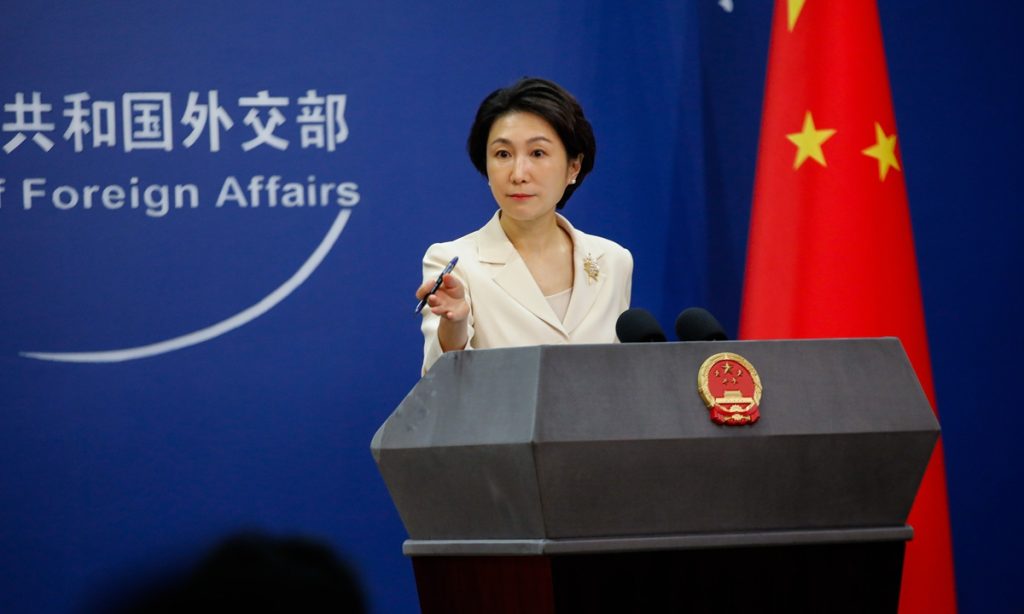
Ceasefire arrangements should help quell the war and restore peace and stability, Chinese Foreign Ministry spokesperson Mao Ning said in response to a question about a question about despite the temporary ceasefire announced by the US and Iran, Israel continues to carry out strikes in Lebanon.

China calls on all relevant parties to resolve disputes through political and diplomatic means, remain calm and exercise restraint, and work to ease tensions, Mao said, as the question noted that such actions, which violate the ceasefire agreement, have also introduced uncertainty into the peace talks between the US and Iran, and the Iranian side has stated that it will not participate in peace negotiations unless Lebanon is also included in the ceasefire arrangement.

US-Taiwan space cooperation bill draws online sarcasm on island; mainland expert calls it another move to extract money

Certain Taiwan media outlets on Thursday reported and touted a bill on space cooperation between the Taiwan region and the US that had passed the US Senate Commerce Committee.  

However, the proposal has drawn sarcasm from some netizens on the island. A Chinese mainland expert said that the US is unlikely to genuinely share advanced technologies in this field with the island of Taiwan, noting that the bill has become a political card for both DPP and some US politicians for political gains.

US Senators Eric Schmitt, Tammy Duckworth, and Michael Bennet claimed on Wednesday local time that the bipartisan "Taiwan and American Space Assistance Act (TASA)" passed out of the Commerce Committee and will now head to the Senate floor, according to a press release published on the official website of Senator Schmitt. 

It also claimed that the so-called TASA helps the US counter so-called threats from China and addresses current gaps in NASA's ability to cooperate with the Taiwan region's space efforts, including satellite programs, space exploration initiatives, and atmospheric and weather research.

Aside from the press release, as of press time, Global Times reporters did not find coverage of the issue in mainstream media in the US. 

Meanwhile, certain pro-DPP media outlets have run reports highlighting that the act "allows exchanges of personnel from the US National Aeronautics and Space Administration (NASA) to carry out cooperation in Taiwan."

For example, Taiwan local media outlet CNA, claimed in a report on Thursday that the bill would expand island's cooperation with NASA and the National Oceanic and Atmospheric Administration (NOAA), and provide channels for personnel from the two US agencies to voluntarily travel to Taiwan island's space agency "to further enhance" the island's space capability.

In the final paragraph, the report noted that the bill must still pass the full US Senate and House of Representatives and be signed by the president before it can take effect. The House version was approved by the House Committee on Science, Space and Technology in early February and will next proceed to a full House vote.

In February, some Taiwan regional media outlets had already hyped the bill. Some netizens on the island criticized it as another "daydream". 

For example, a netizen named "Feixue" commented, "So what? Are we going to pay for US astronaut again?" Another netizen, "@Julia-cd7ui", said that "DPP supporters are getting excited again, so does this mean Taiwan is going to hand out money in aid once more?" 

The DPP authorities have long sought to boost island's space industry and broad military sector, through so-called "cooperation" with the US. However, the US is unlikely to genuinely share advanced technologies in this field with the island of Taiwan, let alone hand over critical high-end technologies to the region. "Even if NASA personnel visit the island for exchanges in the future, their role could in practice resemble that of brokers for the US defense industry seeking to profit from the island," Zheng Jian, a professor at the Taiwan Research Institute of Xiamen University, told the Global Times on Thursday. 

While the US has reportedly delayed announcing a package of arms sales to Taiwan island, certain US politicians' recent push for a space cooperation bill may also serve as a gesture to appease the DPP authorities, said Zheng.

According to a report from The New York Times in February, the US administration has delayed announcing a package of arms sales to the island of Taiwan worth billions of dollars. The weapons sale, which includes air-defense missiles, was in an advanced stage. 

Moreover, given the island's limited scale and resources, building a space system capable of countering the mainland is highly unrealistic—a fact the DPP authorities are well aware of, said Zheng, noting that like many other Taiwan-related bills introduced in Washington, the space bill has become a political card for both sides: the DPP uses it for political maneuvering and extracting money on the island, while some US politicians use it to secure enormous profits for US defense contractors and political gains for themselves.

Global athletes discover palette of charms in home of giant pandas

In Chengdu, capital of southwest China's Sichuan Province and host city of the 12th World Games, Canadian powerboater Reanna Deveau danced alongside a giant panda mascot, her twin buns secured by fluffy panda hair clips.

Fresh from a visit to the city's renowned panda research base, she was brimming with excitement: "These creatures are just so adorable."

Her teammate, Mark Andrews, captured the lively moment via his camera phone. These two athletes are among 6,679 participants from 116 countries and regions at this year's Games -- the largest and most diverse field in its history.

The event in Chengdu marks the latest chapter in a series of world-class sporting spectacles hosted by Chinese cities, following the earlier success of the Beijing Winter Olympics, the Hangzhou Asian Games and the Chengdu FISU World University Games.

BLACK-AND-WHITE ICON

Chengdu's iconic giant pandas are a must-see attraction for international athletes.

"It was absolutely a highlight," said Fritz Heuscher from Switzerland, his eyes lighting up as he spoke about his visit to the Chengdu Research Base of Giant Panda Breeding.

"Giant pandas are one of China's best business cards," affirmed Li Desheng, chief expert at the Giant Panda Conservation Research Center. "Overseas, people know them well and dream of coming to Sichuan Province to see them."

For many competitors, like Portugal's Miguel Ribeiro, the fascination with pandas goes beyond simply observing them in enclosures. Ribeiro, notably, swapped no fewer than 15 panda-themed pins in a single day.

"This is a great way to connect," Ribeiro said. "Many Chinese people shared their own panda stories with me while exchanging pins."

"Hearing the stories about panda conservation has shown me a side of China that's even greener and cuter than it is in books," he added.

RED HOTPOT, GREEN CITY

Chengdu is a city of contrasts, where the fiery heat of hotpot meets the calming embrace of nature. The city's famed Hotpot Bus offers a vivid snapshot of its energetic spirit.

Athletes, eager to taste one of the country's most beloved dishes, gather on the red bus to enjoy hotpot. The spice levels range from blazing, mild to non-spicy, all tailored to individual tastes.

"Hotpot is a key to cultural exchange," explained Lai Xin, head of city cultural experiences for the Chengdu World Games.

Polish canoeist Mateusz Kaminski, who had never tried hotpot before, discovered the dish's depth. "I thought it was all about spice, but like Chengdu itself, it has layers of flavor."

Amid the city's fiery culinary passions lies a tranquil balance, reflected in Chengdu's expansive green spaces. Home to more than 1,500 parks -- the city boasts 40.5 percent forest coverage and 44.7 percent urban greenery.

Embracing this lush environment, Games organizers chose to host 15 outdoor venues within parks, open water areas and repurposed natural spaces, like meadows and the shores of lakes.

After spending time in the city, Andrews reflected on the connection between Chengdu's greenery and the warmth of its people.

"I think the more greenery you have around you, the happier you feel. Maybe that's why people here in Chengdu are always willing to help and wear a smile," he said.

HEARTS OF GOLD

The hospitality of Chengdu's residents was already evident to Andrews shortly after he arrived, while strolling through the historic cultural and business area downtown. A Chinese police officer greeted him with a smile.

"Welcome to Chengdu, and best of luck in the World Games," the officer said -- fluent English adding to the charm of the interaction.

For Heuscher, the city's welcoming spirit seemed to extend to everyone he encountered. He proudly wore a badge featuring his Chinese name, Fu Qiang, a gift from a staff member at the World Sports Village.

"It sounds like 'Fritz,' my first name," he said.

This personal touch is part of the services provided in the Village, which offer athletes opportunities to learn Chinese culture through interactive activities.

"So far, around 900 athletes have received their Chinese names," said An Xiaoning, head of the program.

"They truly have hearts of gold," said Heuscher.