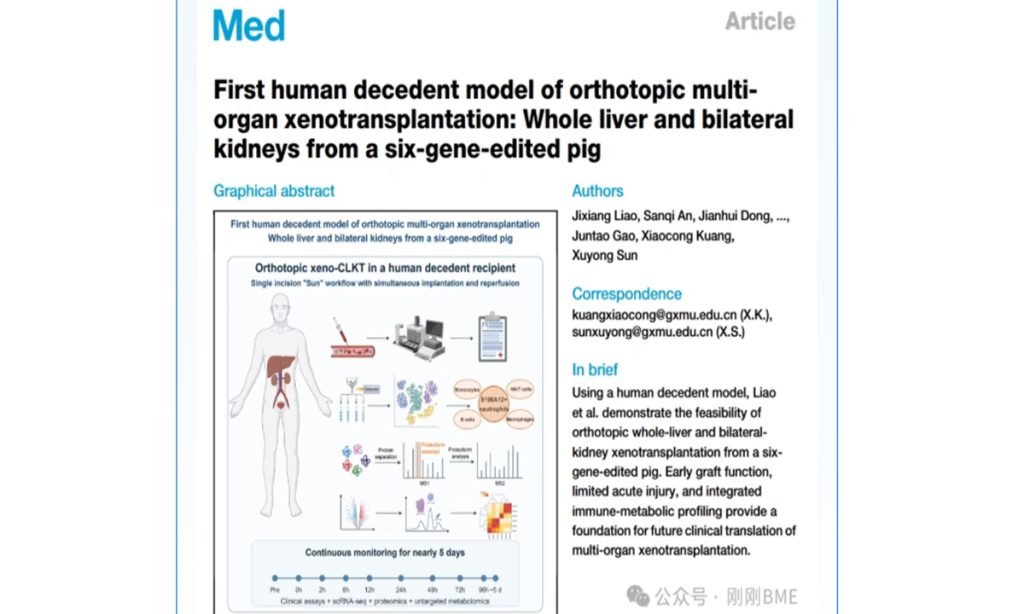
A Chinese medical team has reportedly performed the world's first combined xenotransplantation of a gene-edited pig liver and two pig kidneys into a human body, marking a huge milestone in the exploration of multi-organ xenotransplantation.
According to a post on the official WeChat account of the Second Affiliated Hospital of Guangxi Medical University on Monday, the procedure was carried out by a medical team led by Professor Sun Xuyong from the hospital and involved an orthotopic transplant, meaning the organs were placed in their normal anatomical positions. The recipient was a 53-year-old brain-dead man, and the surgery was performed with the consent of his family.
The team used gene-edited Bama miniature pigs from Guangxi as the source of the donor organs. The donor pigs underwent six precise genetic edits, including the removal of key genes that can trigger hyperacute rejection in humans and the insertion of human genes related to blood clotting and immune compatibility, the Xinhua News Agency reported on Wednesday.
During five days of systematic monitoring, the transplanted organs showed encouraging physiological signs, with generally normal blood supply as well as observed bile secretion and urine production, according to the post.
The research was published in Med, a Cell Press journal, on May 29, 2026, and was later featured by Nature, drawing wider attention from the global academic community, media reported.
Leonardo Riella, a physician-scientist at Harvard University and Massachusetts General Hospital who led the team behind the world's first living-recipient pig kidney transplant in 2024, said multi-organ xenotransplantation is more complex than single-organ transplantation, but the study showed that it is technically feasible.
Set to be held in the US, Canada and Mexico from June 11 to July 19, this year's World Cup tournament will see 48 teams contesting for the first time in the tournament's history. Although the Chinese men's national soccer team did not qualify for the World Cup, the country's presence will be palpable.
With less than a week before kickoff, this year's World Cup has yet to generate strong buzz in China, possibly due to time zone differences and other factors. But there is no such lag for Chinese companies, which are already engaging with the event at a higher and more advanced level.
China's footprint at this year's World Cup highlights a shift from low-cost manufacturing to stylish, original designs, alongside the contribution of Chinese referees and officiating technologies. This evolving role is driven by innovation and advanced technology. Guy-Laurent Epstein, UEFA events marketing director, told the People's Daily that Chinese companies are no longer mere commercial sponsors buying ad space, but are instead bringing cutting-edge technological innovations directly into UEFA's tournament systems.
Upgraded innovation
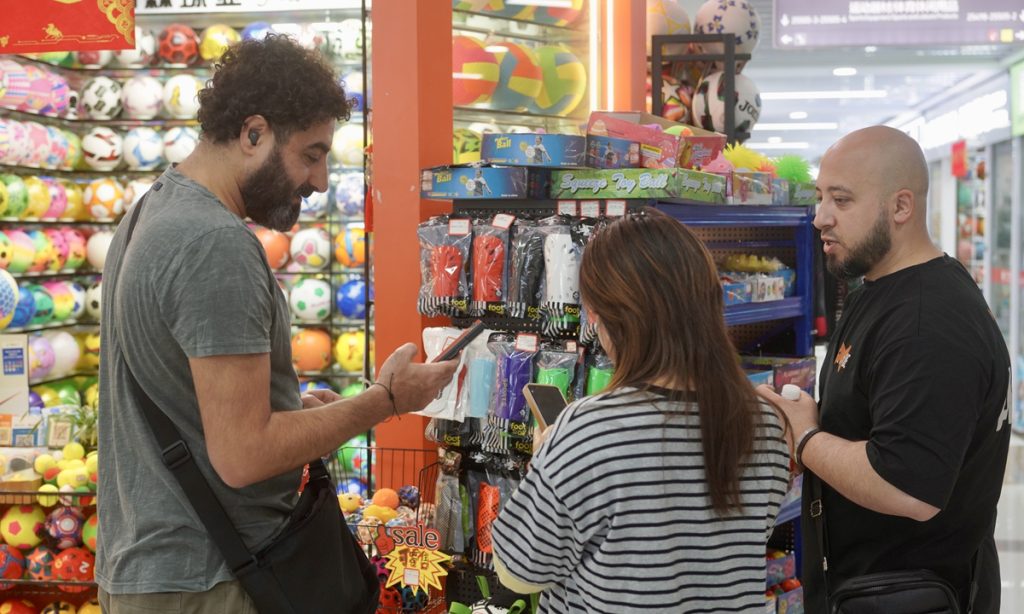
In Yiwu, the world's supermarket in East China's Zhejiang Province, brightly colored commemorative soccer balls stand out vividly. Chen Shaomei, manager of Minsa Sports in the Yiwu International Trade Market showed the Global Times their popular overseas bestseller - a commemorative soccer ball designed with the signature colors of the three host countries: the US, Canada, and Mexico.
"This is our self-designed, self-manufactured, and self-branded commemorative ball," Chen told the Global Times on Sunday.
This is the sixth World Cup that Chen has participated in as a merchant. Chen's company has been deeply engaged in the ball industry for many years, with 90 percent of its products exported overseas.
Chen said Chinese manufacturing, including that of Yiwu, has moved beyond competing primarily on price and now stands out through creative design and higher-quality advantages. "Our greatest strength lies in our unique designs," he noted.
Beijing-based sports and e-commerce retail company All Star Partner secured official World Cup licensing rights for multiple popular national teams. Jin Ye, chief operating officer of the company, told the Global Times on Sunday that truly vibrant and enduring products must integrate team culture, fans' emotions, and real-life usage scenarios.
"Fans cannot express their passion only inside the stadium - they showcase their identity while shopping, traveling, going to school, commuting, attending parties, and sharing on social platforms. Therefore, we are developing more lifestyle-oriented products such as casual T-shirts, hats, bags, plush pendants, cups, neck pillows, canvas shoes, and more, allowing national team IPs to truly become part of everyday life," Jin said.
In the past, when people thought of Chinese companies participating in international sports events, they mainly associated them with manufacturing and supply chain capabilities. However, soon Chinese enterprises will not only be capable of producing products, but also of participating in design, brand expression, and user engagement - thereby influencing the commercialization strategies of international IPs in the Chinese and broader Asian markets in return, Jin noted.
The export sports enterprise Kelme, leveraging its strong technological innovation advantages, will be the official jersey sponsor for the national teams of Jordan and Bosnia and Herzegovina, according to Fujian Daily.
"We use new functional sports fabrics that give the jerseys multiple advantages, including moisture absorption, quick drying, and excellent breathability. The entire jersey weighs less than 140 grams, making it lightweight, form-fitting, and skin-friendly. Professional players have praised it as 'breathing armor,'" said Yang Yuanchang, deputy director of the international marketing department of the company, Fujian Daily reported.
Hu Qimu, a professor at the Maritime Silk Road Institute of Huaqiao University, told the Global Times on Sunday that these creative products not only enrich the supply of the World Cup, but also serve as a vivid reflection of the country's industrial transformation and upgrading.
"From relying primarily on price competition in the past to now shifting toward creative design and independent branding, Chinese enterprises have enhanced their competitiveness through continuous innovation," Hu said.
High-tech support
Beyond this presence, some Chinese technology companies are building a solid "technological foundation" for the tournament.
As FIFA's Official Technology Partner, Lenovo is providing AI equipment, services, and solutions for this World Cup. According to a statement sent to the Global Times on Sunday, the company said that during the event, its 3D Digital Human Visualization Solution will be officially applied to the refereeing system and event broadcasting.
The system uses 3D modeling and next-generation generative AI technology to create 3D virtual avatars for the players of this tournament. Particularly in offside replay segments, they offer both on-site and online audiences more intuitive visual interpretations, while accurately replicating each player's body dimensions and features, greatly enhancing the credibility and transparency of refereeing decisions, said the company.
As the "media heart" of this World Cup, the 2026 FIFA World Cup International Broadcast Centre, located in Dallas, the US, has selected Hisense as its dedicated display equipment provider.
The company told the Global Times that Hisense's technology accurately reproduces every detail of the on-field action, which will assist Video Assistant Referees in making precise decisions and supporting high-quality event broadcasting.
Hu noted that the participation model of Chinese companies in major sporting events has evolved from an early focus on seeking exposure to applying their technologies in real overseas scenarios.
International media outlets including Reuters have also observed that Chinese companies are undergoing a major transformation in their role at top-tier international sporting events, evolving from peripheral merchandise suppliers into key providers of core technological infrastructure, the People's Daily reported.
Hu noted that Chinese enterprises are not only achieving brand promotion and business expansion through sports marketing, but are also leveraging their capabilities to provide high-quality products and drive improvements in event organization.
As Chinese companies participate more deeply in top-tier international events, the future international sports arena is likely to see more "Chinese technology" and "Chinese solutions," the expert added.
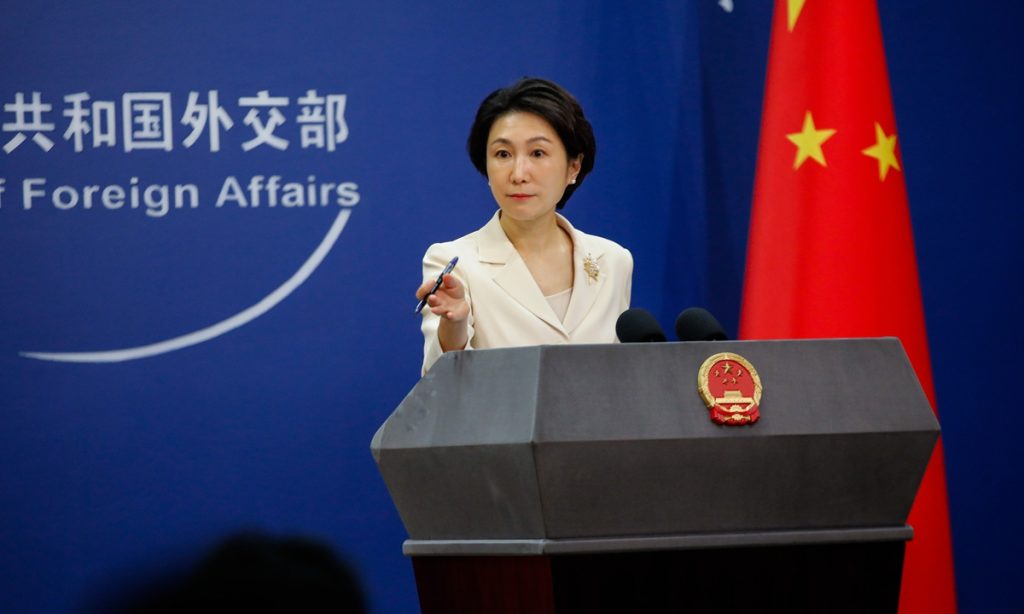
Chinese Foreign Ministry spokesperson Mao Ning said on Wednesday that China is deeply concerned about the current Middle East situation, stressing that a renewed outbreak of hostilities serves the interests of no party and urging all relevant parties to cherish the opportunity for peace, honor their ceasefire commitments, maintain the momentum of negotiations, and adhere to political and diplomatic means to resolve disputes.
Mao made the remarks when asked to comment on reports that the US Central Command said on social media on June 2 (US Eastern Time) that US forces had intercepted multiple ballistic missiles and drones launched by Iran and carried out what it described as a "self-defense" strike on Iran's Qeshm Island. Reports also said that Iran subsequently launched attacks on US military bases in the Middle East, while air-defense sirens sounded across several Gulf countries, further escalating tensions in the region.
In response, Mao also called for an early realization of a comprehensive and lasting ceasefire and for creating the necessary conditions to restore peace and stability in the Gulf region and the broader Middle East.
China's Shenzhou-22 crewed spaceship undocked from the space station combination at 2:44 p.m. (Beijing Time) on Friday, and will commence the return mission of sending the Shenzhou-21 astronauts Zhang Lu, Wu Fei and Zhang Hongzhang back to Earth, according to the China Manned Space Agency (CMSA).
The spaceship is scheduled to return to the Dongfeng landing site in north China's Inner Mongolia Autonomous Region later.
The CMSA said that prior to the separation, the Shenzhou-21 crew, with the assistance of the ground staff, completed various tasks such as setting the status of the space station combination, processing and transmitting the experimental data, and transferring remaining supplies. The Shenzhou-21 crew also carried out handover work and exchanged in-orbit work experience with the Shenzhou-23 crew who entered the space station on May 25.
China launched the Shenzhou-21 spaceship on Oct. 31, 2025 to send the Shenzhou-21 crew to its space station for rotation with Shenzhou-20 crew. However, the Shenzhou-20 crew later found that Shenzhou-20 spaceship's return capsule viewport window suffered a suspected impact from space debris during its mission and was unfit for crew return mission.
On Nov. 14, 2025, the Shenzhou-20 crew returned safely aboard the Shenzhou-21 spacecraft. On Nov. 25, 2025, China launched the Shenzhou-22 spaceship to provide a return vessel for the Shenzhou-21 crew.
Visiting Chinese Foreign Minister Wang Yi said on Friday that China looks forward to working with Canada to jointly advance the China-Canada new strategic partnership.
Wang made the remarks during talks with former Canadian Prime Minister Jean Chretien.
Wang, also a member of the Political Bureau of the Communist Party of China Central Committee, said that Chretien initiated the "golden decade" of China-Canada relations during his tenure as prime minister.
The improvement in China-Canada relations meets the aspirations of both peoples, Wang said, adding that China looks forward to working with Canada to jointly advance the China-Canada new strategic partnership.
Highlighting China's rapid development, Chretien said that the economies of Canada and China are highly complementary.
He expressed his willingness to make contributions to friendly exchanges between the two nations.
A total of 754 million domestic passenger trips were made in China in the first seven days of the 8-day National Day and Mid-Autumn Festival holidays, a year-on-year increase of 78.9%. Holiday tourism generated 668.1 billion yuan ($92.80 billion), up 132.6% year-on-year, official data showed on Friday.
The high-altitude pressurized liable building independently developed and built by China Construction Third Engineering Bureau Co. Ltd, China's first "zero-altitude astronomical observation station," held a handover ceremony in the Kizilsu Kirghiz Autonomous Prefecture, Northwest China's Xinjiang Uygur Autonomous Region, and was officially delivered for demonstration application, authorities confirmed recently.
"Zero-altitude building" refers to the use of pressurization and other technologies to adjust the indoor key human settlement environment indicators to the low altitude level in the plain area, so that the human body feels more comfortable. When used, the altitude inside the building can be set according to the needs of personnel and reduce the impact of altitude sickness.
The observatory is located near Muztagh Ata, the third highest peak of the West Kunlun Mountains in Akto county. It sits at an altitude of 4,526 meters, with a total construction area of approximately 150 square meters, capable of supporting scientific research, residential, and office functions.
The observation station is a scientific research pressurized building specially designed for plateau astronomical work in response to the needs of its cooperative organization, Beijing Normal University. It can increase the overall atmospheric pressure inside the building to one standard atmospheric pressure while solving the problems of low pressure and oxygen deficiency in the plateau.
The facility provides a comfortable and healthy environment for astronomers to work and live in high-altitude areas, lowering the risk of physiological damage caused by the plateau's extreme environment.
It is expected to support a new phase of rapid development in China's astronomical scientific research work, according to media reports.
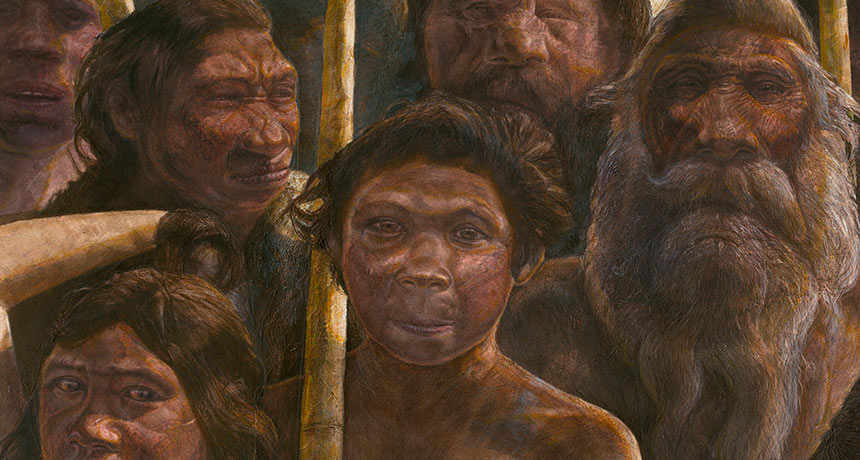
Neandertals hung out in what’s now northern Spain around 430,000 years ago, an analysis of ancient DNA suggests. That’s an earlier Neandertal presence in Europe, by at least 30,000 years, than many researchers had assumed.
Fragments of nuclear DNA from a tooth and partial leg bone discovered at Sima de los Huesos, a chamber deep inside a Spanish cave, resemble corresponding parts of a previously reassembled Neandertal genome, researchers say in a study published online March 14 in Nature. Not much nuclear DNA survives in such ancient fossils, say paleogeneticist Matthias Meyer of the Max Planck Institute for Evolutionary Anthropology in Leipzig, Germany, and his colleagues. Meyer’s group recovered DNA fragments covering a fraction of 1 percent of the newly recovered Neandertal tooth and leg genomes. Just enough DNA remained to enable comparisons with DNA of a Neandertal woman (SN: 1/25/14, p. 17) and a Denisovan woman (SN: 9/22/12, p. 5). Denisovans are considered close genetic cousins of Neandertals.
The early age for the new genetic finds challenges the idea that fossils from Sima de los Huesos, or pit of bones, come from a species called Homo heidelbergensis. Some researchers have suspected that by around 400,000 years ago, H. heidelbergensis gave rise to evolutionary precursors of both Neandertals and Homo sapiens. An ancient genetic puzzle has also emerged at Sima de los Huesos. On one hand, nuclear DNA — which passes from both parents to their children — pegs the Spanish hominids as Neandertals. But mitochondrial DNA — typically inherited only from the mother — already extracted from one Sima de los Huesos fossil (SN: 12/28/13, p. 8) and described for a second fossil in the new study has more in common with Denisovans.
Denisovans lived in East Asia at least 44,000 years ago, but their evolutionary history is unknown.
If early Neandertals lived in northern Spain roughly 430,000 years ago, “we have to go back further in time to reach the common ancestor of Neandertals and Denisovans,” Meyer says. The new genetic data from Sima de los Huesos now suggest that Denisovans split from Neandertals perhaps 450,000 years ago, says paleoanthropologist Chris Stringer of the Natural History Museum in London. Genetic and fossil evidence point to Neandertals and H. sapiens diverging from a common ancestor around 650,000 years ago, he proposes.
But it’s hard to say whether that common ancestor was H. heidelbergensis, Stringer adds. “Research must refocus on fossils from 400,000 to 800,000 years ago to determine which ones might lie on ancestral lineages of Neandertals, Denisovans and modern humans.”
Hominids throughout Eurasia during that time may have shared a mitochondrial DNA pattern observed in Sima de los Huesos Neandertals and Asian Denisovans, Meyer suggests. If that was the case, Neandertals acquired a new form of mitochondrial DNA by interbreeding with modern humans or their direct ancestors from Africa sometime between 430,000 and 100,000 years ago (SN: 3/19/16, p. 6).
Another possibility is that Neandertals traveled to Europe from Asia more than 430,000 years ago, carrying Denisovan mitochondrial DNA with them, says paleogeneticist Carles Lalueza-Fox of the Institute of Evolutionary Biology in Barcelona. Or hybrid descendants of early Neandertals and early Denisovans may have lived at Sima de los Huesos, carrying Denisovan mitochondrial DNA, he speculates.
“We really need more genetic data from Sima de los Huesos, and other sites of that age, to narrow down these scenarios,” Meyer says.
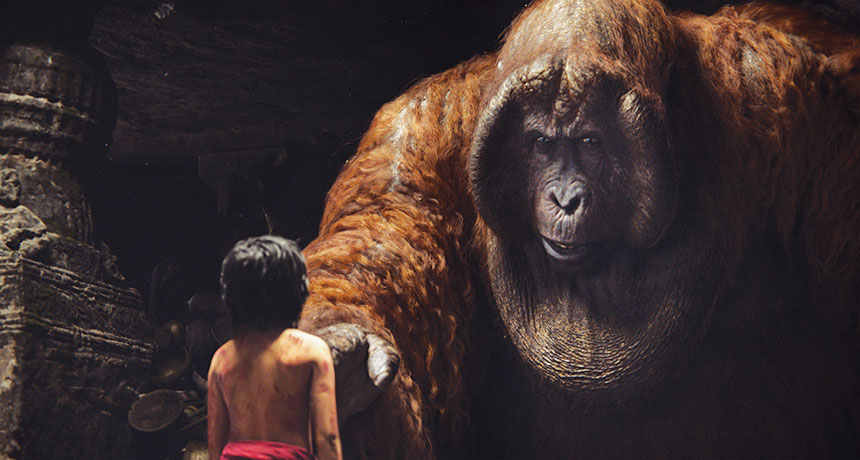
In the 1967 animated Disney film The Jungle Book, the feral boy Mowgli encounters a jazz-singing orangutan named King Louie, who implores Mowgli to teach him the secret of fire. King Louie presented a challenge for the producers of Disney’s live-action, CGI-enhanced remake of the film, opening April 15. “We had this notion that we would be as authentic as we could be to the region,” says producer Brigham Taylor. The problem: Orangutans are not native to India. In fact, King Louie himself is not native to Rudyard Kipling’s original stories. But instead of scrapping the character, the filmmakers got creative. While researching India’s wildlife, the film’s art department learned that a colossal ape named Gigantopithecus once roamed the region. Various species of Gigantopithecus lived in India, China and Southeast Asia from about 6.5 million years ago until as recently as a few hundred thousand years ago. The ape was truly gigantic — by some estimates, twice as big as a gorilla.
So King Louie morphed from orangutan to Gigantopithecus. The switch was a “fun justification,” Taylor says, to keep the character and play up his size while still staying true to India’s fauna. (Yes, the ape is extinct, but this is a movie about talking animals. And fossil evidence does suggest that the ape at least mingled with the human ancestor Homo erectus.)
Using the scientific information they could find on the Internet, visual effects artists imagined how the animal would look and move, Taylor says. The result: an ape that resembles an overgrown orangutan, Gigantopithecus’ closest living relative. The movie ape has shaggy hair, flaring cheeks and a saggy pouch that hangs from the throat like a double chin — and towers about 12 feet tall. It’s difficult to judge how accurate Disney’s rendering is. Despite possibly having been the largest primate ever to have lived, Gigantopithecus left behind few fossils. Scientists have just four lower jaws and over a thousand teeth, says biological anthropologist Russell Ciochon of the University of Iowa. That’s not much to go on, but Ciochon and colleagues made their own reconstruction a couple decades ago. The researchers took a jaw from China and made an outline of a skull that could fit such a jaw. Because most primate skulls scale to body size, Ciochon says, his group could estimate Gigantopithecus’ weight, 800 to 900 pounds, and height, about 9 feet from head to toe. (The species that lived in India was actually probably smaller.) Adding other details like hair to the animal is a matter of conjecture, Ciochon says.
But the teeth do offer some solid details about the ape’s lifestyle. Wear patterns and microscopic debris stuck to the teeth indicate Gigantopithecus dined on fruits, leaves, shoots, roots and perhaps even bamboo. Last year, researchers confirmed those details after analyzing the ratios of carbon isotopes in teeth found in Southeast Asia. The analysis also determined that Gigantopithecus was a strict forest dweller, even though it also lived near grasslands in some areas. In fact, the researchers contend, Gigantopithecus’ reliance on forests and its big size — and therefore big appetite — may have been the animal’s undoing. As Southeast Asia’s jungles gave way to expanding grasslands during the last glacial period, Gigantopithecus may have been unable to cope.
Perhaps if our ancestors had shared the secret of fire with Gigantopithecus, the giant ape would still be around today.
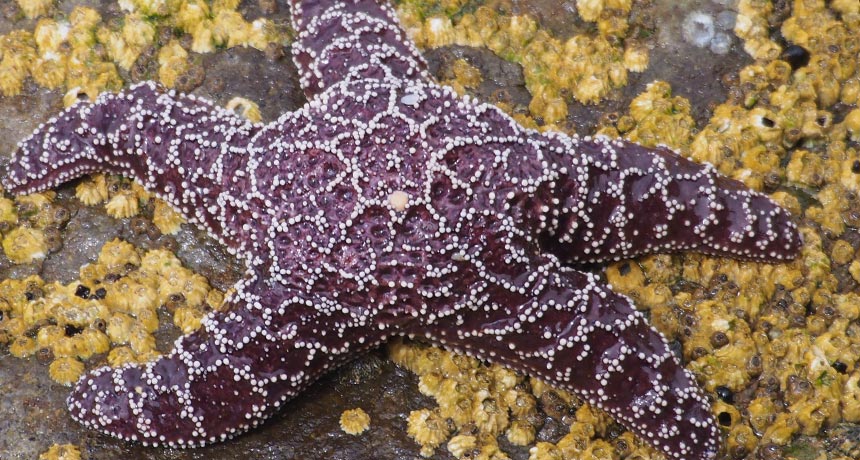
In the summer of 2013, an epidemic began sweeping through the intertidal zone off the west coast of North America. The victims were several species of sea star, including Pisaster ochraceus, a species that comes in orange and purple variants. (It’s also notable because it’s the starfish that provided ecology with the fundamental concept of a keystone species.) Affected individuals appeared to “melt,” losing grip with the rocks to which they were attached — and then losing their arms. This sea star wasting disease, as it is known, soon killed sea stars from Baja California to Alaska.
This wasn’t the first outbreak of sea star wasting disease. A 1978 outbreak in the Gulf of California, for instance, killed so many Heliaster kubinjiisun stars that the once ubiquitous species is now incredibly rare.
These past incidents, though, happened fast and within smaller regions, so scientists had struggled to figure out what had happened. With the latest outbreak happening over such a large — and well-studied — region and period of time, marine biologists have been able to gather more data on the disease than ever before. And they’re getting closer to figuring out just what happened in this latest incident.
One likely factor is the sea star-associated densovirus, which, in 2014, scientists reported finding in greater abundance in starfish with sea star wasting disease than in healthy sea stars. But the virus can’t be the only cause of the disease; it’s found in both healthy and sick sea stars, and it has been around since at least 1942, the earliest year it has been found in museum specimens. So there must be some other factor at play. Earlier this year, scientists studying the outbreak in Washington state reported in the Proceedings of the Royal Society B thatwarm waters may increase disease progression and rates of death. Studies of California starfish came to a similar conclusion. But a new study, appearing May 4 in PLOS One , finds that may not be true for sea stars in Oregon. Bruce Menge and colleagues at Oregon State University took advantage of their long-term study of Oregon starfish to evaluate what happened to sea stars during the recent epidemic and found that wasting disease increased with cooler , not warmer, temperatures. “Given conflicting results on the role of temperature as a trigger of [sea star wasting disease], it seems most likely that multiple factors interacted in complex ways to cause the outbreak,” they conclude. What those factors are, though, is still a mystery.
Also unclear is what long-term effects this outbreak will have on Pacific intertidal communities.
In the 1960s, Robert Paine of the University of Washington performed what is now considered a classic experiment. For years, he removed starfish from one area of rock in Makah Bay at the northwestern tip of Washington and left another bit of rock alone as a control. Without the starfish to prey on them, mussels were able to take over. The sea stars, Paine concluded, were a “keystone species” that kept the local food web in control.
If sea star wasting disease has similar effects on the Pacific intertidal food web, Menge and his colleagues write, “it would result in losses or large reductions of many species of macrophytes, anemones, limpets, chitons, sea urchins and other organisms from the low intertidal zone.”
What happens, the group says, may depend on how quickly the disease disappears from the region and how many young sea stars can grow up and start munching on mussels.