Translators' Voices: China's green transition shows ability to combine long-term vision with practical implementation

Editor's Note:

The year 2026 marks the start of the 15th Five-Year Plan period (2026-30). The outline of the 15th Five-Year Plan dedicates a chapter to "accelerating the green transition across the board and building a Beautiful China."

From the guiding philosophy that "lucid waters and lush mountains are invaluable assets," to the strategic guidance of China's "dual carbon" goals, and further to the systematic arrangements for comprehensive green transition, China has, under the guidance of Xi Jinping Thought on Ecological Civilization, accelerated its green and low-carbon transition and continued to improve the quality of its ecological environment.

The book series Xi Jinping: The Governance of China includes a number of President Xi's important ideas on ecological conservation. These ideas profoundly reflect the inheritance, enrichment and development of the theoretical framework for ecological civilization construction, as well as the continuity, elevation and focus of its goals and tasks.

Volume V of the book series includes "The Beautiful China Initiative" as a dedicated topic, systematically expounding the thinking and arrangements for building a Beautiful China.

In the 25th installment of the special series "Decoding the Book Xi Jinping: The Governance of China," the Global Times, along with the People's Daily Overseas Edition, continues to invite Chinese and foreign scholars, translators of Xi's works, practitioners with firsthand experience, and international readers to focus on the theme of "accelerating the green transition across the board and building a Beautiful China." Together, they explore the vivid practices through which China, under the guidance of Xi Jinping Thought on Ecological Civilization, applies the concept of green development throughout the process of economic and social development, and discuss its major practical significance and contemporary value.

In the 25th article of the "Translators' Voices" column, the Global Times (GT) reporters Wang Wenwen and Liu Xuandi interviewed José Medeiros da Silva (Medeiros da Silva), a Brazilian professor at Zhejiang International Studies University. Medeiros da Silva was a member of the translation team of the Portuguese edition of Xi Jinping: The Governance of China.

GT: In the book series Xi Jinping: The Governance of China, President Xi put forward important thoughts on ecological civilization, among which the "two mountains" concept that "lucid waters and lush mountains are invaluable assets" has become a guiding principle for China's ecological civilization development. How do you understand the profound meaning of this concept? What kind of path to modernization has China taken under its guidance?

Medeiros da Silva: The "two mountains" concept is one of the most representative expressions of Xi Jinping Thought on Ecological Civilization. At its core lies the recognition that economic prosperity, quality of life, and lasting social development ultimately depend on preserving the natural conditions that sustain life. More than an environmental policy, it represents a shift in perspective: Ecological protection is no longer viewed as a constraint on growth but as an essential condition for achieving higher-quality development.

This understanding has become one of the foundations of China's efforts to build an ecological civilization. On this basis, the country has been pursuing a path of modernization that seeks to move beyond the traditional divide between economic development and environmental protection, integrating high-quality growth, rural revitalization, green transition, technological innovation, and common prosperity. The goal is not simply to expand material wealth but to build a more balanced, sustainable, and harmonious society. In this sense, China's modernization seeks to demonstrate that economic development, social well-being, and ecological protection can advance together in ways that are mutually reinforcing.

I was able to observe this integration firsthand during a visit to Anji County in East China's Zhejiang Province. As I walked through its landscapes, I was reminded of traditional Chinese shanshui paintings, where mountains, rivers, and human beings exist in a state of harmony. In Anji, this aesthetic sensibility takes on a contemporary and tangible form. Common prosperity is not merely an ideal. It is visible in the villages' architecture, in the quality of life enjoyed by local residents, and in the way the local economy has been reorganized around natural resources. The experience allowed me to see how cultural heritage, ecological stewardship, and modernization can coexist and strengthen one another. It also showed that such achievements require not only goodwill, but also strategic vision, political commitment, and sustained investment over time.

For this reason, I believe that the "two mountains" concept transcends the Chinese context. At a time marked by climate change, accelerating biodiversity loss, and the challenges of sustainable development, it offers a valuable point of reference for countries seeking to reconcile economic growth with environmental protection - not as opposing goals, but as complementary dimensions of the same development project. Its most enduring contribution may be its demonstration that building a sustainable future requires not only technological progress, but also a deeper transformation in the way we understand the relationship between humanity and nature. Ultimately, it calls for reflection on the broader path of human civilization in the 21st century.

GT: In Volume V of Xi Jinping: The Governance of China, President Xi stated that "green growth should be a defining feature of high-quality development, and new quality productive forces are intrinsically green." How do you understand the dialectical relationship between high-quality development and high-standard environmental protection reflected in this statement? What implications does it offer for other countries pursuing modernization and green transformation?

Medeiros da Silva: President Xi's statement suggests that environmental concerns are no longer a peripheral issue, but have become an integral part of the very logic of innovation, productivity, and value creation.

The dialectical relationship embedded in this statement operates on two complementary levels. First, it affirms that quality and sustainability are inseparable. A development model that degrades ecosystems, depletes natural resources, or transfers environmental costs to future generations can hardly be considered truly high-quality development. Second, it points to a transformation in the very foundations of production. New quality productive forces are driven by scientific innovation, artificial intelligence, digitalization, clean energy, and low-carbon technologies. These forces not only reduce environmental impacts, but also transform sustainability into a source of innovation, responsibility, advanced productive capacity, and long-term prosperity.

This helps explain why China treats green development as a core component of its modernization strategy. Investments in renewable energy, the circular economy, smart infrastructure, and advanced technologies are not viewed as concessions to environmentalism, but as key drivers of a more resilient, innovative, and future-oriented economy. In this sense, the green transition is not merely an environmental agenda. It is also a strategy for industrial upgrading, strengthening productive capabilities, and creating new sectors with higher added value.

For other countries, China's experience offers a valuable point of reference - not as a model to be mechanically replicated, but as an invitation to develop their own approaches, capable of combining innovation, ecological responsibility, and shared prosperity. In an increasingly interconnected world, this perspective broadens the possibilities for cooperation and mutual learning in addressing the common challenges facing humanity.

GT: 2026 marks the start of China's 15th Five-Year Plan period (2026-30). The outline of the plan lists "major new strides in advancing the Beautiful China initiative" as one of the major objectives for economic and social development during this period. How do you view China's integration of ecological civilization and green development goals into its long-term national development planning? How would you assess the importance of such policy continuity and implementation in achieving coordinated progress between economic growth and environmental protection?

Medeiros da Silva: The integration of ecological civilization and green development goals into the 15th Five-Year Plan shows how mature these issues have become within China's modernization process. They have become structural components of the country's broader development strategy. I find it particularly significant that the construction of a Beautiful China has been placed among the central objectives of economic and social planning for the period from 2026 to 2030.

What impresses me most is China's ability to combine long-term vision with practical implementation. The country has demonstrated a remarkable capacity to translate broad strategic objectives into public policies, investments, institutional mechanisms, and progressively achievable goals. Five-year plans play a crucial role in this process because they translate long-term national aspirations into concrete priorities, policy frameworks, and measurable objectives.

From this perspective, the incorporation of the green transition and the Beautiful China Initiative into the 15th Five-Year Plan illustrates the interconnected nature of several key concepts shaping contemporary China, including ecological civilization, green development, common prosperity, and new quality productive forces. Rather than isolated ideas, these concepts form an integrated framework that seeks to guide the construction of a more innovative, balanced, and sustainable society.

Perhaps one of the most important contributions of China's experience is the demonstration that building an ecologically sustainable society depends not only on setting ambitious goals, but also on maintaining strategic direction and continuity of purpose over time. When it comes to the relationship between development and nature, decades matter more than political cycles.

GT: In Volume V, President Xi pointed out that "a sound ecosystem is essential for civilization to prosper. We must work together to promote harmonious coexistence between humanity and nature, build a community of all life on Earth, and create a clean and beautiful world for us all." In your view, what significance does Xi Jinping Thought on Ecological Civilization hold for addressing current global sustainable development challenges and advancing global ecological civilization?

Medeiros da Silva: As Xi often emphasizes, there is only one Earth in the universe. The idea of building a community with a shared future for humanity - a vision that emphasizes the interconnected destinies and responsibilities of all peoples - invites us to recognize an increasingly evident reality: The major ecological challenges of our time transcend national borders and affect all of humanity, albeit in different ways.

Climate change, biodiversity loss, land degradation, water scarcity, and ocean pollution are not challenges that any single country or civilization can solve alone. They require new forms of cooperation, dialogue, and shared responsibility. In this context, the value of a national experience lies not only in its domestic achievements. It also lies in its capacity to contribute to a broader reservoir of ideas, reflections, and practical solutions available to humanity as a whole.

I see the aspiration to build a clean and beautiful world not merely as an environmental goal, but as a civilizational horizon. Its deeper significance lies in its potential to foster collaboration, mutual learning, and more harmonious coexistence among nations. In an increasingly interconnected world, a community of life on Earth should not be understood as the project of any single nation, but as a shared undertaking of humanity as a whole.

China launches first operational 24-hour typhoon rapid intensification forecast model

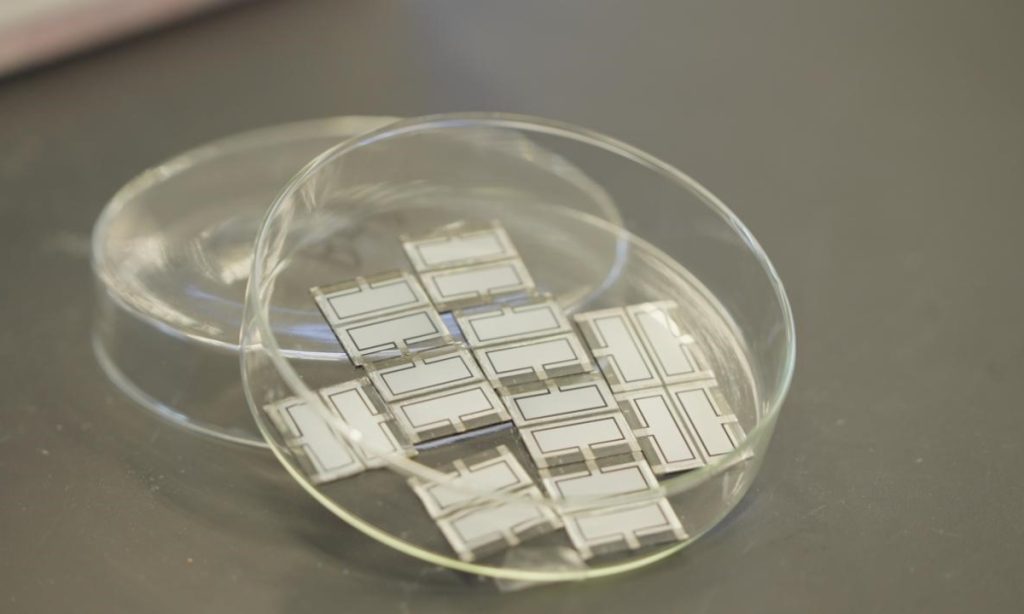
Chinese scientists have developed a machine learning-based typhoon rapid intensification forecasting model which has been deployed and tested in operational use at the National Meteorological Center and the Hong Kong Observatory, marking a significant breakthrough for China in the field of forecasting sudden changes in tropical cyclone rapid intensity which has long remained a major challenge worldwide, the Global Times learned from the developer of the model on Wednesday. 

Meteorologists define typhoon rapid intensification as a process in which a typhoon's intensity increases by more than 15 meters per second within 24 hours, or by more than 10 meters per second within 12 hours. Such changes are highly destructive. 

Super typhoons including Rammasun in 2014 and Yagi in 2024 all rapidly intensified before making landfall, resulting in heavy casualties and significant economic losses, China Science Daily reported. 

The machine learning-based typhoon rapid intensification forecasting model developed by the research team led by Li Qinglan, a researcher at Shenzhen Institutes of Advanced Technology, Chinese Academy of Sciences, is the first in China to be put into operational use for 24-hour typhoon rapid intensification forecasting, with a 12-hour forecasting model also launched, marking the integration of independently developed domestic AI typhoon rapid intensification forecasting technology into the national meteorological system.

According to Li, typhoon rapid intensification is hard to anticipate, making timely preparedness and response difficult. 

Typhoon intensity evolution is governed by inner-core structure and the underlying sea-land surface conditions, making intensity forecast even more challenging. 

Traditional numerical models cannot accurately represent the evolution of typhoon intensity due to resolution and parameterization limits. As a result, typhoon intensity forecast, particularly rapid intensification, remains a long-standing challenge, Li told the Global Times. 

Li noted that typhoons often develop a symmetric ring-shaped inner core before rapid intensification. A more uniform and symmetrical typhoon inner-core structure signals a higher chance of rapid intensification.

In recent years, artificial intelligence and machine learning, which excel at processing large datasets and uncovering complex nonlinear relationships, have emerged as key technologies for improving tropical cyclone forecasting, Shenzhen Evening News reported. 

The team combined four machine learning algorithms including Decision Trees, Random Forests, AdaBoost, and LightGBM into an ensemble system that forecasts rapid intensification to improve prediction accuracy, according to Li. 

The model was tested against all North Atlantic 24-hour tropical cyclone rapid intensification cases from 2016 to 2020 and it has achieved higher detection rates and lower false alarms, showing strong operational performance compared with the US National Hurricane Center's best system, Li said.

China Meteorological Administration released on April 1 its climate trend forecast for the main flood season from June to August this year. The administration expects 24 to 26 typhoons will form over the Northwest Pacific and the South China Sea in 2026, with 7 to 9 making landfall in China - higher than the long-term average. Typhoon tracks are expected to be mainly westward and northwestward, primarily affecting the coastal regions of East China and South China, with overall stronger-than-normal intensity, CCTV News reported on April 1. 

Any activities China conducts around Huangyan Dao, including scientific research, constitute legitimate rights of a sovereign state: Chinese FM

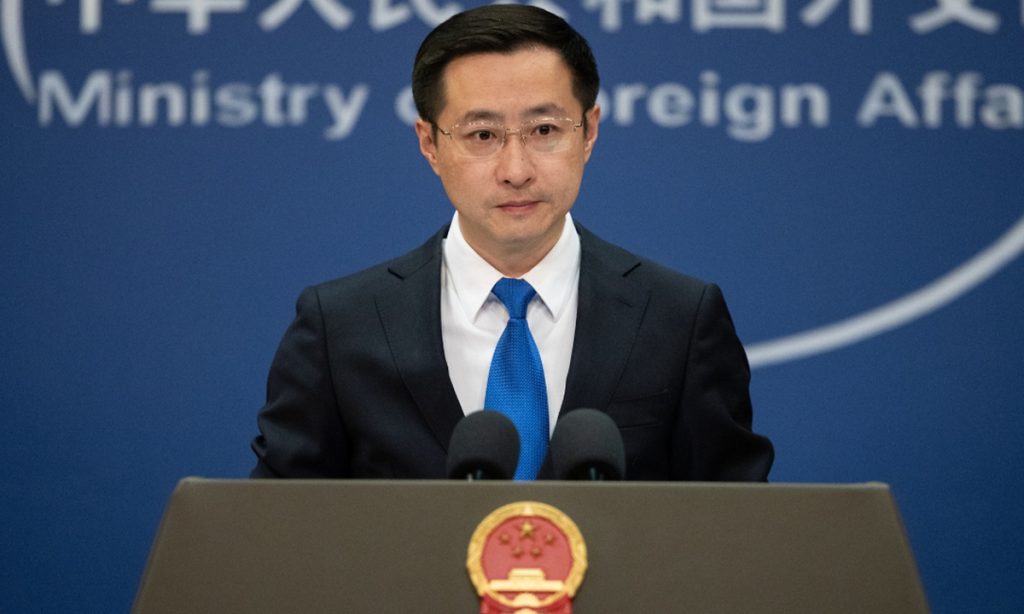
When asked to comment on reports claiming that China had removed the structure previously installed on Huangyan Dao under pressure from the US and the Philippines, Chinese Foreign Ministry spokesperson Lin Jian said during a Wednesday press conference that Huangyan Dao is an inherent territory of China, and China holds indisputable sovereignty over Huangyan Island and its adjacent waters.

Since late May, the South China Sea Institute of Oceanology of the Chinese Academy of Sciences has carried out a comprehensive survey covering the entire Huangyan Dao atoll. This scientific expedition has helped deepen understanding and forecasting of Huangyan Dao's ecosystem and supports ecological civilization development in the South China Sea, and the mission has been successfully completed. Detailed information about the expedition is available on the official website of the research institute, Lin said. 

"I wish to stress that any activities China conducts around Huangyan Dao, including scientific research, constitute legitimate rights of a sovereign state, and no other country has the right to interfere," Lin said, adding that China urges relevant countries to immediately stop fabricating slander and false accusations against China, and cease provocative acts at sea.

‘Innovative, inspiring and enlightening,’ Bangladeshi students take close look at China’s social and economic devt, seeking experience for Bangladesh

In recent days, a delegation of youth, women, and student representatives from the Bangladesh Nationalist Party (BNP) visited Southwest China's Chongqing and Shanghai, taking a close look at various aspects of China's economic and social development. "Innovative, inspiring, and enlightening," Md. Abidul Islam Khan, a student leader of the BNP's student wing, told the Global Times on Thursday when describing the ongoing trip. 

The aspect that surprised me most was the practical use of advanced technology and automation. At the Chongqing Robot AI Application Demonstration Center, I saw robots and AI systems being used in real industrial and service applications, not just as future ideas, the Bangladeshi student leader said.  

"I was also impressed by the management style in the companies we visited, especially the focus on efficiency, teamwork, and continuous innovation. At Shanghai Xincheng Information Technology Co., Ltd., it was clear that technology development is closely connected with education and industry needs," Abidul Islam Khan said. 

The Bangladeshi student representative also noted that there was a moment during these visits when he thought about Bangladesh's young population and growing economy. "We have enormous potential, but we need stronger investment in technical education, digital skills, and innovation. Seeing how China connects technology, training, and industry made me feel that this is exactly the kind of experience Bangladesh can learn from."

This is the second delegation of Bangladeshi youth to gain a glimpse of their country's technological future during a visit to China. In April, the Global Times reporter accompanied a high-level Bangladeshi delegation on a visit to Beijing's E-Town area, which is now home to more than 300 robotics companies and a complete industrial chain.

Before departing for China, the Chinese Embassy in Bangladesh held a pre-departure exchange meeting where the Chinese Ambassador to Bangladesh Yao Wen said China attaches great importance to the visit and has carefully arranged a diverse program of tours, exchanges, and discussions, according to a readout released by the embassy. 

Yao also expressed hope that the delegation would make full use of the opportunity to observe, learn, and reflect, and to combine China's development experience with Bangladesh's national conditions, thereby contributing wisdom and strength to Bangladesh's economic and social development, the readout said. 

"Before coming to China, I already knew that China had achieved remarkable economic growth and urban development. But seeing Chongqing with my own eyes gave me a much deeper understanding of how that development works in practice," Abidul Islam Khan said. 

The Bangladeshi student representative continued that what impressed him most was the combination of modern infrastructure, digital technology, and efficient public services. "At the Chongqing City Exhibition Hall, we saw how long-term planning shaped the city's growth. The cleanliness of public spaces, the smooth public transportation system, and the way technology is used in everyday services all stood out to me," he said. 

Another aspect that left a strong impression was the sense of organization and discipline in daily urban life, which showed how planning and public participation can make a very large city function efficiently, the student added. 

During a meeting between Chinese Foreign Minister Wang Yi and Bangladeshi Foreign Minister Khalilur Rahman in Beijing on May 6, Wang said China is ready to promote the alignment of the high-quality Belt and Road cooperation with Bangladesh's national development strategies, deepen cooperation in traditional areas like economy, trade, investment, infrastructure, water conservancy and people-to-people exchanges, expand cooperation in emerging industries such as green development and digital economy, and support Chinese enterprises to invest in Bangladesh, according to the Xinhua News Agency. 

"While Bangladesh and China already enjoy strong economic and business relations, I believe the next stage of the relationship should focus more on people-to-people connections," Abidul Islam Khan said. 

For many Bangladeshis, China is viewed as an enigma - a country respected for its remarkable achievements but not always fully understood. Visits like this help bridge that gap by allowing young people to experience China directly, interact with its people, and better understand its society and development journey, he said. 

Bangladesh has a large, energetic, and ambitious youth population. By working together in education, innovation, and cultural exchange, Bangladesh and China can create new opportunities for the next generation and strengthen the foundation of our bilateral relationship for years to come, Abidul Islam Khan said. 

China, Russia eye deepening cooperation in tourism sector

The Moscow City Tourism Committee hosted more than 100 representatives of China's travel industry, city authorities, and business partners, to showcase the Russian capital's tourism potential, including its summer campaigns, and presented Moscow's updated promotional strategy for the Chinese market in Beijing on the sidelines of the 2026 Beijing Fragrant Hills Tourism Summit of the World Tourism Cities Federation on Tuesday.

The promotion session was aimed at helping tourism industry professionals and Chinese tourists understand Moscow's rich and unique tourism resources, further stimulating the potential for cooperation between Moscow and Beijing. Moscow tourism authorities affirmed that China remains one of Moscow's most important international tourism partners.
During the session, Xu Zhentao, deputy director of the Beijing Bureau of Culture and Tourism, said in his opening remarks that Beijing and Moscow are traditional sister cities with a long history of fruitful exchanges in the fields of culture and tourism.

Xu said Russia remains the largest source of inbound tourists for Beijing. In 2025, Beijing received 504,900 tourists from Russia, and from January to April, the city received 303,700 tourists, representing a year-on-year increase of 138.5 percent, according to official data.

"The 30-day visa-free policy between China and Russia continues to generate benefits. More and more Russians are choosing to visit Beijing. Meanwhile, Moscow, with its rich history, culture and unique urban charm, is attracting an increasing number of Chinese tourists," he elaborated.

In recent years, under the China-Russia comprehensive strategic coordination, tourism cooperation between Beijing and Moscow has continued to deepen and become more practical, Xu added, saying that the two cities have held festivals and celebrations, sent art troupes to each other, while strengthening cultural ties and deepening friendship.

He also shared that in the second half of the year, Beijing will also send a delegation to Russia to participate in the 3rd edition of the Theater Boulevard International Open Festival, featuring online performances, cultural and tourism exhibitions, and business matchmaking, aiming to further promote tourism cooperation between the two cities.

In 2024, mayors of Beijing and Moscow inked a program of cooperation between the two cities for the 2024-2026 period, charting the future course for their sister-city relationship.

In February 2026, the Moscow City Tourism Committee and the Beijing Municipal Bureau of Culture and Tourism signed a Memorandum of Understanding on cooperation in the tourism sector. Both cities vowed to step up efforts to strengthen collaboration in key areas such as tourism promotion, industry exchange, route development, and talent cultivation, to improve the regular cooperation mechanism, and upgrade the quality of tourism cooperation.
Evgeny Kozlov, Chairman of the Moscow City Tourism Committee, told the Global Times that in the first quarter of 2026, Moscow welcomed 130,000 visitors from China - a 30 percent increase compared to the same period in 2025.

At the same time, the chairman observed that the profile of Chinese travelers also undergoes changes, with a growing number of independent travelers aged 18-35 seeking authentic urban experiences beyond standardized excursions.

Kozlov said that to meet the demand, Moscow has prepared hundreds of tour guides who speak Chinese and many restaurants have provided menus in Chinese. The committee has been updating the contents with recommendations on where to go, must-see places in its social media accounts in Chinese, offering convenience for Chinese tourists in all aspects.

He also shared that by autumn, Moscow and Beijing are planning joint exhibitions among museums.

Moscow is working on feasibility research to expand cultural events in other cities in China as well, Kozlov said.
Andrey Povalyaev, minister-counsellor of the Russian Embassy in China, said in his remarks that direct flights between major cities make travel to Moscow truly convenient.

June is a special time in Moscow. The city is truly transformed: summer evenings paint the sky in soft golden hues, music echoes along the embankments, and Moscow's famous boulevards are immersed in verdant vegetation. This is the season of festivals, exhibitions, and open-air concerts, Minister-Counsellor Povalyaev said.

In summer, Moscow lives with the utmost openness, generosity, and a special passion and scope. Today, Moscow is offering rich cultural programs, superb cuisine, cutting-edge urban infrastructure, and one of the world's best public transportation systems, said Povalyaev.

He added that the capital continues to change - new museums and galleries are emerging, urban spaces and parks are being developed, and historic districts are being renovated.

"I am confident that today's meeting will give new impetus to tourism ties between our countries and capitals. Moscow is always open to Chinese guests and is ready to show itself in all its glory with genuine hospitality," Povalyaev concluded.

Chinese team achieves world's first combined pig liver and kidney transplant in human

A Chinese medical team has reportedly performed the world's first combined xenotransplantation of a gene-edited pig liver and two pig kidneys into a human body, marking a huge milestone in the exploration of multi-organ xenotransplantation.

According to a post on the official WeChat account of the Second Affiliated Hospital of Guangxi Medical University on Monday, the procedure was carried out by a medical team led by Professor Sun Xuyong from the hospital and involved an orthotopic transplant, meaning the organs were placed in their normal anatomical positions. The recipient was a 53-year-old brain-dead man, and the surgery was performed with the consent of his family.

The team used gene-edited Bama miniature pigs from Guangxi as the source of the donor organs. The donor pigs underwent six precise genetic edits, including the removal of key genes that can trigger hyperacute rejection in humans and the insertion of human genes related to blood clotting and immune compatibility, the Xinhua News Agency reported on Wednesday. 

During five days of systematic monitoring, the transplanted organs showed encouraging physiological signs, with generally normal blood supply as well as observed bile secretion and urine production, according to the post. 

The research was published in Med, a Cell Press journal, on May 29, 2026, and was later featured by Nature, drawing wider attention from the global academic community, media reported. 

Leonardo Riella, a physician-scientist at Harvard University and Massachusetts General Hospital who led the team behind the world's first living-recipient pig kidney transplant in 2024, said multi-organ xenotransplantation is more complex than single-organ transplantation, but the study showed that it is technically feasible. 

Chinese companies play major role in 2026 World Cup with innovation

Set to be held in the US, Canada and Mexico from June 11 to July 19, this year's World Cup tournament will see 48 teams contesting for the first time in the tournament's history. Although the Chinese men's national soccer team did not qualify for the World Cup, the country's presence will be palpable.

With less than a week before kickoff, this year's World Cup has yet to generate strong buzz in China, possibly due to time zone differences and other factors. But there is no such lag for Chinese companies, which are already engaging with the event at a higher and more advanced level.

China's footprint at this year's World Cup highlights a shift from low-cost manufacturing to stylish, original designs, alongside the contribution of Chinese referees and officiating technologies. This evolving role is driven by innovation and advanced technology. Guy-Laurent Epstein, UEFA events marketing director, told the People's Daily that Chinese companies are no longer mere commercial sponsors buying ad space, but are instead bringing cutting-edge technological innovations directly into UEFA's tournament systems.

Upgraded innovation

In Yiwu, the world's supermarket in East China's Zhejiang Province, brightly colored commemorative soccer balls stand out vividly. Chen Shaomei, manager of Minsa Sports in the Yiwu International Trade Market showed the Global Times their popular overseas bestseller - a commemorative soccer ball designed with the signature colors of the three host countries: the US, Canada, and Mexico.

"This is our self-designed, self-manufactured, and self-branded commemorative ball," Chen told the Global Times on Sunday.

This is the sixth World Cup that Chen has participated in as a merchant. Chen's company has been deeply engaged in the ball industry for many years, with 90 percent of its products exported overseas.

Chen said Chinese manufacturing, including that of Yiwu, has moved beyond competing primarily on price and now stands out through creative design and higher-quality advantages. "Our greatest strength lies in our unique designs," he noted.

Beijing-based sports and e-commerce retail company All Star Partner secured official World Cup licensing rights for multiple popular national teams. Jin Ye, chief operating officer of the company, told the Global Times on Sunday that truly vibrant and enduring products must integrate team culture, fans' emotions, and real-life usage scenarios.

"Fans cannot express their passion only inside the stadium - they showcase their identity while shopping, traveling, going to school, commuting, attending parties, and sharing on social platforms. Therefore, we are developing more lifestyle-oriented products such as casual T-shirts, hats, bags, plush pendants, cups, neck pillows, canvas shoes, and more, allowing national team IPs to truly become part of everyday life," Jin said.

In the past, when people thought of Chinese companies participating in international sports events, they mainly associated them with manufacturing and supply chain capabilities. However, soon Chinese enterprises will not only be capable of producing products, but also of participating in design, brand expression, and user engagement - thereby influencing the commercialization strategies of international IPs in the Chinese and broader Asian markets in return, Jin noted.

The export sports enterprise Kelme, leveraging its strong technological innovation advantages, will be the official jersey sponsor for the national teams of Jordan and Bosnia and Herzegovina, according to Fujian Daily.

"We use new functional sports fabrics that give the jerseys multiple advantages, including moisture absorption, quick drying, and excellent breathability. The entire jersey weighs less than 140 grams, making it lightweight, form-fitting, and skin-friendly. Professional players have praised it as 'breathing armor,'" said Yang Yuanchang, deputy director of the international marketing department of the company, Fujian Daily reported.

Hu Qimu, a professor at the Maritime Silk Road Institute of Huaqiao University, told the Global Times on Sunday that these creative products not only enrich the supply of the World Cup, but also serve as a vivid reflection of the country's industrial transformation and upgrading.

"From relying primarily on price competition in the past to now shifting toward creative design and independent branding, Chinese enterprises have enhanced their competitiveness through continuous innovation," Hu said.

High-tech support

Beyond this presence, some Chinese technology companies are building a solid "technological foundation" for the tournament.

As FIFA's Official Technology Partner, Lenovo is providing AI equipment, services, and solutions for this World Cup. According to a statement sent to the Global Times on Sunday, the company said that during the event, its 3D Digital Human Visualization Solution will be officially applied to the refereeing system and event broadcasting.

The system uses 3D modeling and next-generation generative AI technology to create 3D virtual avatars for the players of this tournament. Particularly in offside replay segments, they offer both on-site and online audiences more intuitive visual interpretations, while accurately replicating each player's body dimensions and features, greatly enhancing the credibility and transparency of refereeing decisions, said the company.

As the "media heart" of this World Cup, the 2026 FIFA World Cup International Broadcast Centre, located in Dallas, the US, has selected Hisense as its dedicated display equipment provider.

The company told the Global Times that Hisense's technology accurately reproduces every detail of the on-field action, which will assist Video Assistant Referees in making precise decisions and supporting high-quality event broadcasting.

Hu noted that the participation model of Chinese companies in major sporting events has evolved from an early focus on seeking exposure to applying their technologies in real overseas scenarios.

International media outlets including Reuters have also observed that Chinese companies are undergoing a major transformation in their role at top-tier international sporting events, evolving from peripheral merchandise suppliers into key providers of core technological infrastructure, the People's Daily reported.

Hu noted that Chinese enterprises are not only achieving brand promotion and business expansion through sports marketing, but are also leveraging their capabilities to provide high-quality products and drive improvements in event organization.

As Chinese companies participate more deeply in top-tier international events, the future international sports arena is likely to see more "Chinese technology" and "Chinese solutions," the expert added.

Renewed hostilities serve the interests of no party: Chinese FM on reports of recent US, Iranian military actions

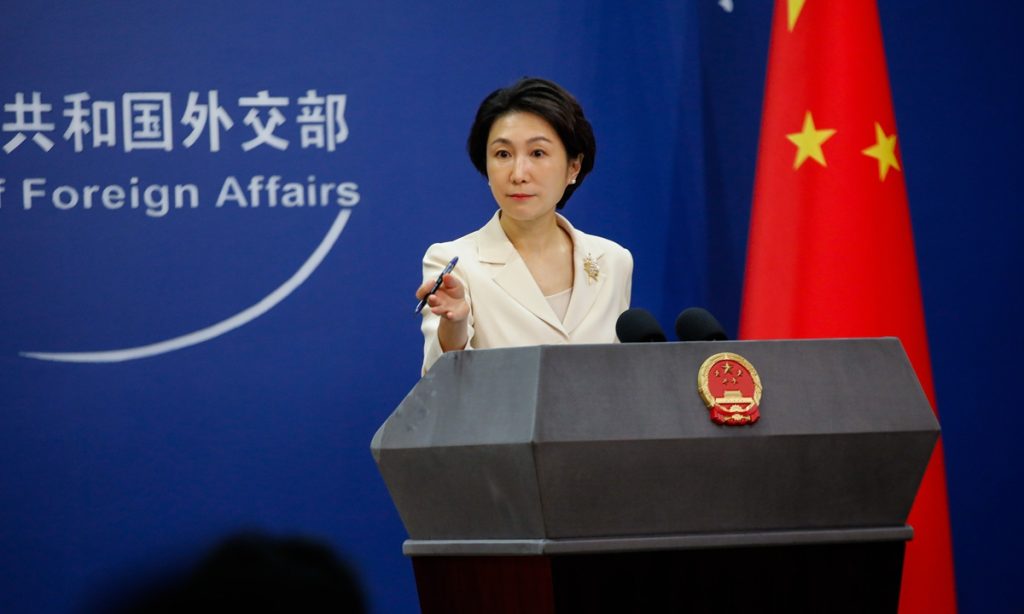
Chinese Foreign Ministry spokesperson Mao Ning said on Wednesday that China is deeply concerned about the current Middle East situation, stressing that a renewed outbreak of hostilities serves the interests of no party and urging all relevant parties to cherish the opportunity for peace, honor their ceasefire commitments, maintain the momentum of negotiations, and adhere to political and diplomatic means to resolve disputes.

Mao made the remarks when asked to comment on reports that the US Central Command said on social media on June 2 (US Eastern Time) that US forces had intercepted multiple ballistic missiles and drones launched by Iran and carried out what it described as a "self-defense" strike on Iran's Qeshm Island. Reports also said that Iran subsequently launched attacks on US military bases in the Middle East, while air-defense sirens sounded across several Gulf countries, further escalating tensions in the region. 

In response, Mao also called for an early realization of a comprehensive and lasting ceasefire and for creating the necessary conditions to restore peace and stability in the Gulf region and the broader Middle East.