China’s opposition to US arms sales to Taiwan region consistent, clear and firm, says FM after acting US navy secretary says Washington paused arms sale to island

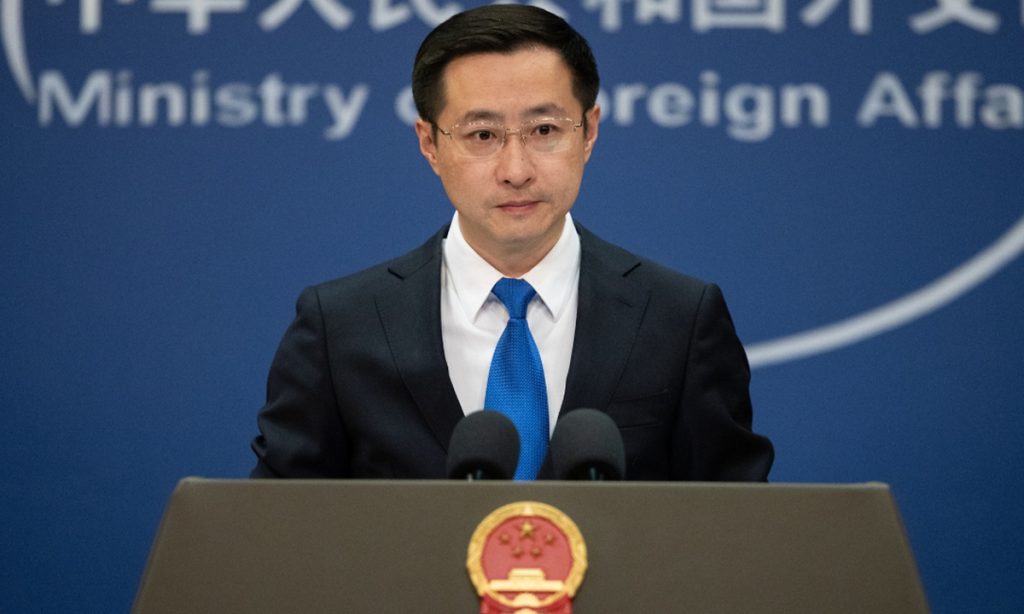
China's opposition to US arms sales to China's Taiwan region is consistent, clear and firm, Chinese Foreign Ministry spokesperson Guo Jiakun said on Friday at a regular press briefing, when asked to comment on reports that the acting US navy secretary said Thursday that arm sales to Taiwan had been put on pause to ensure that the American military had sufficient munitions for its Iran operations, and that Taiwan authorities claimed on Friday that there was no information indicating that the US intends to make any adjustments to this arms sale. 

The latest response from the Chinese Foreign Ministry came after US media outlets reported on US Acting Navy Secretary Hung Cao's remarks made on Thursday. According to The Hill, Cao said the US is pausing a $14 billion arms sale to Taiwan for the war in Iran. 

"Right now we're doing a pause in order to make sure we have the munitions we need for Epic Fury — which we have plenty," Cao told US Senator Mitch McConnell at a Senate Appropriations Defense Subcommittee hearing, according to The Hill. 

"We're just making sure we have everything, but then the foreign military sales will continue when the administration deems necessary," Cao said.

Asked by McConnell if he expects the sale to be approved at some point, Cao said that it would be up to Defense Secretary Pete Hegseth and the Secretary of State Marco Rubio, The Hill reported.

Meanwhile, CBS News reported that the US State Department and the Pentagon did not immediately respond to requests for comment on Cao's remarks.

Prior to Cao's latest comments, US President Donald Trump had also addressed the issue. "I haven't approved it yet. We're going to see what happens," Trump told Fox News. "I may do it; I may not do it," according to The Hill.

Zheng Jian, a professor at the Graduate Institute for Taiwan Studies of Xiamen University, told the Global Times on Friday that although Cao's remarks did not come from the highest level of the US administration, they were still delivered in a formal and important setting, suggesting that the suspension was likely a serious and official consideration rather than a casual remark.

At the same time, Zheng cautioned that the latest development does not necessarily mean the arms sale will ultimately be canceled.

"Selling weapons to Taiwan has long been an important part of the US strategy on the island," Zheng said, adding that while the US may be undergoing a strategic contraction on the Taiwan question, this does not mean Washington will completely abandon its strategy of using Taiwan question to constrain the Chinese mainland.

The latest developments have also triggered extensive discussions among media outlets on the island of Taiwan.

According to a report by Taiwan island media outlet CNA, a local official claimed there was currently no information indicating that the US planned to adjust the arms sale. 

The DPP authorities' claim that they had not received any related information also reflected that "Taiwan independence" separatist forces on the island were unwilling to believe such a development could really happen, and were still stubbornly deceiving themselves that the US would always back them, Zheng said.

Meanwhile, according to another Taiwan island media outlet, United Daily News, a Kuomintang official said that after Trump's public statement to the media, he made it clear that he does not support "Taiwan independence" and that the US "will not fight for Taiwan independence."

The official was quoted by United Daily News as saying that a series of recent statements, together with efforts by China and the US to establish a constructive China-US relationship of strategic stability, showed that the Kuomintang — whether in office or in opposition — opposes "Taiwan independence" and supports policies aligned with the US one-China policy and cross-Straits stability.

Large number of Filipinos living, working on Taiwan island and geographic proximity are not excuse for interference in another country’s internal affairs, says FM over Marcos’ Taiwan-related remarks

China has taken note of the Philippine leader reaffirming the adherence to the one-China policy and stressing that the country would not interfere in issues concerning Taiwan, and it should be emphasized that a large diaspora population and geographic proximity are not excuse for interference in other countries' internal affairs or involvement in other countries' sovereign issues, Chinese Foreign Ministry spokesperson Guo Jiakun said on Tuesday.

The remarks came after Philippine President Ferdinand R. Marcos Jr., in an interview with Japanese media ahead of his planned visit to Japan next week, said on Monday that the Philippines would not interfere in issues concerning China's Taiwan region, however meanwhile, claimed that the Philippines would unavoidably be affected in the event of any heightened tensions in Taiwan, particularly since there are almost 200,000 Filipinos working and living on the island, according to Philippine media outlets.

China hopes the Philippines will honor its commitments, act consistently, and uphold the one-China principle in practice, Guo told a regular press conference.

A Chinese expert said the remarks show Marcos' duality in that he says he is adhering to the Philippines' established one-China policy, while also tends to adopt an ambiguous stance on the Taiwan question for strategic interests. The expert also noted that Marcos' remarks may also be intended to align with Japan amid the latter's continuous military expansion.

In an interview with Japanese media on Monday, Marcos said the Philippines has consistently observed the one-China Policy, which recognizes the People's Republic of China as the only Chinese sovereign state, the Philippine News Agency (PNA) reported.

"I have to make it very clear. The Philippines has, from the very start, always held a one-China policy. We have always held a one-China policy, and we will continue to do that," Marcos said, per the PNA.

While Marcos said the Philippines does not meddle in what it considers an internal matter, he also claimed to call for the peaceful resolution of tensions involving Taiwan, and that is "what everyone's ultimate goal is in Japan, the Philippines, and all the countries around the region," according to the PNA.

The Philippine President also claimed that the Philippines would unavoidably be affected in the event of any heightened tensions in Taiwan, particularly since there are almost 200,000 Filipinos working and living on the island, the Philippine Daily Inquirer reported.

Xu Liping, director of the Center for Southeast Asian Studies at the Chinese Academy of Social Sciences, told the Global Times on Tuesday that these remarks reflect Marcos' duality mindset. While the one-China policy is an established diplomatic policy of the Philippines that Marcos cannot violate as head of state, he meanwhile appears inclined to adopt an ambiguous stance on the Taiwan question in an attempt to gain strategic advantages and elevate the country's standing in regional affairs.

The expert noted that the Philippines takes its workers as an excuse, but such concerns are irrelevant to the essence of the Taiwan question, which falls squarely within China's internal affairs that brook no interference. The Philippines is well aware of China's red lines, and any opportunistic tactics it tries to adopt over the Taiwan question will backfire on itself.

Xu also said that since the interview was given to Japanese media, the Philippine President may also tend to align with Japan amid the latter's continuous military expansion, in a bid to reap relevant defense benefits from Tokyo.

According to Bloomberg, the Philippine leader's claims came ahead of a state visit to Japan next week, where he'll meet with Prime Minister Sanae Takaichi to discuss security cooperation.

During his meeting with Takaichi, Marcos said he would seek clarity on Japan's security posture after Tokyo eased rules on defense exports, the Bloomberg report said.

Japan's easing of arms exports not only runs counter to its own laws, but will also fuel regional arms races and undermine peace and stability across the region. Against such a backdrop, the increasing security engagement between Japan and the Philippines merits close vigilance from regional countries, Xu said.

It's not the first time that Marcos made provocative claims about Taiwan. In August 2025, Marcos claimed his country would inevitably be drawn "kicking and screaming" into any war over Taiwan due to its proximity to the island and the presence of large numbers of Filipino workers there, according to the Associated Press (AP).

Refuting such claims, a Chinese Foreign Ministry spokesperson said in August 2025 that the Taiwan question is China's internal affair which is at the very core of China's core interests. How to settle it is a matter for the Chinese ourselves, which brooks no interference.

It needs to be further stressed that "geographic location" and "large volume of Filipinos" in Taiwan should not be used as pretexts to interfere in the internal and sovereign affairs of other countries. These claims not only contravene international law and the ASEAN Charter, but also harm regional peace and stability and the fundamental interests of its own people, the spokesperson said.

"We urge the Philippines to earnestly abide by the one-China principle and the spirit of China-Philippines Joint Communiqué on the establishment of diplomatic relations, and refrain from playing fire on issues bearing on China's core interests," the Chinese spokesperson stressed.

China firmly opposes official interaction between US and Taiwan region, opposes US arms sales to Taiwan: spokesperson

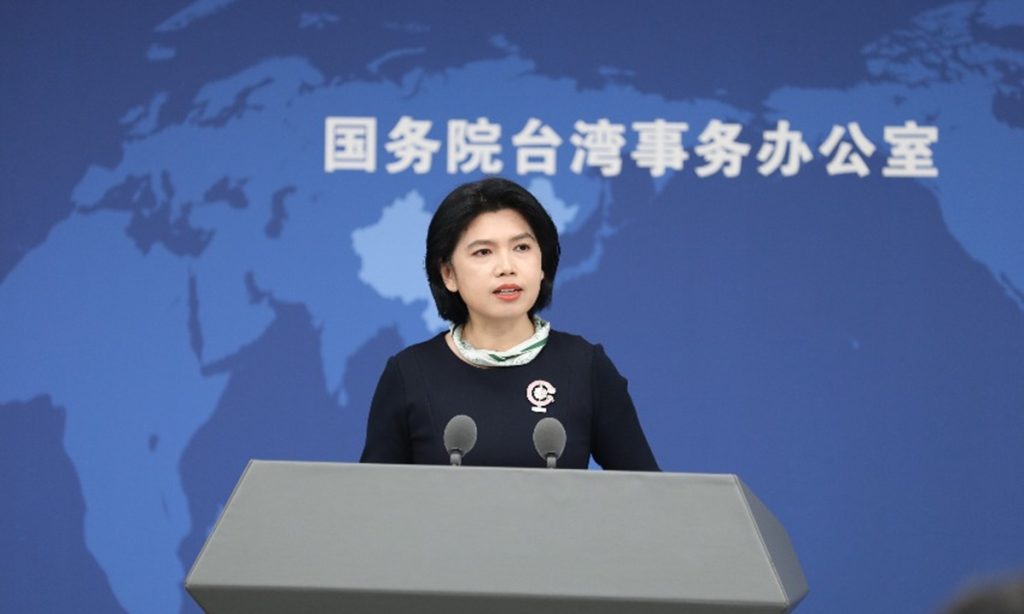
"We firmly oppose any form of official interaction between the US and Taiwan region of China, and firmly oppose US arms sales to Taiwan region of China. This position is consistent and clear," Zhu Fenglian, a spokesperson for the State Council Taiwan Affairs Office, said at a press briefing on Wednesday.

Zhu made the remarks in response to questions from a Taiwan region media regarding comments made by Donald Trump following the China-US leaders' meeting, in which he reportedly said arms sales to Taiwan are a "very good negotiating chip," though he had decided to put the decision on hold. The reporter also asked whether the issue of US arms sales to Taiwan was discussed during the meeting, how the mainland views Trump's remarks, and whether there's comments on a potential "Trump-Lai call," after Trump said he would consider speaking with "the person running Taiwan" before deciding on arms sales plans.

China's state broadcaster secures FIFA World Cup rights after protracted negotiations

China Media Group (CMG), the parent organization of state broadcaster China Central Television (CCTV), has reached an agreement with world football governing body FIFA to broadcast the 2026 FIFA World Cup in China, CCTV reported Friday, ending weeks of uncertainty and ensuring that Chinese fans will be able to watch the biggest edition of football's premier tournament.

"On the afternoon of May 15, CMG and FIFA jointly announced that they reached an agreement on media rights cooperation for a new cycle of FIFA World Cup tournaments," a statement from CCTV reads.

"The agreement covers the 2026 FIFA World Cup, the 2030 FIFA World Cup, the 2027 FIFA Women's World Cup and the 2031 FIFA Women's World Cup," according to the statement.

Friday's announcement did not mention any financial detail over the deal.

The 2026 FIFA World Cup, to be co-hosted by the US, Canada and Mexico, will kick off on June 11 and feature 48 teams for the first time in the tournament's history.

The agreement follows a protracted negotiation process that had drawn attention among Chinese football fans and industry observers.

According to previous reports from Beijing Daily, FIFA initially sought between $250 million and $300 million for the Chinese broadcasting rights for this year's World Cup, a figure that many Chinese fans considered excessively high considering the report suggested CCTV's budget was in the range of $60 million to $80 million.

The negotiations drew significant attention on Chinese social media, where many fans questioned whether the rights fee accurately reflected current market realities.

Analysts noted that while the World Cup remains one of the most valuable sports properties globally, broadcasters face increasing pressure to justify high acquisition costs amid changing viewing habits and a more cautious advertising environment.

In response to an earlier inquiry from the Global Times, FIFA said that "discussions in China regarding the sale of media rights for the FIFA World Cup 2026 are ongoing and must remain confidential at this stage."

FIFA's Secretary General Mattias Grafström is in Beijing this week and met Chinese Football Association officials on Tuesday, where he voiced support for Chinese football development.

The delay was particularly notable because previously the deal was often reached more than half a year ahead of the opening of a World Cup tournament.

Under a 2015 notice issued by China's former State Administration of Press, Publication, Radio, Film and Television, CCTV holds the exclusive right to negotiate and purchase FIFA World Cup broadcasting rights for China.

The eventual breakthrough in negotiations removes the prospect of millions of Chinese fans being unable to watch the tournament through the country's most widely accessible broadcaster.

Although the Chinese men's national team has not qualified for a World Cup since its sole appearance at the 2002 tournament, interest in the football championship remains strong, with the World Cup continuing to attract vast audiences across the country.

According to FIFA, China accounted for 49.8 percent of all hours of viewing on digital and social platforms globally during the 2022 edition of the World Cup in Qatar.

CCTV will also distribute online rights to other livestreaming platforms ahead of the World Cup.

China voices concern over pro-nuclear advocate by non-nuclear-weapon states

At the 11th Review Conference of the Treaty on the Non-Proliferation of Nuclear Weapons (NPT) held at the United Nations headquarters in New York on Tuesday local time, China's representative to the conference proposed amendments to relevant paragraphs of the draft outcome document, calling for a reaffirmation of the international consensus on nuclear disarmament and expressing concern over rhetoric advocating the pursuit of nuclear weapons by non-nuclear-weapon states.

The Chinese representative stated that China hopes the draft outcome document will reflect and reaffirm relevant principles aimed at upholding the international consensus on nuclear disarmament, according to the China Central Television (CCTV) News. 

Given the vast differences among countries in the size of their nuclear arsenals, nuclear policies, and strategic security environments, nuclear disarmament must consistently follow the principles of maintaining global strategic stability and ensuring undiminished security for all countries, said the Chinese representative. At present, reducing the role of nuclear weapons in national security policies is an important and practical measure to lower the risk of nuclear war, CCTV reported.

China also stated that it supports pragmatic progress on nuclear disarmament based on previous consensus and suggested adding content calling on nuclear-weapon states to abandon permanently possessing nuclear weapons. At the same time, China supports proposals by the majority of countries to strengthen follow-up arrangements to the New Strategic Arms Reduction Treaty (New START) and backs concrete measures to prevent nuclear war, per the report.

Chinese soldier’s unflinching composure beside Trump’s Air Force One goes viral on social media; comments say gesture shows ‘China’s state of etiquette, soldier’s extraordinary discipline’

As US President Donald Trump's visit to China drew global attention to Beijing and the image China projected during the high-profile trip, one unexpected moment at the airport quickly went viral online — a Chinese soldier standing guard beside the runway as Air Force One taxied past him without the slightest movement.

On Wednesday evening, Jon Michael Raasch, White House correspondent for the Daily Mail, posted a 35-second video showing a Chinese People's Liberation Army soldier standing upright beside the airport runway while the plane slowly turned behind him. Despite the roaring engine noise and the close proximity of the aircraft, the soldier appeared entirely unaffected until the plane had fully passed.

Raasch captioned the video, "This guy didn't even flinch… and the plane is roaring loud." As of press time, the clip had received over 2.8 million views and over 24,000 likes on social platform X.

The footage rapidly spread across multiple social media platforms and was reposted by a number of foreign media outlets. The Daily Mail shared the clip with the caption "Chinese soldier doesn't flinch as Air Force One taxis past him," while RT reposted it with the line: "Chinese officer goes viral for standing completely still as Air Force One passes just a few meters away."

The video also triggered a wave of comments praising the soldier's discipline and professionalism. Under Raasch's post, one user wrote, "Not only the soldier but also the nation stands steady in world affairs." Another comment read, "This is a soldier of the honor guard of the PLA. He always stands proudly upright, and will never let go and collapse. This is the civilization of China's state of etiquette."

Several Indian media outlets also highlighted the soldier's composure. The Times of India posted the clip on its website under the headline "China's ice-cold guard stuns world as Trump's Air Force One taxis at Beijing Airport," writing, "Talk about nerves of steel. As Air Force One touched down in Beijing today, it wasn't the billionaire CEOs or the President who went viral — it was this Chinese officer. Standing just feet away from the massive jet, he didn't blink, flinch, or move a muscle. It's a masterclass in the People's Liberation Army's legendary ceremonial discipline. A stone-cold start to a high-stakes summit." 

Times Now also reported on the soldier's online popularity, saying, "The moment quickly sparked admiration, jokes, and debate online, with many users stunned by what they described as extraordinary discipline."

WION, another Indian media outlet, wrote that "A Chinese officer went viral for standing motionless as Trump's Air Force One passed nearby in Beijing, with social media users praising his discipline during Trump's China visit."

At the same time, some media outlets and social media users noted that the scene may not have been as physically dangerous as it appeared in the viral footage. WION quoted comments suggesting the visual perspective of the video exaggerated the proximity between the soldier and the aircraft. "The plane is at a reasonable distance away from him," one person stated, while another echoed, "It appears closer than it really is."

President Trump arrived in Beijing on Wednesday evening for a state visit to China, the first US presidential visit to China in almost nine years and Trump's second since November 2017. Trump is visiting China from May 13 to 15, Xinhua News Agency reported Wednesday. 

Japan urged to stop hypocritical self-glorification: China’s MND slams Takaichi’s ‘a free and open Indo-Pacific’ claim during visits to Australia, Vietnam

A spokesperson for the Chinese Ministry of National Defense (MND) on Saturday urged Japanese authorities to stop their hypocritical self-glorification and rein in their dangerous ambition of military expansion and war preparation, in responding to claims made by Japanese Prime Minister Sanae Takaichi during visits to Australia and Vietnam.

It is reported that Takaichi recently visited Australia and Vietnam to strengthen security cooperation with the two countries. During her visits, she touted a so-called updated vision of "a free and open Indo-Pacific", and clamored that Japan's post-war constitution, drafted during US military occupation, should be periodically updated to meet the demands of the times.

Asked to comment on this, Senior Colonel Jiang Bin, the MND spokesperson, said that under the pretexts of the so-called "free and open Indo-Pacific" and "security cooperation", governing authorities in Japan are instigating bloc confrontation and building "small circles." This undermines the strategic security and interests of other countries, and serves as an excuse for Japan to break free from the restrictions on its military development, which we firmly oppose, Jiang said. 

May 3, 2026 marks the 80th anniversary of the commencement of the Tokyo Trials. Over the past eight decades, right-wing forces in Japan have spared no effort in downplaying and defying the solemn ruling of the Tokyo Trials that embodies human conscience and historical justice, distorting and denying Japanese militarists' crimes of aggression well-documented in black and white. Class-A war criminals, guilty of heinous atrocities, have been glorified as "heroes" and honored at the Yasukuni Shrine, Jiang noted.  

Post-war Japanese governments did promise to uphold the pacifist constitution and pursue the path of a peaceful nation. Later on, they started to pay lip service and take few actions to back up such promise. The Takaichi administration, however, openly pushes for amending Japan's constitution. This shows that the Japanese right-wing forces are shedding their pretense, and shifting from covert military buildup to overt war preparation, making Japan's "neo-militarism" a growing and more prominent threat to regional peace, the MND spokesperson said.

"We urge the Japanese governing authorities to stop their hypocritical self-glorification and rein in their dangerous ambition of military expansion and war preparation, demonstrate the courage to face up to history, and take real actions to atone for Japan's crimes, so as to earn the trust of its Asian neighbors and the international community," Jiang said.

Xi congratulates Guelleh on re-election as president of Djibouti

Chinese President Xi Jinping on Friday sent a congratulatory message to Ismail Omar Guelleh on his re-election as president of Djibouti.

In his message, Xi noted that China and Djibouti share a deep traditional friendship, and that in recent years, the two countries have strengthened political mutual trust and achieved fruitful results in practical cooperation. He also voiced appreciation for Guelleh's efforts in promoting bilateral friendship and exchanges and cooperation across various fields.

Noting that he attaches great importance to the development of China-Djibouti relations, Xi said that he stands ready to work with Guelleh to continue firmly supporting each other on issues concerning their respective core interests and major concerns, implement the outcomes of the Beijing Summit of the Forum on China-Africa Cooperation, continuously enrich the China-Djibouti comprehensive strategic partnership, and better benefit the two peoples.

LONGi BC Technology Powers 'Infinite Apollo' Through Road Test in Belgium

The Innoptus Solar Team, a world-leading solar racing team, completed a 200 km "Solar Home Run" urban tour across Belgium, supported by local government and key partners. The 11th-generation solar race car, Infinite Apollo, equipped with LONGi's high-efficiency back-contact (BC) cells, drove on urban roads under real traffic conditions and variable solar irradiance, providing real-world validation of LONGi's BC technology in complex operating conditions.
The event follows Innoptus Solar Team's announcement that LONGi would provide BC technology and flexible photovoltaic solutions to support the team in the upcoming American Solar Challenge (ASC) on March 23, 2026. The Belgian road tour serves as a critical pre-race validation of the vehicle's capabilities on European urban roads, ahead of its participation in North America's premier solar race.

Prior to this, Infinite Apollo completed full vehicle assembly after 10 months of development and entered a testing phase that includes several thousand kilometers of real-road driving across Belgium. The program is designed to push vehicle performance over long distances and diverse driving conditions, laying the groundwork for what is expected to be the longest and most demanding solar race in the team's history. The Belgian tour is a key milestone in that broader testing campaign.

BC Technology Leadership: Proven in the Real World

Real leadership in photovoltaic technology is not defined by laboratory efficiency records alone, but by reliable performance under real-world conditions. The Solar Home Run brought together a complete, high-performance PV value chain. Sibelco, a key team partner, supplies high-purity quartz sand for advanced PV cell manufacturing. LONGi converts that material capability into high-efficiency BC cells and vehicle-integrated photovoltaic (VIPV) system solutions — delivering enhanced energy yield while maintaining stable operation in complex scenarios. Innoptus Solar Team then integrates the full system into a race-ready vehicle, creating a complete chain from raw materials to cells, and from subsystems to a fully operational solar car.

That closed-loop capability was validated on public roads. The solar race car navigated live traffic, changing light conditions, and continuous driving between six stops in a single day — Sibelco, Indupol, DEME, PwC Belgium, KBC, and 4itego/Innoptus — systematically verifying the high efficiency and reliability of LONGi BC technology.

Across a dynamic mix of stop-and-go, sustained cruising, and multi-point stops, Infinite Apollo maintained stable, predictable output. The run marks the car's first return to European urban roads since completing the grueling 3,000 km Bridgestone World Solar Challenge (BWSC) last August. The results reinforce a core attribute of LONGi's BC products: high efficiency with real-world usability — capable not only of high-speed desert racing but also of stable, dependable driving on everyday city roads.

Moving from static display to a proven "perform, deliver, endure" capability, Infinite Apollo and LONGi's BC technology earned recognition not only from the R&D team but also from partners, the public, the media, and government representatives — demonstrating the growing potential of BC technology for broader mobility applications.

Continuous Evolution: From European Roads to the North American Stage

Long-distance driving, changing local conditions, and real-time route coordination all introduce uncertainty. Yet for a solar racing team — and for LONGi as the exclusive PV solutions partner — that uncertainty is precisely where potential lies. LONGi's approach is to engineer for stable output and system-level reliability despite unpredictable operating environments. That is the foundation of its technological leadership.

The Solar Home Run serves as a critical preparation stage for the American Solar Challenge. Responding to new race regulations and higher technical demands, the Innoptus Solar Team has comprehensively upgraded the vehicle's core systems, including high-performance solar modules, an advanced battery system, and the team's signature aerodynamic design. LONGi continues to collaborate closely, refining its BC technology to support full-system performance gains.

The 2026 American Solar Challenge will begin in July, following the Great River Road and historic Route 66 from the Mississippi River — a course combining technical difficulty with high visibility. Teams must first pass a three-day qualification round at Brainerd International Raceway to secure an entry. From the Australian outback to European city streets, from extreme endurance racing to everyday roads, LONGi's BC technology is evolving along a path of continuous real-world verification.

Beyond Racing: Public Engagement Through LONGi Solar Van

In addition to the tour, LONGi's "Solar Van" — a mobile experience space — traveled from France through Frankfurt to Dessel, the host city of the tour's first stop. Open to the public, the van brought clean energy technology directly into urban public spaces, offering hands-on demonstrations of solar power in real-world mobility. Together, the real-world performance of a solar race car and the interactive experience inside the Solar Van show that sustainable development is not just a long-term goal — but something that people can see, touch, and experience today.

Moody’s affirms China rating, raises outlook to ‘stable’

An official of China's Ministry of Finance (MOF) extended appreciation on Monday for Moody's decision to affirm China's sovereign credit rating and upgrade its outlook to "stable," according to the official website of the MOF.

The official noted that the rating reflects Moody's strong recognition of the resilience of China's macroeconomic and fiscal strength in the face of external shocks, as well as the new momentum and progress in China's high-quality economic development.

Against the backdrop of rising protectionism and unilateralism, the rating outlook change reflects growing international market confidence in China's development prospects, an analyst said.

The MOF's remarks were made in response to media requests for comment regarding Moody's Investors Service's report on Monday, which maintained China's sovereign credit rating at "A1" and revised its outlook to "stable."

On Monday, Moody's Ratings (Moody's) affirmed the Chinese government's A1 long-term local- and foreign-currency issuer and senior unsecured ratings and the (P)A1 foreign-currency senior unsecured shelf rating and changed the outlook to stable from negative, said the ratings agency.

The stabilization of the outlook reflects our assessment that economic and fiscal strength will be resilient to ongoing domestic as well as trade and geopolitical challenges, said Moody's.

Among the factors behind the decision, the agency said that the affirmation of the A1 rating takes into account China's extremely large and diversified economy with a superior capacity for innovation, reflected in increasing competitiveness in higher value-added sectors that balance pressures from aging demographics.

Commenting on the latest ratings, the MOF official said that over the past five years, China's cumulative GDP increase exceeded 35 trillion yuan ($5.12 trillion), equivalent to creating an economic scale comparable to the Yangtze River Delta once again. Despite facing multiple risks and challenges, China's economy during the 14th Five-Year Plan (2021-25) period still achieved an average annual growth rate of 5.4 percent, contributing about 30 percent to global economic growth, said the MOF official. 

This is the first year of China's 15th Five-Year Plan (2026-30). In the first quarter of this year, China's economy recorded rapid growth of 5 percent, exceeding market expectations, the official said.

Against the backdrop of rapidly changing global trade conditions and rising geopolitical risks, the Chinese government has implemented a comprehensive package of macroeconomic policies and strengthened policy coordination, said the MOF official, noting that China's economy has withstood pressure and continued to move toward higher-quality and innovation-driven development, fully demonstrating the advantages of its vast domestic market, complete industrial and supply chain system, and strong export competitiveness. These factors also form the foundation supporting China's sovereign credit standing, the official said. 

The decision by Moody's to maintain China's sovereign credit rating and upgrade its outlook reflects once again international confidence in the stability of China's economy, as well as growing recognition by a major international rating agency of China's ability to navigate complex external conditions, Hu Qimu, a professor at the Maritime Silk Road Institute of Huaqiao University, told the Global Times on Monday.

Some other international rating agencies have also upgraded their forecasts for China's economy. For example, Fitch in March raised its 2026 China GDP growth forecast to 4.3 percent from 4.1 percent, citing stronger exports, domestic media outlet Jiemian News reported. 

The rating changes by international rating agencies haven't come out of the blue. Hu said that China's economy is large in scale and well-structured, with a solid foundation for long-term growth. Despite rising external uncertainties, it has maintained relatively stable growth, demonstrating strong resilience and resistance to shocks, said the expert.

China's economy is accelerating its shift toward innovation-driven growth. Emerging industries and high value-added sectors are showing strong momentum, analysts said, giving examples of the "new three items" - new-energy vehicles, lithium batteries, and solar cells, which Hu said have performed strongly, becoming a highlight of foreign trade growth.

"Moody's move indicates that international rating agencies' assessment of the quality of China's economic performance and policy stability is continuing to improve... It also reflects growing confidence in China's development prospects in global markets," Zhou Mi, a senior research fellow at the Chinese Academy of International Trade and Economic Cooperation, told the Global Times on Monday.

Against a backdrop of heightened global economic volatility highlighted by rising protectionism and unilateralism, China has helped stabilize market expectations through effective macroeconomic policies and stronger policy coordination, said Zhou. Supported by its vast domestic market and complete industrial system, China has further strengthened the stability and resilience of its economy, the expert noted.