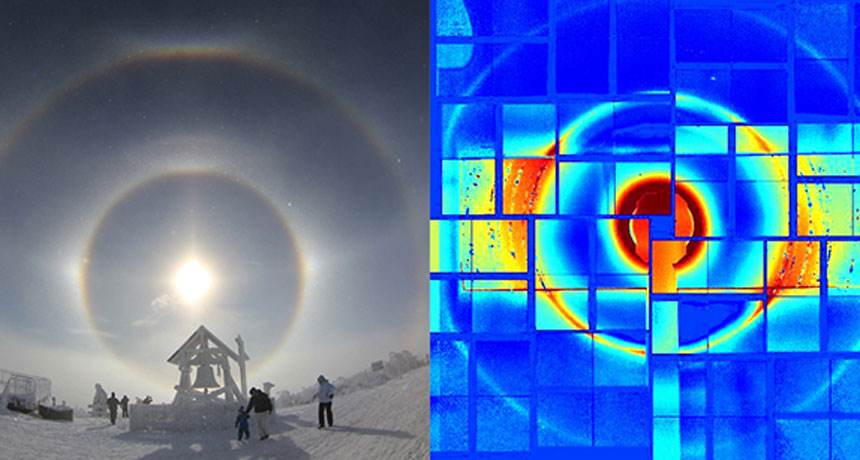
Cube-shaped ice is rare, at least at the microscopic level of the ice crystal. Now researchers have coaxed typically hexagonal 3-D ice crystals to form the most cubic ice ever created in the lab.
Cubed ice crystals — which may exist naturally in cold, high-altitude clouds — could help improve scientists’ understanding of clouds and how they interact with Earth’s atmosphere and sunlight, two interactions that influence climate.
Engineer Barbara Wyslouzil of Ohio State University and colleagues made the cubed ice by shooting nitrogen and water vapor through nozzles at supersonic speeds. The gas mixture expanded and cooled, and then the vapor formed nanodroplets. Quickly cooling the droplets further kept them liquid at normally freezing temperatures. Then, at around –48° Celsius, the droplets froze in about one millionth of a second.
The low-temperature quick freeze allowed the cubic ice to form, the team reports in the July 20 Journal of Physical Chemistry Letters. The crystals weren’t perfect cubes but were about 80 percent cubic. That’s better than previous studies, which made ice that was 73 percent cubic.
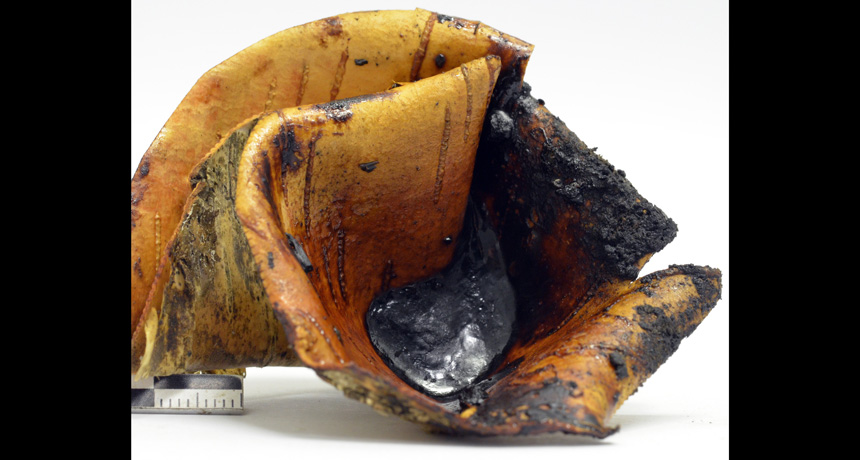
Neandertals took stick-to-itiveness to a new level. Using just scraps of wood and hot embers, our evolutionary cousins figured out how to make tar, a revolutionary adhesive that they used to make formidable spears, chopping tools and other implements by attaching sharp-edged stones to handles, a new study suggests.
Researchers already knew that tar-coated stones date to at least 200,000 years ago at Neandertal sites in Europe, well before the earliest known evidence of tar production by Homo sapiens, around 70,000 years ago in Africa. Now, archaeologist Paul Kozowyk of Leiden University in the Netherlands and colleagues have re-created the methods that these extinct members of the human genus could have used to produce tar. Three straightforward techniques could have yielded enough adhesive for Neandertals’ purposes, Kozowyk’s team reports August 31 in Scientific Reports. Previous studies have found that tar lumps found at Neandertal sites derive from birch bark. Neandertal tar makers didn’t need ceramic containers such as kilns and didn’t have to heat the bark to precise temperatures, the scientists conclude. These findings fuel another burning question about Neandertals: whether they had mastered the art of building and controlling a fire. Some researchers suspect that Neandertals had specialized knowledge of fire control and used it to make adhesives; others contend that Neandertals only exploited the remnants of wildfires. The new study suggests they could have invented low-tech ways to make tar with fires, but it’s not clear whether those fires were intentionally lit.
“This new paper demystifies the prehistoric development of birch-bark tar production, showing that it was not predicated on advanced cognitive or technical skills but on knowledge of familiar, readily available materials,” says archaeologist Daniel Adler of the University of Connecticut in Storrs, who did not participate in the study. Kozowyk’s group tested each of three tar-making techniques between five and 11 times. The lowest-tech approach consisted of rolling up a piece of birch bark, tying it with wood fiber and covering it in a mound of ashes and embers from a wood fire. Tar formed between bark layers and was scraped off the unrolled surface. The experimenters collected up to about one gram of tar this way.
A second strategy involved igniting a roll of birch bark at one end and placing it in a small pit. In some cases, embers were placed on top of the bark. The researchers either scraped tar off bark layers or collected it as it dripped onto a rock, strip of bark or a piece of bark folded into a cup. The most tar gathered with this method, about 1.8 grams, was in a trial using a birch-bark cup placed beneath a bark roll with its lit side up and covered in embers.
Repeating either the ash-mound or pit-roll techniques once or twice would yield the relatively small quantity of tar found at one Neandertal site in Europe, the researchers say. Between six and 11 repetitions would produce a tar haul equal to that previously unearthed at another European site.
In a third technique, the scientists placed a birch-bark vessel for collecting tar into a small pit. They placed a layer of twigs across the top of the pit and placed pebbles on top, then added a large, loose bark roll covered in a dome-shaped coat of wet soil. A fire was then lit on the earthen structure. This method often failed to produce anything. But after some practice with the technique, one trial resulted in 15.7 grams of tar — enough to make a lump comparable in size to the largest chunks found at Neandertal sites.
An important key to making tar was reaching the right heat level. Temperatures inside bark rolls, vessels, fires and embers varied greatly, but at some point each procedure heated bark rolls to between around 200˚ and 400˚ Celsius, Kozowyk says. In that relatively broad temperature range, tar can be produced from birch bark, he contends.
If they exploited naturally occurring fires, Neandertal tar makers had limited time and probably relied on a simple technique such as ash mounds, Kozowyk proposes. If Neandertals knew how to start and maintain fires, they could have pursued more complex approaches.
Some researchers say that excavations point to sporadic use of fire by Neandertals, probably during warm, humid months when lightning strikes ignited wildfires. But other investigators contend that extinct Homo species, including Neandertals, built campfires (SN: 5/5/12, p. 18).
Whatever the case, Kozowyk says, “Neandertals could have invented tar with only basic knowledge of fire and birch bark.”
Walls can get the best of clumsy TV sitcom characters and bats alike.
New lab tests suggest that smooth, vertical surfaces fool some bats into thinking their flight path is clear, leading to collisions and near misses.
The furry fliers famously use sound to navigate — emitting calls and tracking the echoes to hunt for prey and locate obstacles. But some surfaces can mess with echolocation.
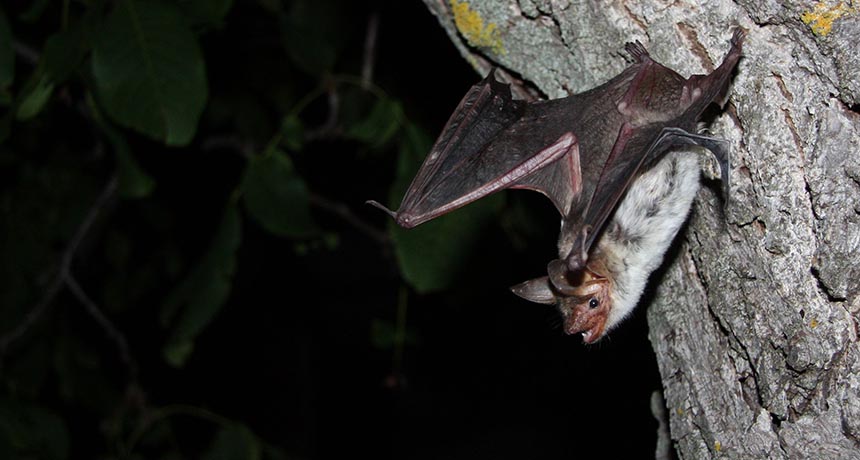
Stefan Greif of the Max Planck Institute for Ornithology in Seewiesen, Germany, and colleagues put bats to the test in a flight tunnel. Nineteen of 21 greater mouse-eared bats (Myotis myotis) crashed into a vertical metal plate at least once, the scientists report in the Sept. 8 Science. In some crashes, bats face-planted without even trying to avoid the plate. Smooth surfaces act as acoustic mirrors, the team says: Up close, they reflect sound at an angle away from the bat, producing fuzzier, harder-to-read echoes than rough surfaces do. From farther away, smooth surfaces don’t produce any echoes at all.
Infrared camera footage of wild bat colonies showed that vertical plastic plates trick bats in more natural settings, too.
Crash reel This video shows three experiments into how smooth surfaces affect bat flight. In one lab test, a vertical metal plate gave a bat the illusion of a clear flight path, causing it to crash into the barrier. In a second lab test, a horizontal metal plate created the illusion of water; the bat dips to surface to take a sip. Finally, near a natural bat colony, a bat collides with a vertically hung plastic plate, showing that smooth surfaces could impact bats in the wild, as well.
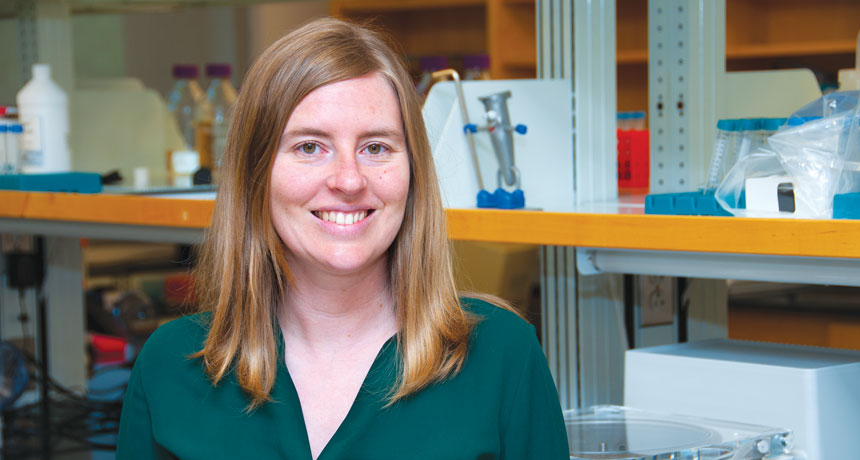
In a pitch-black rainforest with fluttering moths and crawling centipedes, Christina Warinner dug up her first skeleton. Well, technically it was a full skeleton plus two headless ones, all seated and draped in ornate jewelry. To deter looters, she excavated through the night while one teammate held up a light and another killed as many bugs as possible.
As Warinner worked, unanswerable questions about the people whose skeletons she was excavating flew through her mind. “There’s only so much you can learn by looking with your own eyes at a skeleton,” she says. “I became increasingly interested in all the things that I could not see — all the stories that these skeletons had to tell that weren’t immediately accessible, but could be accessible through science.”
At age 21, Warinner cut her teeth on that incredibly complex sacrificial burial left behind by the Maya in a Belize rainforest. Today, at age 37, the molecular anthropologist scrapes at not-so-pearly whites to investigate similar questions, splitting her time between the University of Oklahoma in Norman and the Max Planck Institute for the Science of Human History in Jena, Germany. In 2014, she and colleagues reported a finding that generated enough buzz to renew interest in an archaeological resource many had written off decades ago: fossilized dental plaque, or calculus. Ancient DNA and proteins in the plaque belong to microbes that could spill the secrets of the humans they once inhabited — what the people ate, what ailed them, perhaps even what they did for a living.
Bacteria form plaque that mineralizes into calculus throughout a person’s life. “It’s the only part of your body that fossilizes while you’re still alive,” notes Warinner. “It’s also the last thing to decay.”
Though plaque is prolific in the archaeological record, most researchers viewed calculus as “the crap you scraped off your tooth in order to study it,” says Amanda Henry, an archaeologist at Leiden University in the Netherlands. With some exceptions, molecular biologists saw calculus as a shoddy source of ancient DNA.
But a few researchers, including Henry, had been looking at calculus for remnants of foods as potential clues to ancient diets. Inspired by some of Henry’s images of starch grains preserved in calculus, Warinner wondered if the plaque might yield dead bacterial structures, perhaps even bacteria’s genetic blueprints.
Her timing couldn’t have been better. Warinner began her graduate studies at Harvard in 2004, just after the sequencing of the human genome was completed and by the time she left in 2010, efforts to survey the human microbiome were in full swing. As a postdoc at the University of Zurich, Warinner decided to attempt to extract DNA from the underappreciated dental grime preserved on the teeth of four medieval skeletons from Germany. At first, the results were dismal. But she kept at it. “Tina has a very interested, curious and driven personality,” Henry notes. Warinner turned to a new instrument that could measure DNA concentrations in skimpy samples, a Qubit fluorometer. A surprising error message appeared: DNA too high. Dental calculus, it turned out, was chock-full of genetic material. “While people were struggling to pull out human DNA from the skeleton itself, there’s 100 to 1,000 times more DNA in the calculus,” Warinner says. “It was sitting there in almost every skeletal collection untouched, unanalyzed.” To help her interpret the data, Warinner mustered an army of collaborators from fields ranging from immunology to metagenomics. She and her colleagues found a slew of proteins and DNA snippets from bacteria, viruses and fungi, including dozens of oral pathogens, as well as the full genetic blueprint of an ancient strain of Tannerella forsythia, which still infects people’s gums today. In 2014, Warinner’s team revealed a detailed map of a miniature microbial world on the decaying teeth of those German skeletons in Nature Genetics.
Later in 2014, her group found the first direct protein-based evidence of milk consumption in the plaque of Bronze Age skeletons from 3000 B.C. That same study linked milk proteins preserved in the calculus of other ancient human skeletons to specific animals — providing a peek into long-ago lifestyles.
“The fact that you can tell the difference between, say, goat milk and cow milk, that’s kind of mind-blowing,” says Laura Weyrich, a microbiologist at the University of Adelaide in Australia, who also studies calculus. Since then, Warinner has found all sorts of odds and ends lurking on archaic chompers from poppy seeds to paint pigments. Warinner’s team is still looking at the origins of dairying and its microbial players, but she’s also branching out to the other end of the digestive spectrum. The researchers are looking at ancient DNA in paleofeces, which is exactly what it sounds like — desiccated or semifossilized poop. It doesn’t stay as fresh as plaque in the archaeological record. But she’s managed to find some sites with well-preserved samples. By examining the array of microbes that lived in the excrement and plaque of past humans and their relatives, Warinner hopes to characterize how our microbial communities have changed through time — and how they’ve changed us.
The research has implications for understanding chronic, complex human diseases over time. Warinner’s ancient DNA work “opens up a window on past health,” says Clark Larsen, an anthropologist at Ohio State University.
It’s all part of what Warinner calls “the archaeology of the unseen.”
Editor’s note: This story was corrected on October 4, 2017, to note that the 2014 report on milk consumption was based on protein evidence, not DNA.
A doctor explains to a young couple that he has screened the pair’s in vitro fertilized embryos and selected those that had no major inheritable diseases. The couple had specified they want a son with hazel eyes, dark hair and fair skin. Then the doctor announces that he has also taken the liberty of eliminating the “burden” of genetic propensities for baldness, nearsightedness, alcoholism, obesity and domestic violence.
The prospective mother replies that they didn’t want those revisions. “I mean diseases, yes, but …” Her husband jumps in to say, “We were just wondering if it’s good to leave a few things to chance.” But the doctor reminds the would-be parents why they came to him in the first place. They want to give their child “the best possible start.”
That’s a scene from the movie Gattaca, which premiered 20 years ago in October. But thanks to recent advances in gene-editing tools such as CRISPR/Cas9, genetic manipulation of human embryos is becoming reality.
Soon, designer babies like those described in the film may even become morally mandatory, some ethicists say.
Gattaca’s narrator tells us that such genetic manipulation of in vitro fertilized embryos has become “the natural way of giving birth” in the near future portrayed in the film. It has also created an underclass of people whose parents didn’t buy those genetic advantages for their children. Until recently, that sort of fiddling with human DNA was only science fiction and allegory, a warning against a new kind of eugenics that could pit the genetic haves and have-nots against each other. At a symposium sponsored by the Hastings Center on October 26 before the World Conference of Science Journalists in San Francisco, ethicists and journalists explored the flip side of that discussion: whether parents have a moral obligation to make “better” babies through genetic engineering. Technology that can precisely change a baby’s genes is quickly becoming reality. This year, scientists reported using CRISPR/Cas9 in viable human embryos to fix mutations that cause heart and blood disorders. CRISPR/Cas9 acts as a molecular scissors that relatively easily and precisely manipulates DNA. Scientists have honed and developed the tool in the roughly five years it has been around, creating myriad “CRISPR” mice, fish, pigs, cows, plants and other creatures. Its use in human embryos has been hotly debated. Should we or shouldn’t we?
For many people, the fear of a class of genetically enhanced people is reason enough not to tinker with the DNA of the human germline — eggs, sperm, embryos and the cells that give rise to eggs and sperm. By all means, correct diseases, these folks say, but don’t add extras or meddle with characteristics that don’t have anything to do with health. A panel of ethicists convened by the U.S. National Academies of Medicine and Science also staked out that position in February, ruling that human germline engineering might someday be permissible for correcting diseases, but only if there are no alternatives and not for enhancements.
But the question “should we?” may not matter much longer, predicted the Hastings Center’s Josephine Johnston at the symposium. As science advances and people become more comfortable with gene editing, laws prohibiting tinkering with embryos will fall, she said, and it will be up to prospective moms and dads to decide for themselves. “Will editing a baby’s genes be mandatory, the kind of thing you’re supposed to do?”
For Julian Savulescu, an ethicist at the University of Oxford, the answer is yes. Parents are morally obligated to take steps to keep their children healthy, he says. That includes vaccinating them and giving them medicine when they’re ill. Genetic technologies are no different, he argues. If these techniques could make children resistant to infections, cancer or diabetes, then parents have an obligation to use them, he says.
For now, he cautions, CRISPR’s safety and efficacy haven’t been established, so parents shouldn’t subject their children to the risks. He also points out that this sort of editing would also require in vitro fertilization, which is prohibitively costly for many people. (And couples could pretty much forget about having the perfect baby through sexual intercourse. Designer darlings would have to be created in the lab.)
But someday, possibly soon, gene editing could become a viable medical intervention. “If CRISPR were safe and not excessively costly, we have a moral obligation to use it to prevent and treat disease,” Savulescu says.
Using gene editing to cure genetic diseases is something retired bioethicist Ronald Green of Dartmouth College can get behind. “I fully support the reproductive use of gene-editing technology for the prevention and elimination of serious genetic diseases,” Green said at the symposium. “If we could use gene editing to remove the sequences in an embryo that cause sickle cell disease or cystic fibrosis, I would say not only that we may do so, but in the case of such severe diseases, we have a moral obligation to do so.”
But that’s where a parent’s obligation stops, Green said. Parents and medical professionals aren’t required to enhance health “to make people who are better than well,” he said.
Savulescu, however, would extend the obligation to other nondisease conditions that could prevent a kid from having a full set of opportunities in life. For instance, children with poor impulse control may have difficulty succeeding in school and life. The drug Ritalin is sometimes prescribed to such kids. “If CRISPR could do what Ritalin does and improve impulse control and give a child a greater range of opportunities,” he says, “then I’d have to say we have the same moral obligation to use CRISPR as we do to provide education, to provide an adequate diet or to provide Ritalin.”
Green rejected the idea that parents should, or even could, secure a better life for their kids through genetic manipulation. Scientists haven’t identified all the genes that contribute to good lives — and there are plenty of factors beyond genetics that go into making someone happy and successful. Already, Green said, “the healthy natural human genome has enough variety in it to let any child successfully navigate the world and fulfill his or her own vision of happiness.” (A version of his remarks was posted on the Hastings Center’s Bioethics Forum.)
Many traits that would help a person make more money or have an easier life are associated with social prejudices and discrimination, says Marcy Darnovsky, the executive director of the Center for Genetics and Society in Berkeley, Calif. People who are taller and fair-skinned tend to make more money. If parents were to engineer their children to have such traits, “I think we would be inscribing those kinds of social prejudices in biology,” she says. “We get to very troubled waters very quickly as a society once we start down that road.”
Creating a class of “genobility,” as Green calls genetically enhanced people, would increase already staggering levels of inequality, Darnovsky says. That, says Savulescu, “is the Gattaca objection I often get.”
Yes, he acknowledges, “it could create even greater inequalities, there’s no doubt about that.” Whenever money is involved, people who have more of it can afford better treatments, diets and healthier lifestyles — and disparities will exist. “However, this is not inevitable,” Savulescu says. Countries with national health care systems could provide such services for free. Such measures could even correct natural inequalities, he argues.
Johnston worries that genetic manipulation could change family dynamics. Parents might be disappointed if their designer baby doesn’t turn out as desired. That’s a variation of the old problem of unfulfilled parental expectations, Savulescu says. “It’s a problem that deserves attention, but it’s not a problem that deserves banning CRISPR,” he says.
A misfit gang of superconducting materials may be losing their outsider status.
Certain copper-based compounds superconduct, or transmit electricity without resistance, at unusually high temperatures. It was thought that the standard theory of superconductivity, known as Bardeen-Cooper-Schrieffer theory, couldn’t explain these oddballs. But new evidence suggests that the standard theory applies despite the materials’ quirks, researchers report in the Dec. 8 Physical Review Letters.
All known superconductors must be chilled to work. Most must be cooled to temperatures that hover above absolute zero (–273.15° Celsius). But some copper-based superconductors work at temperatures above the boiling point of liquid nitrogen (around –196° C). Finding a superconductor that functions at even higher temperatures — above room temperature — could provide massive energy savings and new technologies (SN: 12/26/15, p. 25). So scientists are intent upon understanding the physics behind known high-temperature superconductors. When placed in a magnetic field, many superconductors display swirling vortices of electric current — a hallmark of the standard superconductivity theory. But for the copper-based superconductors, known as cuprates, scientists couldn’t find whirls that matched the theory’s predictions, suggesting that a different theory was needed to explain how the materials superconduct. “This was one of the remaining mysteries,” says physicist Christoph Renner of the University of Geneva. Now, Renner and colleagues have found vortices that agree with the theory in a high-temperature copper-based superconductor, studying a compound of yttrium, barium, copper and oxygen.
Vortices in superconductors can be probed with a scanning tunneling microscope. As the microscope tip moves over a vortex, the instrument records a change in the electrical current. Renner and colleagues realized that, in their copper compound, there were two contributions to the current that the probe was measuring, one from superconducting electrons and one from nonsuperconducting ones. The nonsuperconducting contribution was present across the entire surface of the material and masked the signature of the vortices.
Subtracting the nonsuperconducting portion revealed the vortices, which behaved in agreement with the standard superconductivity theory. “That, I think, is quite astonishing; it’s quite a feat,” says Mikael Fogelström of Chalmers University of Technology in Gothenburg, Sweden, who was not involved with the research. The result lifts some of the fog surrounding cuprates, which have so far resisted theoretical explanation. But plenty of questions still surround the materials, Fogelström says. “It leaves many things still open, but it sort of gives a new picture.”
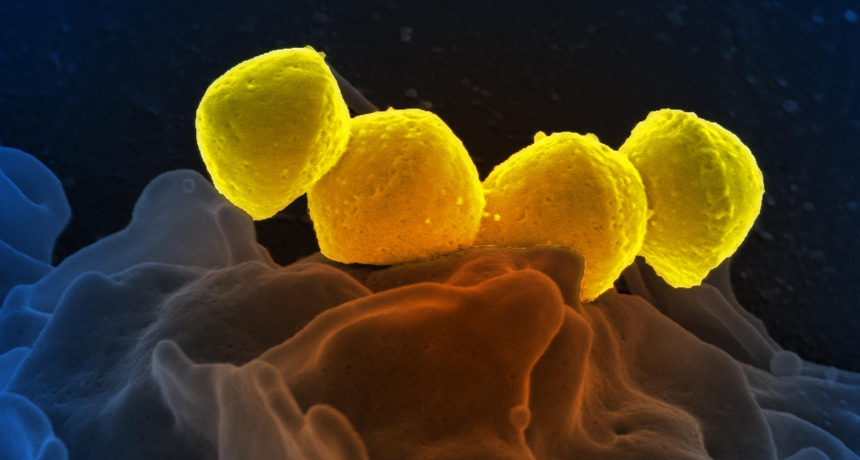
One person infected with strep bacteria might get a painful sore throat; another might face a life-threatening blood infection. Now, scientists are trying to pin down why.
Variation between individuals’ immune systems may not be entirely to blame. Instead, extra genes picked up by some pathogens can cause different strains to have wildly different effects on the immune system, even in the same person, researchers report January 11 in PLOS Pathogens.
The idea that different strains of bacteria can behave differently in the body isn’t new. Take E. coli: Some strains of the bacteria that can cause foodborne illness make people far sicker than other strains. But bacteria have exceptionally large amounts of genetic variation, even between members of the same species. Scientists are still trying to figure out how that genetic diversity affects the way microbes interact with the immune system. Any species of bacteria has a core set of genes that all its members share. Then there’s a whole pot of genes that different strains of the species pick and choose to create what’s known as an accessory genome. These genes are custom add-ons that specific strains have acquired over time, from their environment or from other microbes — something like an expansion pack for a card game. Sometimes, that extra genetic material gives bacteria new traits.
Uri Sela and his colleagues at the Rockefeller University in New York City tested the way these extra genes influenced the way two common species of bacteria, Staphylococcus aureus and Streptococcus pyogenes, interacted with the immune system. Staphylococcus bacteria can cause everything from rashes to food poisoning to blood infections. Streptococcus bacteria can cause strep throat, as well as a host of more serious illnesses (SN: 10/4/14, p. 22).
Different strains of the same species provoked wildly different immune responses in blood samples collected from the same patient, the researchers first showed. But the strain-specific responses were consistent across patients. Some strains triggered lots of T cells to be made in every sample, for example; others increased B cell activity. (T cells and B cells are the two main weapons of the adaptive immune response, which enables the body to build long-lasting immunity against a particular pathogen.) In tests of strains missing some of their extra genes, though, the T cells didn’t respond as strongly as they did to a matching strain that contained the extra genes. This finding suggests that the variation in immune response across strains was coming, at least in part, from differences in these supplementary genes. “Currently when a patient comes to the hospital with an infection, we don’t define the strain of the species” for common infections like strep and staph, says Sela, an immunologist. In the future, he says, information about the strain could help doctors predict how a patient’s illness will unfold and decide on the best treatment.
The new study “adds fuel to an active debate” about the role of accessory genes, says Alan McNally, a microbiologist at the University of Birmingham in England — whether or not the collections of genetic add-ons that bacteria maintain are shaped by natural selection, the process that fuels evolution. This research suggests that for some kinds of bacteria, genetic customization might aid survival of certain strains by enabling them to provoke a tailored immune response.
But more research needs to be done to link the strain-to-strain variation in immune response to the accessory genome, he says, as this study looked at only a few extra genes, not the entire accessory genome.
Volcano-fueled holes in Earth’s ozone layer 252 million years ago may have repeatedly sterilized large swaths of forest, setting the stage for the world’s largest mass extinction event. Such holes would have allowed ultraviolet-B radiation to blast the planet. Even radiation levels below those predicted for the end of the Permian period damage trees’ abilities to make seeds, researchers report February 7 in Science Advances.
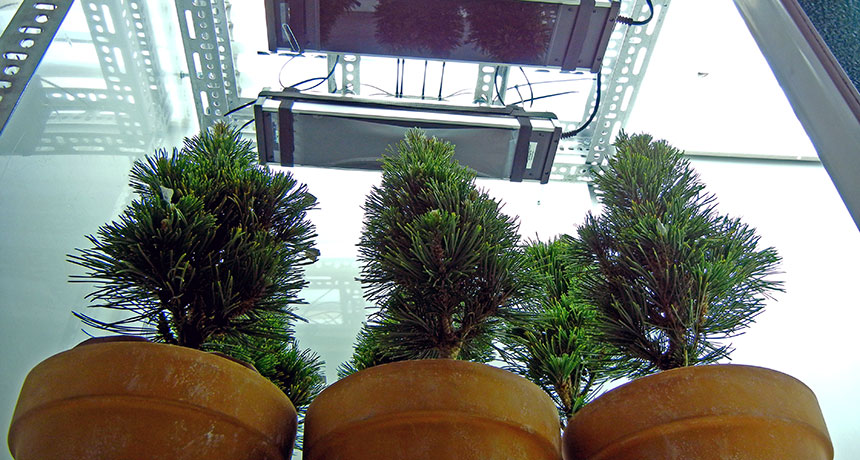
Jeffrey Benca, a paleobotanist at the University of California, Berkeley, and his colleagues exposed plantings of modern dwarf pine tree (Pinus mugo) to varying levels of UV-B radiation. Those levels ranged from none to up to 93 kilojoules per square meter per day. According to previous simulations, UV-B radiation at the end of the Permian may have increased from a background level of 10 kilojoules (just above current ambient levels) to as much as 100 kilojoules, due to large concentrations of ozone-damaging halogens spewed from volcanoes (SN: 1/15/11, p. 12).
Exposure to higher UV-B levels led to more malformed pollen, the researchers found, with up to 13 percent of the pollen grains deformed under the highest conditions. And although the trees survived the heightened irradiation, the trees’ ovulate cones — cones that, when fertilized by pollen, become seeds — did not. But the trees weren’t permanently sterilized: Once removed from extra UV-B exposure, the trees could reproduce again.
The finding supports previous research suggesting that colossal volcanic eruptions in what’s now Siberia, about 300,000 years before the onset of the extinction event, probably triggered the die-off of nearly all marine species and two-thirds of species living on land (SN: 9/19/15, p. 10). Repeated pulses of volcanism at the end of the Permian may have led to several periods of irradiation that sterilized the forests, causing a catastrophic breakdown of food webs, the researchers say — an indirect but effective way to kill.
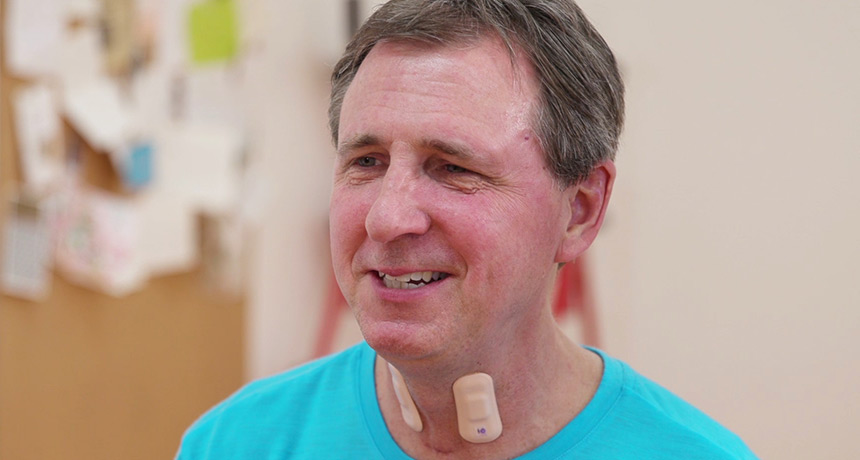
AUSTIN, Texas — Stretchy sensors that stick to the throat could track the long-term recovery of stroke survivors.
These new Band-Aid‒shaped devices contain motion sensors that detect muscle movement and vocal cord vibrations. That sensor data could help doctors diagnose and monitor the effectiveness of certain treatments for post-stroke conditions like difficulty swallowing or talking, researchers reported February 17 in a news conference at the annual meeting of the American Association for the Advancement of Science. Up to 65 percent of stroke survivors have trouble swallowing, and about a third of survivors have trouble carrying on conversations. The devices can monitor speech patterns more reliably than microphones by sensing tissue movement rather than recording sound. “You don’t pick up anything in terms of ambient noise,” says study coauthor John Rogers, a materials scientist and bioengineer at Northwestern University in Evanston, Ill. “You can be next to an airplane jet engine. You’re not going to see that in the [sensor] signal.”
Developed by Rogers’ team, the sensors have built-in 12-hour rechargeable batteries and continually stream motion data to a smartphone. Researchers are now testing the sensors with real stroke patients to see how the devices can be made more user-friendly. For instance, Rogers’ team realized that patients were unlikely to wear sensors that were too easily visible. By equipping the patches with more sensitive motion sensors, they can be worn lower on a person’s neck, hidden behind a buttoned-up shirt, and still pick up throat motion.
These kinds of sensors could also track the recovery of neck cancer patients, who commonly develop swallowing and speaking problems caused by radiation therapy and surgery, Rogers says. The devices can also measure breathing and heart rates to monitor sleep quality and help diagnose sleep apnea. Rogers expects this wearable tech to be ready for widespread use within the next year or two.
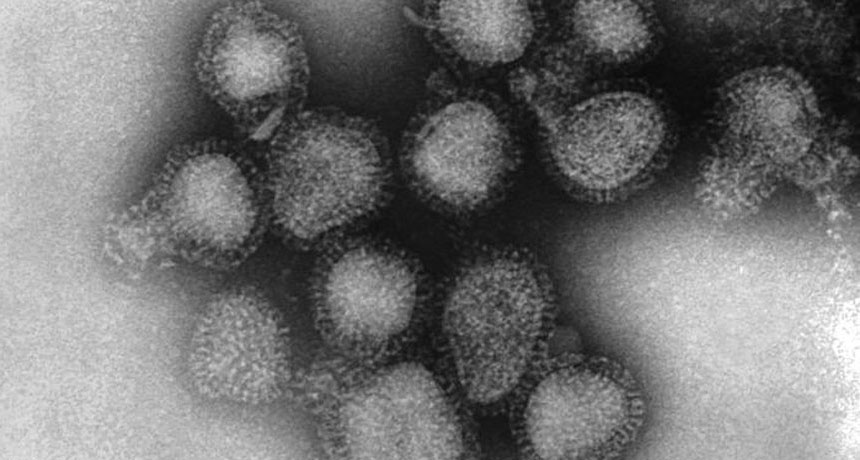
With fevers, chills and aches, the flu can pound the body. Some influenza viruses may hammer the brain, too. Months after being infected with influenza, mice had signs of brain damage and memory trouble, researchers report online February 26 in the Journal of Neuroscience.
It’s unclear if people’s memories are affected in the same way as those of mice. But the new research adds to evidence suggesting that some body-wracking infections could also harm the human brain, says epidemiologist and neurologist Mitchell Elkind of Columbia University, who was not involved in the study. Obvious to anyone who has been waylaid by the flu, brainpower can suffer at the infection’s peak. But not much is known about any potential lingering effects on thinking or memory. “It hasn’t occurred to people that it might be something to test,” says neurobiologist Martin Korte of Technische Universität Braunschweig in Germany.
The new study examined the effects of three types of influenza A — H1N1, the strain behind 2009’s swine flu outbreak; H7N7, a dangerous strain that only rarely infects people; and H3N2, the strain behind much of the 2017–2018 flu season misery (SN: 2/17/18, p. 12). Korte and colleagues shot these viruses into mice’s noses, and then looked for memory problems 30, 60 and 120 days later.
A month after infection, the mice all appeared to have recovered and gained back weight. But those that had received H3N2 and H7N7 had trouble remembering the location of a hidden platform in a pool of water, the researchers found. Mice that received no influenza or the milder H1N1 virus performed normally at the task. Researchers also studied the brain tissue of the infected mice under a microscope and found that the memory problems tracked with changes in nerve cells. A month after H7N7 or H3N2 infection, mice had fewer nerve cell connectors called dendritic spines on cells in the hippocampus, a brain region involved in memory. Electrical experiments on the nerve cell samples in dishes also suggested the cells’ signal-sending abilities were impaired. What’s more, these mice’s brains looked inflamed under the microscope, full of immune cells called microglia that were still revved up 30 and 60 days after infection. Cell counts revealed that mice that had suffered through H3N2 or H7N7 had more active microglia than mice infected with H1N1 or no virus at all. That lingering activity was surprising, Korte says; most immune cells in the body usually settle down soon after an infection clears.
These memory problems and signs of brain trouble were gone by 120 days, which translates to about a decade in human time, Korte says. “I’m not saying that everyone who has influenza is cognitively impaired for 10 years,” he says, noting that human brains are much more complex than those of mice. “The news is more that we should not only look at lung functionality after the flu, but also cognitive effects, weeks and months after infection.”
H7N7 can infect brain cells directly. But H1N1 and H3N2 don’t typically get into the brain (and Korte and colleagues confirmed that in their experiments). Some flu viruses may be causing brain trouble remotely, perhaps through inflammatory signals in the blood making their way into the brain, the study suggests. If that pathway is confirmed, then many types of infections could cause similar effects on the brain. “It is plausible that this is a general phenomenon,” Elkind says.