Xi meets president of Seychelles
Chinese President Xi Jinping met with President of Seychelles Wavel Ramkalawan on Monday.
Chinese President Xi Jinping met with President of Seychelles Wavel Ramkalawan on Monday.
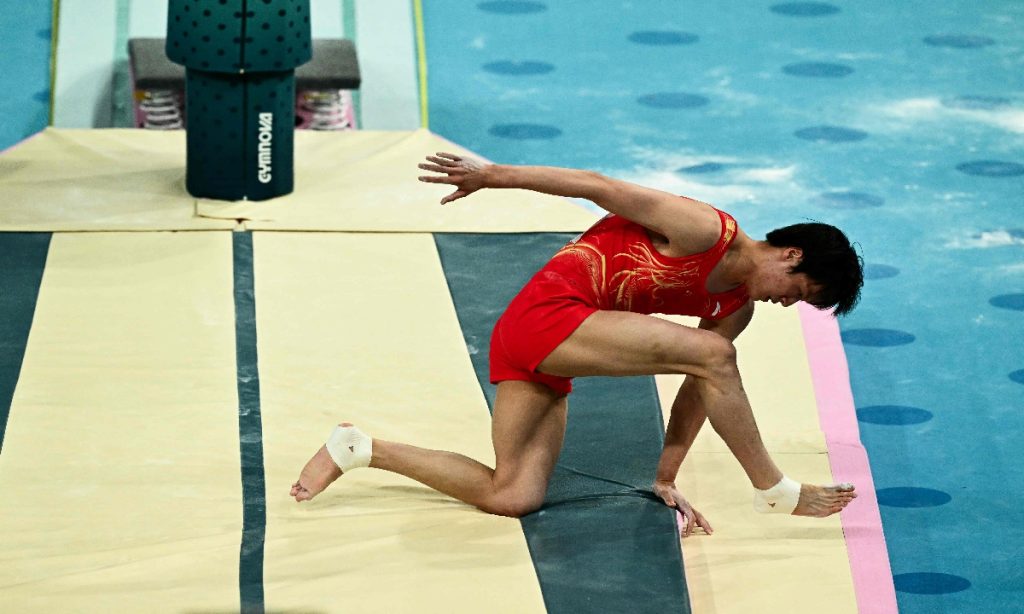
The recent social media scrutiny of Chinese gymnasts headlined by Su Weide at the Paris Olympics highlights a broader issue faced by athletes worldwide: how to deal with intense public and media criticism.
Su's mistakes in the men's team gymnastics event led to a loss of the gold medal to Japan, prompting an outpouring of harsh public criticism from fans. Accusations ranged from a history of poor performances to even allegations of nepotism.
Public opinion can be incredibly harsh, often fixating on athletes' failures rather than their successes. This phenomenon is not new. Legends like gymnastics great Li Ning and star hurdler Liu Xiang have also suffered under the weight of public criticism.
Criticism is an inevitable part of sports, but when it becomes baseless and overly harsh, it can cross the line into abuse.
For instance, the flood of criticism aimed at Su following his performance included not only legitimate critiques of his errors but also unfounded accusations and personal attacks. While it is essential to distinguish constructive criticism from mere vitriol, athletes must learn to navigate and respond to both.
Su's teammates Zhang Boheng and Li Xiaopeng publicly supported Su, emphasizing the difficulty of his role and the team's collective responsibility for its performance. This kind of solidarity and positive reinforcement is crucial to helping athletes withstand the pressures of public opinion.
A notable example of an athlete who can constructively handle opinions against them is Chinese tennis player Zheng Qinwen.
After defeating US player Emma Navarro in the women's singles round of 16, Zheng faced unwarranted criticism and disrespect from her opponent.
But Zheng's response, expressing a willingness to learn and grow from the feedback by saying she would like to correct what upset Navarro and become a better player, demonstrated a higher level of wisdom. This kind of approach not only defuses negativity but also sets a positive example for other athletes.
Former basketball star Yao Ming has advocated for athletes to engage more with the public, emphasizing that increased communication and understanding lead to better judgment and perception. This perspective encourages athletes to see public interaction as an opportunity for growth rather than a threat.
China has moved beyond an era in which only gold medals matter, and the broader public is increasingly able to view sporting achievements with a balanced perspective.
Athletes today should not carry the burden of unrealistic expectations or view public opinion as an insurmountable obstacle.
Instead, they should embrace the chance to communicate openly, learn from feedback, and turn public scrutiny into a tool for personal and professional development.
Ultimately, athletes who actively engage with public opinion and respond constructively can transform negative spirals into opportunities for growth and improvement.
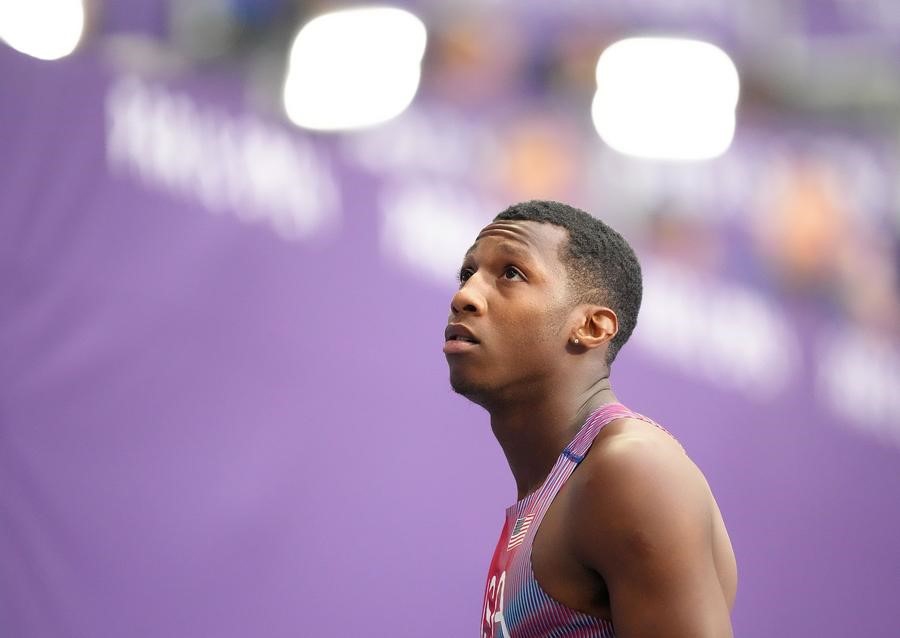
US sprinter Erriyon Knighton, embroiled in a doping controversy, finished fourth in the men's 200-meter final at the Paris Olympics on Thursday. However, his abrupt departure from the media zone without taking interviews has fueled further suspicion regarding his eligibility to compete.
Knighton tested positive for the banned steroid trenbolone during an out-of-competition test on March 26. However, the US Anti-Doping Agency (USADA) opted not to impose a suspension, attributing the positive result to contaminated meat. This decision allowed Knighton to compete in the Paris Olympics qualifiers, a move that sparked widespread concern.
The China Anti-Doping Agency (CHINADA) released two statements on Thursday, one calling for strengthened testing of US athletes, and the other calling for an independent investigation into the actions of the US Anti-Doping Agency (USADA) following latest revelations about the USADA's misconduct and double standards.
"USADA has long ignored its own anti-doping shortcomings while attempting to impose double standards on other countries, exposing its hypocritical and inconsistent approach to anti-doping enforcement," CHINADA said in a statement sent to the Global Times.
When asked about Knighton's whereabouts, a US team staff member informed reporters that Knighton had already left and did not stop for interviews, the Xinhua News Agency reported. Fellow journalists reported that Knighton hurried past American TV reporters without saying a word.
"Why are the usually vocal American athletes silent this time?" Many netizens raised the question on social media.
"Knighton's silence is particularly striking given the ongoing scrutiny of doping practices," commented one pundit.
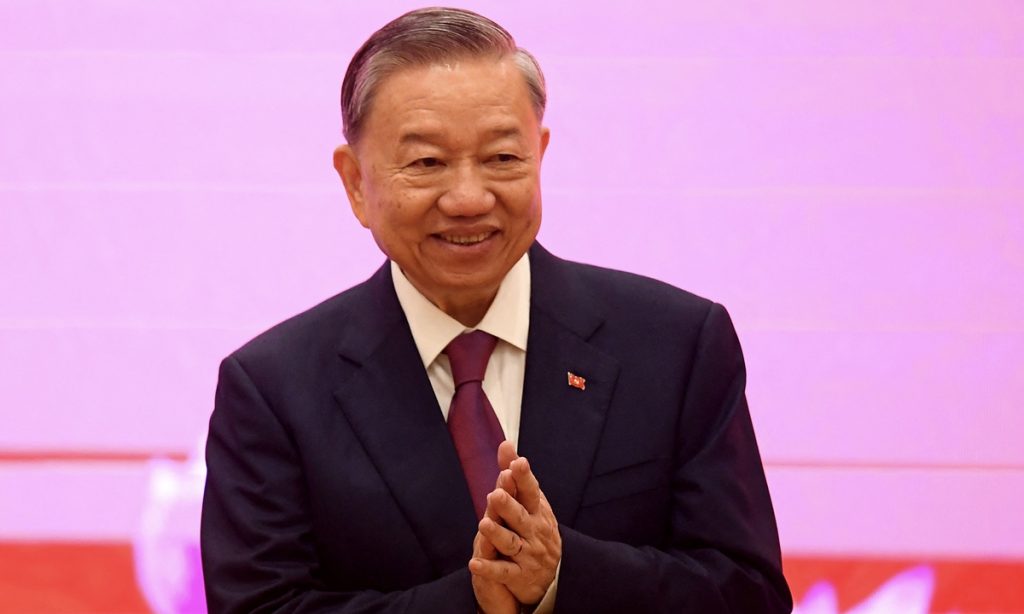
General Secretary of the Communist Party of Vietnam Central Committee and Vietnamese President To Lam arrived in Beijing on Sunday after a stop in Guangzhou, South China's Guangdong Province, earlier on Sunday, kicking off his three-day state visit to China.
Experts believe the trip reflects Vietnam's emphasis on strengthening its ties with China as a top priority while maintaining a balanced diplomacy among major powers, noting that the focus of this visit is not only on enhancing coordination between two socialist countries but also on strengthening infrastructure cooperation such as railway construction.
Lam was elected as general secretary of the Communist Party of Vietnam Central Committee on August 3, following the passing of former General Secretary Nguyen Phu Trong on July 19.
During his time in Guangzhou, Lam followed the "red footprints" of the late Vietnamese leader Ho Chi Minh and review his revolutionary activities in China, according to CCTV news.
Lam's choice of Guangzhou as his first stop in China holds historical significance as this year marks the 100th anniversary of Ho's revolutionary activities in Guangdong. It signifies the deep-rooted revolutionary tradition and friendship between the two countries, and highlights the close ties between the two parties, said Yu Xiangdong, director of the Institute for Vietnam Studies at the Zhengzhou University.
In the early 20th century, Guangzhou attracted many Vietnamese patriots, making it an important overseas base for comrades like Ho.
Lam, his wife and a high-ranking delegation of Vietnam paid a floral tribute to martyr Pham Hong Thai at his grave in the Huanghuagang Memorial Park in Guangzhou, and visited the relic site of the headquarters of the Vietnamese Revolutionary Youth League in the city early Sunday morning, Vietnam News Agency reported.
In addition, the Vietnamese delegation also aims to learn from China's reform and opening-up process by studying the case of Guangzhou, which has been at the forefront of this process. What's more, given that Guangdong ranks at the top among Chinese provinces in terms of trade volume with Vietnam, the delegation would like to seek deepened cooperation to promote its own economic development, said Gu Xiaosong, dean of the ASEAN Research Institute of Hainan Tropical Ocean University.
China is Vietnam's largest trading partner, with Guangdong accounting for 20 percent of the bilateral trade, and enjoying a productive collaboration with Vietnam in various fields.
Last December, China and Vietnam agreed to build a community with a shared future that carries strategic significance. Lam's visit will also be the two top leaders' first face-to-face interaction since assuming the new positioning of bilateral relations.
Under Nguyen Phu Trong's term, Vietnam's foreign policy has adhered to a "bamboo diplomacy" featuring a balanced strategy among major powers including China, the US, and Russia. Lam is expected to follow the path set by his predecessor and develop relations with Washington in terms of trade and security cooperation, Yu noted. However, the first visit in China underscores Hanoi's emphasis on strengthening ties with Beijing within its balanced foreign policy framework, given that China and Vietnam are not only neighbors but socialist countries led by communist parties, Gu said.
Eyeing pragmatic cooperation
Boosting rail links with China is a crucial step in Vietnam's economic development, as the country is experiencing a rapid takeoff of its economy yet it's has insufficient infrastructure to support this speed.
Therefore, Lam will likely discuss railway cooperation with China, which possess the world's leading high-speed rail technology and great financial advantages. What's more, given the geographical proximity, once high-speed rail is established between the two countries, Vietnam can access the Chinese market and further expand toward Europe by connecting through China, as Europe is also a significant market for Vietnam, observers said.
In the first seven months of this year, a total of 6,850 containers have been transported through the China-Vietnam railway, a 16-fold increase compared to the previous year, putting bilateral trade onto an "express lane," according to authorities in Nanning, South China's Guangxi Zhuang Autonomous Region.
Another major focus of Lam's trip is to enhance communication between the two parties, said experts. Given that China and Vietnam are among the world's few socialist countries, it is crucial to enhance political exchanges to prevent peaceful evolution, Gu said.
At the invitation of General Secretary of the Communist Party of China Central Committee and Chinese President Xi Jinping, General Secretary of the Communist Party of Vietnam Central Committee and Vietnamese President To Lam will pay a state visit to China from Aug. 18 to 20, foreign ministry spokesperson Hua Chunying announced Thursday.
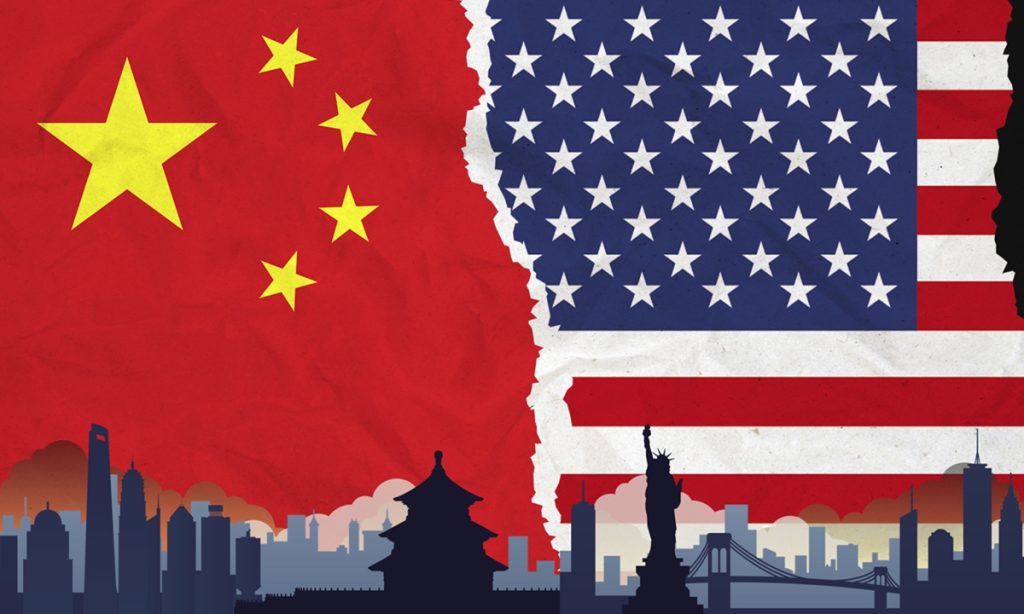
Chinese and US economic officials will hold another round of talks under the Financial Working Group mechanism later this week in Shanghai, according to several US media reports, indicating that the world's two biggest economies are continuing their dialogue amid mounting bilateral trade tensions and growing risks for the global economy.
The talks, which reportedly will take place on Thursday and Friday, come after the third plenary session of the 20th Central Committee of the Communist Party of China (CPC) drew up sweeping reforms that are set to underpin China's high-quality development for years to come, and as global markets are increasingly worried about the prospects of the US economy, which some fear could fall into a potential recession.
Amid its economic woes, Washington needs coordination with China to respond to potential risks and challenges and ensure overall economic and financial stability, analysts said. And enhanced dialogue and cooperation between Chinese and US officials will help inject a sense of stability into an increasingly uncertain global geo-economic situation, the analysts said, urging the US to stop politicizing trade issues and remove restrictions and tariffs against Chinese products.
Timely talks
The US delegation led by Brent Neiman, the Treasury Department's assistant secretary for international finance, departed the US on Monday and the talks will take place on Thursday and Friday, The New York Times reported on Monday. The US delegation is expected to meet with senior officials from the People's Bank of China, the central bank and other departments, according to the report.
Chinese officials have not yet publicly confirmed the talks as of press time on Tuesday. This would be the fifth meeting of the Financial Working Group, which was established in 2023 as part of efforts by the two countries to strengthen communication on economic and financial issues. The fourth meeting was held in April in Washington, where the two sides held discussions on a wide range of issues, including monetary policies, financial stability and cooperation on financial regulation.
While the upcoming talks will likely continue to focus on similar issues, there are new pressing issues that will be discussed, including growing concerns over the US economy that has rattled global markets, analysts said.
"The US pays attention to Chinese policies and seeks dialogue with China largely because of its own interests, especially as the US faces economic pressure," Xin Qiang, deputy director of the Center for American Studies and director of the Center for Taiwan Studies at Fudan University, told the Global Times on Tuesday. "US inflation has not fallen back to an ideal range and new jobs data was disappointing, which lays bare the underlying economic problems. Some analysis even suggests that the US economy may face a potential recession."
Highlighting their keenness to enhance communication with China amid growing risks facing the US economy, US officials have also revealed their intentions for the upcoming talks.
"We intend for this FWG meeting to include conversations on financial stability, issues related to cross-border data, lending and payments, private-sector efforts to advance transition finance, and concrete steps we can take to improve communication in the event of financial stress," Neiman said ahead of the trip, referring to the abbreviation for the financial working group, according to The New York Times.
This shows that the US side wants to coordinate with China in terms of macro policies and responses to potential economic troubles, analysts said.
"In view of the current poor expectations for economic growth and the need to avoid global shocks caused by major monetary policy adjustments, the topics of the talks are timely and urgent," Zhang Monan, deputy director of Institute of American and European studies at the China Center for International Economic Exchanges in Beijing, told the Global Times on Tuesday.
Zhang said that coordination and cooperation between China and the US over policies are conducive to stabilizing global financial markets and also beneficial to both sides. "As China and the US are major economic powers, coordination of their monetary and financial policies is of great significance to stabilizing the global financial market," he said.
China's growing role
While the US continues its attempt to contain China's development, it also increasingly realizes the irreplaceable role of China in helping deal with both global as well as the US' economic issues, especially as China continues to promote high-quality development and high-level opening-up, analysts said.
Indeed, one of the main topics of the upcoming talks in Shanghai may focus on the reform measures outlined at the third plenary session of the 20th CPC Central Committee, they said.
"The third plenum serves as an important wind vane for China's future reform and has attracted the attention of the world. As the world's second-largest economy, China will release growth momentum through a new round of reform and opening-up in the future, which will have a huge impact on the world economy," Zhang said, noting that the US also pays great attention to Chinese policies in areas such as the financial industry and market access.
In contrast to some inward and protectionist trends in some countries and regions, including the US, China continues to strive for high-quality development and high-level opening-up. "Opening-up is a defining feature of Chinese modernization. We must remain committed to the basic state policy of opening to the outside world and continue to promote reform through opening-up," the communique of the latest third plenary session stated.
Analysts said that as the communique clearly stated, China will continue to promote high-quality, sustainable development and will expand high-level opening-up, which will create more opportunities for the world, and relevant countries should stop smearing Chinese policies and stop politicizing economic and trade issues.
Even as they pursue talks with Chinese counterparts, US officials have continued their crackdown campaign against Chinese products and businesses. For example, after the fourth round of talks of the Financial Working Group, the US in May announced additional tariffs on a wide range of Chinese products, including electric vehicles. The US has since delayed the imposition of the additional tariffs on some products.
At the upcoming talks, Chinese officials are expected to raise concerns over the US' economic and trade restrictions, according to analysts.
"The US has apparently realized that imposing additional tariffs on Chinese products will only increase the costs for US consumers and exacerbate the US inflation," Xin said, adding that despite such a realization, US politicians, out of political considerations, choose to defy basic economic laws.
He Weiwen, a senior fellow at the Center for China and Globalization, said that the US may, under domestic economic pressure, pursue talks with China, but it is unlikely to stop its long-term containment of China. "We must have a clear understanding of this, while seeking to stabilize and improve China-US bilateral ties," He told the Global Times on Tuesday.
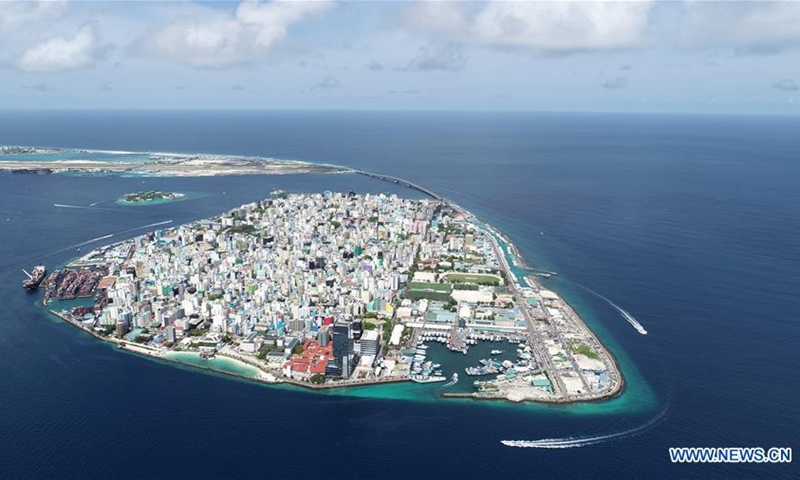
After Indian External Affairs Minister S. Jaishankar assured that ties with the Maldives are a priority during his meeting with top Maldivian officials on Saturday, some Indian media said Jaishankar's visit has China in mind. Chinese experts said on Sunday that China does not seek exclusive engagement or cooperation from Maldives, while India perceives China as a threat to its supremacy in the region.
According to the Press Trust of India (PTI), Jaishankar on Saturday met Maldives President Mohamed Muizzu and other top leaders in the first high-level trip from New Delhi after Muizzu assumed office in November last year. Indian media outlets also mentioned China's "growing military ties" with the Maldives as part of their coverage on the relationship between India and the Maldives.
Some Western media claimed that the Maldives, which is strategically located in the Indian Ocean, is caught in competition between India and China.
Long Xingchun, a professor from the School of International Relations at Sichuan International Studies University, told the Global Times on Sunday that China views its relations with countries in the Indian Ocean, including the Maldives, as normal relations. However, India perceives China as a competitor that would challenge its supremacy in the region, which is India's self-perception.
Sovereign countries have the right to establish normal relations with any other country, as seen in China's relationships with Nepal and the Maldives. China does not seek exclusive engagement or cooperation from the Maldives, Long said.
Long added that China also supports the Maldives in fostering friendly cooperation with India, and China does not impose the need for small South Asian countries to align with a particular side, as China views such demands demonstrate a lack of respect for the sovereignty of these countries.
The relationship between India and the Maldives has been under severe strain since Muizzu took charge and demanded the withdrawal of Indian military personnel manning three aviation platforms gifted by India to the Maldives, PTI said.
Long noted that India may feel somewhat embarrassed about withdrawing its military personnel, particularly given the close relationship between the Maldives and China.
However, due to the strong ties between India and the Maldives, including the fact that a significant number of tourists in Maldives are from India, India is seeking to repair this relationship, Long added. Continuing to isolate the Maldives could potentially push the current government further toward China, which would not be beneficial for India.
The chairman of the China Council for the Promotion of International Trade (CCPIT) Ren Hongbin on Wednesday (local time) met with Craig Allen, president of the US-China Business Council (USCBC), in Washington during a roundtable on promoting exchanges between the two countries' business communities, the CCPIT said on Thursday.
The roundtable was one of the events held during a week-long visit by the Chinese business delegation to the US, following a US business delegation visiting China that ended on July 23, on the heels of the recently concluded third plenum of the 20th Communist Party of China Central Committee.
Ren said that the third plenum emphasized that China should develop new institutions for a higher-standard open economy, which will provide rare historical opportunities for deepening exchanges and cooperation between the business communities of China and the US, and achieving win-win cooperation.
Ren expressed hope that the two councils can enhance exchanges and make efforts to promote bilateral business relations.
Allen was thankful for the CCPIT's and Chinese business' efforts in meeting foreign companies' operating demand in China. He said he is looking forward to more measures to implement the guideline of the third plenum and the policies boosting domestic demand in China.
The event brought together a Chinese business delegation consisting of multiple entrepreneurs and executives from 11 top 500 US-based companies, according to the CCPIT.
Representatives from the US business community expressed optimism about the positive signal of China's broader opening-up. They hoped that US companies could participate in China's modernization drive and achieve win-win cooperation, adding that the China International Supply Chain Expo offers a platform for productive communication between enterprises from the two countries.
Invited by the CCPIT, a US business delegation led by Raj Subramaniam, board chair of the US-China Business Council, arrived in Beijing on July 22, comprising top executives from US-based multinational companies, including Micron, Goldman Sachs, Apple and Boeing.
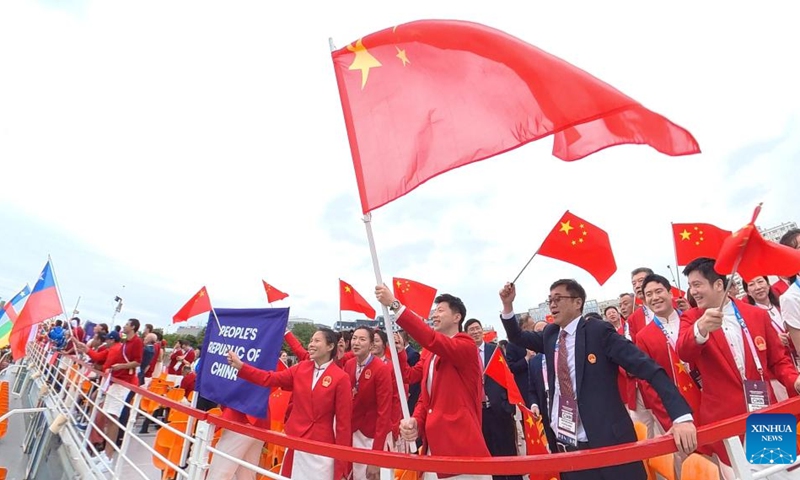
At the Paris Olympic Games, Team China has showcased confidence, friendship and unity by paying tribute to the Olympic motto of "Faster, Higher, Stronger -- Together" with their best competitive state and many heartwarming moments, analysts said.
In contrast, the lingering doubts over the doping case of American Olympic sprinter Erriyon Knighton is causing concerns but the US has turned a blind eye to its own athletes who violated the rules while busy accusing the China Anti-Doping Agency and World Anti-Doping Agency (WADA) of "covering up the truth" and demanding sanctions against Chinese athletes. The US' domineering attitude of "I can only check you, but you are not allowed to check me" shows a hegemonic mindset, analysts said.
WADA responded to a Reuters story of Wednesday local time exposing a scheme whereby the US Anti-Doping Agency (USADA) allowed athletes who had doped, to compete for years, in at least one case without ever publishing or sanctioning their anti-doping rule violations, in direct contravention of the WADA and USADA's own rules.
This USADA scheme threatened the integrity of sporting competition, which the anti-doping code seeks to protect. By operating it, USADA was in clear breach of the rules. Contrary to the claims made by USADA, WADA did not sign off on this practice of permitting drug cheats to compete for years on the promise that they would try to obtain incriminating evidence against others, according to the statement published by WADA on Wednesday.
"WADA is now aware of at least three cases where athletes who had committed serious anti-doping rule violations were allowed to continue to compete for years while they acted as undercover agents for USADA, without it notifying WADA and without there being any provision allowing such a practice under the Code or USADA's own rules," said the WADA statement.
Li Xiang, a sports commentator who is covering the Olympic Games in Paris, told the Global Times on Thursday that the friction with WADA has shown that Team USA is not clean at all, and this makes those groundless accusations launched by the US authorities, media and some individuals against China and other countries on the doping issue even more unconvincing. Li said the US using its hegemonic influence and power to contain China and other competitors in sports is truly a disgrace and unsportsmanlike.
In any field that used to be dominated by the US, once Chinese or other countries' athletes make history and even break world records, the US will launch all-out campaign to stigmatize its competitors, weaponize its influence, conduct long-arm jurisdiction against its challengers, and this situation will likely become a new normal in the coming years, Shen Yi, a professor on international relations at Fudan University, told the Global Times on Thursday.
According to the New York Times on Thursday, US Congress has threatened to cut funding for the WADA. The Justice Department and the FBI have opened criminal investigations into how the WADA tests were handled.
Clearly, the US, just like what it has always done in the UN and other fields like international trade disputes or sci-tech rivalry, will use all it has, including sanctions, bans, boycotts, stigmatizations, war of words, long-arm jurisdiction and so on, to contain its competitor and defend its hegemony, Li said.
Apart from the doping issue, the US also has tension with other countries' teams in Paris. According to CNN on Wednesday, Romanian Prime Minister Marcel Ciolacu is refusing to attend the Olympics closing ceremony in protest over the women's floor exercise final earlier this week in which two Romanian gymnasts did not make the medal stand due to controversial judgement that favored US gymnasts.
China: friendship and unity
Team China, which now ranks NO.2 on the medal list, has demonstrated charm and sportsmanship in Paris, as Chinese young athletes win friendship and respect from their rivals and foreign audiences.
According to the Xinhua News Agency, Spanish badminton player Carolina Marin thanked He Bingjiao for her heartwarming gesture - showcasing a Spain pin on the medal podium.
Marin, leading the semifinal against He midway through the second game of the match, was forced to withdraw due to a serious knee injury, which sent her rival into the final. Although He only won silver, she showed in the medal ceremony that she had not forgotten Marin by showing a badge of the Spanish flag to the cameras.
Marin returned to Spain on Monday, where tests showed the 31-year-old has torn the cruciate knee ligament in her right knee for the second time in her career. She thanked He for her podium gesture.
"The moment on the podium is one of the kindest gestures I have ever had toward me and I will always be incredibly grateful," she wrote, adding that she had "never received as much affection and support.''
Another moment that demonstrated true Olympic spirit was when the table tennis players from China, North Korea, and South Korea stood together on the podium and happily took a selfie on July 30.
In the mixed doubles table tennis final at the Paris Olympics, the Chinese duo Wang Chuqin and Sun Yingsha defeated the North Korean team 4-2 to win the gold medal. The North Korean team took silver, while the South Korean team won bronze.
After the match, Chinese athlete Sun Yingsha organized a selfie with athletes from China, North Korea, and South Korea to commemorate the moment, CCTV reported.
Sports competitions are typically seen as contests between nations, but in this touching moment, they showcased the friendship and unity among athletes, analysts said.
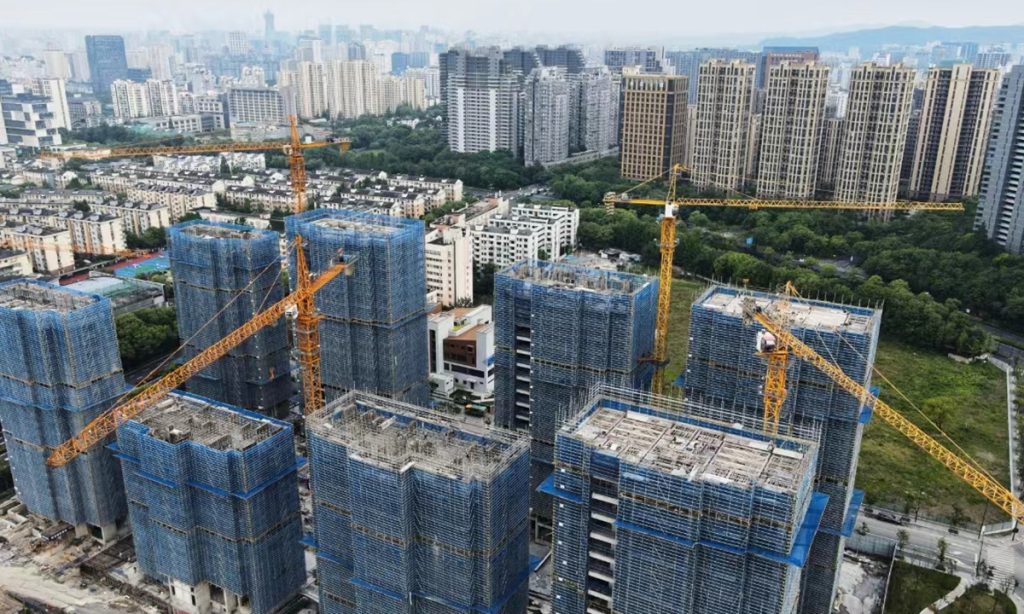
China's government-subsidized housing construction has gained momentum this year. By the end of June, 1.128 million units have been built, or completing 66.2 percent of the annual target, with investments totaling 118.3 billion yuan ($16.5 billion), Xinhua News Agency reported on Wednesday.
The progress came amid efforts by Chinese cities to strengthen policy support and advance related housing projects, in line with the central government's recent resolution to enhance the country's social security system, which includes scaling up construction and supply of government-subsidized apartments to improve residential well-being.
In Fuzhou, East China's Fujian Province, the city has recently introduced a dual application system for its first government-subsidized housing project based on the allotted purchase model, offering both online and offline options to streamline the application process for home-buyers.
As of the end of July, 362 out of the 701 housing units planned as part of the project had been successfully applied, thanks to its diverse application channels and flexible allocation principles, local authorities said.
Major Chinese cities such as Guangzhou, Shenzhen, Hangzhou, and Shanghai have also kicked off various government-subsidized housing projects.
As of July, Hangzhou has accumulated approximately 170,000 units of public rental housing, 264,600 units of government-subsidized rental housing, and 17,400 units of shared ownership housing. The city plans to commence construction of no fewer than 6,000 units of government-subsidized housing for sale in 2024.
In Shanghai, government-subsidized rental housing has also seen rapid progress, with around 47,000 new units constructed and 34,000 units supplied by mid-year, official data showed.
During the first half of the year, the Chinese government's work on affordable housing mainly focused on promoting major housing projects, managing existing inventory and optimizing market supply, Yan Yuejin, research director at Shanghai-based E-house China R&D Institute, told the Global Times on Wednesday.
"Recent high-level meetings in Beijing clarified the direction for future real estate development, such as ramping up affordable housing projects," Yan said.
China's Ministry of Housing and Urban-Rural Development plans to continue following up with the projects' execution and ensuring financial backing to speed up construction and meet annual targets.
Yan noted that the achievements in the first half laid a solid basis for advancing efforts in the second half. Ongoing improvements in housing market, particularly addressing the needs of first-time buyers, will help resolve housing issues for key group.
China is pushing to build a new real estate sector development model on the bedrock of the "three major projects" - involving affordable housing, advancing the construction of public infrastructure for both normal and emergency use, and the renovation of run-down neighborhoods in cities.
On July 31, China's State Council, the cabinet, pledged increased central fiscal support for affordable rental housing and urban infrastructure upgrades in a new five-year urbanization plan, as part of efforts to speed up urbanization and boost domestic demand.