A doctor explains to a young couple that he has screened the pair’s in vitro fertilized embryos and selected those that had no major inheritable diseases. The couple had specified they want a son with hazel eyes, dark hair and fair skin. Then the doctor announces that he has also taken the liberty of eliminating the “burden” of genetic propensities for baldness, nearsightedness, alcoholism, obesity and domestic violence.
The prospective mother replies that they didn’t want those revisions. “I mean diseases, yes, but …” Her husband jumps in to say, “We were just wondering if it’s good to leave a few things to chance.” But the doctor reminds the would-be parents why they came to him in the first place. They want to give their child “the best possible start.”
That’s a scene from the movie Gattaca, which premiered 20 years ago in October. But thanks to recent advances in gene-editing tools such as CRISPR/Cas9, genetic manipulation of human embryos is becoming reality.
Soon, designer babies like those described in the film may even become morally mandatory, some ethicists say.
Gattaca’s narrator tells us that such genetic manipulation of in vitro fertilized embryos has become “the natural way of giving birth” in the near future portrayed in the film. It has also created an underclass of people whose parents didn’t buy those genetic advantages for their children. Until recently, that sort of fiddling with human DNA was only science fiction and allegory, a warning against a new kind of eugenics that could pit the genetic haves and have-nots against each other. At a symposium sponsored by the Hastings Center on October 26 before the World Conference of Science Journalists in San Francisco, ethicists and journalists explored the flip side of that discussion: whether parents have a moral obligation to make “better” babies through genetic engineering. Technology that can precisely change a baby’s genes is quickly becoming reality. This year, scientists reported using CRISPR/Cas9 in viable human embryos to fix mutations that cause heart and blood disorders. CRISPR/Cas9 acts as a molecular scissors that relatively easily and precisely manipulates DNA. Scientists have honed and developed the tool in the roughly five years it has been around, creating myriad “CRISPR” mice, fish, pigs, cows, plants and other creatures. Its use in human embryos has been hotly debated. Should we or shouldn’t we?
For many people, the fear of a class of genetically enhanced people is reason enough not to tinker with the DNA of the human germline — eggs, sperm, embryos and the cells that give rise to eggs and sperm. By all means, correct diseases, these folks say, but don’t add extras or meddle with characteristics that don’t have anything to do with health. A panel of ethicists convened by the U.S. National Academies of Medicine and Science also staked out that position in February, ruling that human germline engineering might someday be permissible for correcting diseases, but only if there are no alternatives and not for enhancements.
But the question “should we?” may not matter much longer, predicted the Hastings Center’s Josephine Johnston at the symposium. As science advances and people become more comfortable with gene editing, laws prohibiting tinkering with embryos will fall, she said, and it will be up to prospective moms and dads to decide for themselves. “Will editing a baby’s genes be mandatory, the kind of thing you’re supposed to do?”
For Julian Savulescu, an ethicist at the University of Oxford, the answer is yes. Parents are morally obligated to take steps to keep their children healthy, he says. That includes vaccinating them and giving them medicine when they’re ill. Genetic technologies are no different, he argues. If these techniques could make children resistant to infections, cancer or diabetes, then parents have an obligation to use them, he says.
For now, he cautions, CRISPR’s safety and efficacy haven’t been established, so parents shouldn’t subject their children to the risks. He also points out that this sort of editing would also require in vitro fertilization, which is prohibitively costly for many people. (And couples could pretty much forget about having the perfect baby through sexual intercourse. Designer darlings would have to be created in the lab.)
But someday, possibly soon, gene editing could become a viable medical intervention. “If CRISPR were safe and not excessively costly, we have a moral obligation to use it to prevent and treat disease,” Savulescu says.
Using gene editing to cure genetic diseases is something retired bioethicist Ronald Green of Dartmouth College can get behind. “I fully support the reproductive use of gene-editing technology for the prevention and elimination of serious genetic diseases,” Green said at the symposium. “If we could use gene editing to remove the sequences in an embryo that cause sickle cell disease or cystic fibrosis, I would say not only that we may do so, but in the case of such severe diseases, we have a moral obligation to do so.”
But that’s where a parent’s obligation stops, Green said. Parents and medical professionals aren’t required to enhance health “to make people who are better than well,” he said.
Savulescu, however, would extend the obligation to other nondisease conditions that could prevent a kid from having a full set of opportunities in life. For instance, children with poor impulse control may have difficulty succeeding in school and life. The drug Ritalin is sometimes prescribed to such kids. “If CRISPR could do what Ritalin does and improve impulse control and give a child a greater range of opportunities,” he says, “then I’d have to say we have the same moral obligation to use CRISPR as we do to provide education, to provide an adequate diet or to provide Ritalin.”
Green rejected the idea that parents should, or even could, secure a better life for their kids through genetic manipulation. Scientists haven’t identified all the genes that contribute to good lives — and there are plenty of factors beyond genetics that go into making someone happy and successful. Already, Green said, “the healthy natural human genome has enough variety in it to let any child successfully navigate the world and fulfill his or her own vision of happiness.” (A version of his remarks was posted on the Hastings Center’s Bioethics Forum.)
Many traits that would help a person make more money or have an easier life are associated with social prejudices and discrimination, says Marcy Darnovsky, the executive director of the Center for Genetics and Society in Berkeley, Calif. People who are taller and fair-skinned tend to make more money. If parents were to engineer their children to have such traits, “I think we would be inscribing those kinds of social prejudices in biology,” she says. “We get to very troubled waters very quickly as a society once we start down that road.”
Creating a class of “genobility,” as Green calls genetically enhanced people, would increase already staggering levels of inequality, Darnovsky says. That, says Savulescu, “is the Gattaca objection I often get.”
Yes, he acknowledges, “it could create even greater inequalities, there’s no doubt about that.” Whenever money is involved, people who have more of it can afford better treatments, diets and healthier lifestyles — and disparities will exist. “However, this is not inevitable,” Savulescu says. Countries with national health care systems could provide such services for free. Such measures could even correct natural inequalities, he argues.
Johnston worries that genetic manipulation could change family dynamics. Parents might be disappointed if their designer baby doesn’t turn out as desired. That’s a variation of the old problem of unfulfilled parental expectations, Savulescu says. “It’s a problem that deserves attention, but it’s not a problem that deserves banning CRISPR,” he says.
Imagine a world where the polar ice sheets are melting, sea level is rising and the atmosphere is stuffed with about 400 parts per million of carbon dioxide. Sound familiar? It should. We’re living it. But the description also matches Earth a little over 3 million years ago, in the middle of the geologic epoch known as the Pliocene.
To understand how our planet might respond as global temperatures rise, scientists are looking to warm periods of the past. These include the steamy worlds of the Cretaceous Period, such as around 90 million years ago, and the boundary of the Paleocene and Eocene epochs, about 56 million years ago. But to many researchers, the best reference for today’s warming is the more recent Pliocene, which lasted from 5.3 million to 2.6 million years ago. The mid-Pliocene was the last time atmospheric CO2 levels were similar to today’s, trapping heat and raising global temperatures to above the levels Earth is experiencing now.
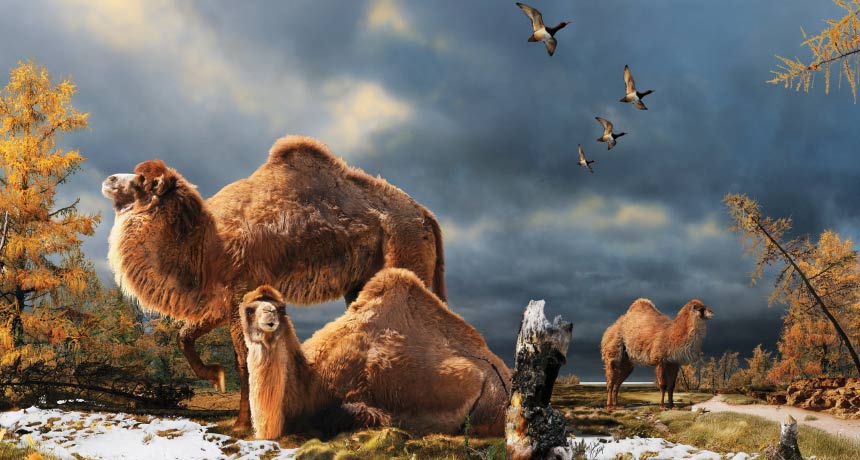
New research is illuminating how the planet responded to Pliocene warmth. One set of scientists has fanned out across the Arctic, gathering geologic clues to how temperatures there may have been as much as 19 degrees Celsius higher than today. The warmth allowed trees to spread far to the north, creating Arctic forests where three-toed horses, giant camels and other animals roamed. When lightning struck, wildfires roared across the landscape, spewing soot into the air and altering the region’s climate. Other researchers are pushing the frontiers of climate modeling, simulating how the oceans, atmosphere and land responded as Pliocene temperatures soared. One new study shows how the warmth may have triggered huge changes in ocean circulation, setting up an enormous overturning current in the Pacific Ocean, similar to the “conveyor belt” in today’s Atlantic that drives weather and climate. A second new paper suggests that the Greenland and Antarctic ice sheets might have responded differently to Pliocene heat, melting at different times.
All this research into the last great warm period is helping scientists think more deeply about how the future might play out. It may not be a road map to the next 100 years, but the Pliocene is a rough guide to the high sea levels, vanishing ice and altered weather patterns that might arrive hundreds to thousands of years from now.
“It’s a case study for understanding how warm climates function,” says Heather Ford, a paleoceanographer at the University of Cambridge. “It’s our closest analog for future climate change.”
Walk through history Teasing out the history of the Pliocene is a little like digging through a family’s past. One group of enthusiasts goes through genealogical records, collecting data on who lived where, and when. Another group uses computer software and modeling to look for broad patterns that describe how the family grew and moved over time.
The data detectives begin their work in rocks and sediments dating to the Pliocene that are scattered around the world like family-tree histories in city library archives. In 1988, the U.S. Geological Survey began a project called PRISM, for Pliocene Research, Interpretation and Synoptic Mapping, which aims to gather as many geologic clues as possible about Pliocene environments. At its start, PRISM focused on a collection of deep-sea cores drilled from the floor of the North Atlantic Ocean. Different types of marine organisms thrive in water of different temperatures. By comparing the relative abundance of species of tiny organisms preserved in the deep-sea cores, PRISM scientists could roughly map how cold-loving organisms gave way to warm ones (and vice versa) at different times in the past. Early results from the project, reported in 1992 by USGS research geologist Harry Dowsett and colleagues, showed that during the Pliocene, warming was amplified at higher latitudes in the North Atlantic.
Scientists continue to add to the PRISM records. One international team drilled a sediment core from beneath a Siberian lake and found that summer air temperatures there, in the mid-Pliocene, were as high as 15° C (about 59° Fahrenheit). That’s 8 degrees warmer than today (SN: 6/15/13, p. 13). Other researchers uncovered clues, such as plant fossils from peat bogs, that suggest mean annual temperatures on Canada’s now-frozen Ellesmere Island near Greenland were as much as 18 degrees higher than today (SN: 4/6/13, p. 9).
Now, a new group of biologists, geoscientists and other experts in past landscapes have banded together in a project called PoLAR-FIT, for Pliocene Landscape and Arctic Remains — Frozen in Time. The team is focusing on the Arctic because, just as today’s Arctic is warming faster than other parts of the planet, the Pliocene Arctic warmed more than the rest of the globe. “That’s what we call polar amplification,” says Tamara Fletcher, a team member and paleoecologist at the University of Montana in Missoula. “It was even more magnified in the Pliocene than what we’re seeing today.”
PoLAR-FIT scientists travel to the Arctic to collect geologic evidence about how the region responded to rising temperatures in the Pliocene. In the thawing permafrost slopes of Ellesmere Island, for instance, Fletcher and colleagues have been mapping black layers of charcoal in sediments dating from the Pliocene. Each charcoal layer represents a fire that burned through the ancient forest. By tracking the events across Ellesmere and other nearby islands, Fletcher’s team discovered that fire was widespread across what is now the Canadian Arctic. Wildfires changed vegetation across the landscape, possibly altering how the Arctic responded to rising temperatures. Soot rising from the fires would have darkened the skies, potentially leading to local or regional weather changes. “How important is that to the warming?” asks Bette Otto-Bliesner, a paleoclimatologist at the National Center for Atmospheric Research in Boulder, Colo. “That’s something we’re still trying to determine.” Fletcher, Otto-Bliesner and colleagues described the charcoal discovery, along with modeling studies of the fires’ effects, in Seattle in October at a meeting of the Geological Society of America.
In 2012, about 283,280 square kilometers of forest burned in Russia. Three years later, more than 20,230 square kilometers burned in Alaska. Last summer, a wildfire broke out in the icy landscape of western Greenland. “We’re already seeing fire in the Arctic, which is unusual today,” Fletcher says. “But it wouldn’t have been unusual in the Pliocene.”
While the work doesn’t predict how much of the Arctic will burn as temperatures rise, the findings do suggest that people need to prepare for more fires in the future. Trapped ocean heat Scientists like Fletcher are the genealogists of the Pliocene, collecting records of past environments. Other researchers — the computer modelers — put those old records into broad context, like historians analyzing family trees for patterns of migration and change.
The modelers begin with data on Pliocene temperatures — such as how hot it got on Ellesmere Island or in the North Atlantic Ocean, as revealed by plant fossils or seafloor sediments. Scientists can also estimate how much CO2 was in the atmosphere at the time by looking at clues such as the density of holes in fossilized leaves of Pliocene plants, which used those openings to take up CO2. Estimates vary, but most suggest CO2 levels were about 350 to 450 ppm in the mid-Pliocene. It’s not clear what caused the gas buildup during the Pliocene; one possibility is it came from long-term changes in the way carbon cycles between the land, ocean and atmosphere. But no matter the source, the high levels of CO 2 caused temperatures to soar by trapping heat in the atmosphere. The Pliocene isn’t a perfect crystal ball for today. For starters, scientists know why CO2 levels are now increasing — burning of fossil fuels and other human activities (SN: 5/30/15, p. 15). As the Industrial Revolution was gaining steam, in the 19th century, atmospheric CO2 levels were around 280 ppm. Today that level is just above 400 ppm, and rising.
Modeling the Pliocene climate can help reveal how Earth responded in somewhat similar conditions. That means studying changes in the Pliocene atmosphere, the land surface and most of all the oceans, which absorb the bulk of planetary warming. “That’s the sort of thing you can understand from studying past warm episodes,” Ford says. “What was different about how heat and carbon were moving around in the ocean?”
Ford has begun working with climatologist Natalie Burls of George Mason University in Fairfax, Va., to try to track how the oceans’ major water masses shifted during the Pliocene. Today the North Atlantic has a deep, cold, salty layer that is crucial to the ocean’s “conveyor belt” circulation. In this pattern, warm waters flow northward from the tropics, then cool and become saltier and denser as they reach higher latitudes. That cool water sinks and travels southward, where it warms and rises and begins the cycle all over again.
This conveyor belt circulation is important to today’s Atlantic climate, because it allows the warm Gulf Stream to moderate temperatures from the U.S. East Coast to Western Europe. Burls and colleagues have now found that a similar pattern might have existed in the Pacific during the Pliocene. They call it the Pacific meridional overturning circulation, or PMOC, just as today’s similar Atlantic circulation is known as the AMOC.
Burls’ team discovered this phenomenon by modeling how the Pliocene ocean would have responded to higher temperatures. Because the Arctic was so warm, the temperature difference between the equator and the mid- and high latitudes was not as great as it is today. The weaker temperature gradient would have meant less rainfall and more evaporation in the midlatitude North Pacific. As a result, its uppermost waters would have gotten saltier. When the North Pacific waters got salty enough, they cooled and sank, setting up an enormous current that dove deep off the coast of northeastern Russia and traveled southward until the water warmed enough to once again rise toward the surface. Real-world data back the claim: Accumulations of calcium carbonate in deep-sea Pacific sediments show that the Pliocene ocean experienced huge shifts at the time, with waters churning all the way from the surface down to about three kilometers deep, as would be expected from a conveyor belt–type circulation. The team reported the finding in Science Advances in September.
What happened in the Pliocene Pacific may say something about the Pacific of the distant future, Burls says. As temperatures rise today, most of the heat is being taken up by the surface layers of the oceans. Over the short term, that works to prevent changes in deep ocean circulation. “Today we’re very quickly turning on the heating, and it will take a while for the deep ocean to adjust,” Burls says.
But in the longer term, thousands of years from now, waters in the North Pacific may eventually become warm and salty enough to establish a PMOC, just as there was in the Pliocene. And that could lead to major changes in weather and climate patterns around the globe.
Land bridges and ice sheets Other modelers are looking beyond the Pacific to improve their understanding of how different parts of the Pliocene world behaved. About a dozen research groups recently launched a new effort called PlioMIP2, or Pliocene Model Intercomparison Project, Phase 2, to model the climate of a time somewhat similar to today in the mid-Pliocene, about 3.205 million years ago.
“We’re working to produce the best picture that we can of what life seemed to be like at the time,” says Alan Haywood, a climate modeler at the University of Leeds in England and a leader of the effort.
In one discovery, project scientists have found that small changes in the geography of their modeled world make a big improvement in the final results. Early models did not accurately capture how much the polar regions heated up. So PlioMIP2 researchers updated their starting conditions. Instead of assuming that the landmasses of the Pliocene world were identical to today, the group made two small, plausible changes in the Arctic. The researchers made a land bridge between Russia and Alaska by closing the Bering Strait, and they added land to connect a few modern islands in the Canadian Arctic, including Ellesmere.
The change “seems small, but it actually can have a huge impact on climate,” says Otto-Bliesner. For instance, closing the Bering Strait cut off a flow in which relatively fresh water from the Pacific travels over the Arctic and into the North Atlantic. With the updated geography, the PlioMIP2 models suddenly did a much better job of simulating heat in the high Arctic.
Otto-Bliesner will describe the team’s results in New Orleans this month at a meeting of the American Geophysical Union. Another PlioMIP2 group, Deepak Chandan and Richard Peltier of the University of Toronto, reported similar findings in July in Climate of the Past. They too found that closing the Bering Strait allowed their model to better simulate the Arctic heating.
Other Pliocene modelers are trying to figure out how the planet’s enormous ice sheets in Greenland and Antarctica might respond to rising temperatures. Geologic evidence, such as ancient beaches from the Pliocene, suggest that global sea levels then were as much as 25 meters higher than today. If all of Greenland’s ice were to melt, global sea levels would rise about six meters; if all of Antarctica went, it would contribute about 60 meters. So parts of these ice sheets, but not all, must have melted during the long-ago warm period.
Several of the PlioMIP2 research groups are modeling how the polar ice sheets responded in the heat of the Pliocene. “It will tell us how much we should be worried,” Otto-Bliesner says. One new study suggests that the northern and southern ice sheets may have behaved out of phase with each other. In a simulation of the mid- to late Pliocene, climate modeler Bas de Boer of Utrecht University in the Netherlands and colleagues found that as Greenland’s ice melted, Antarctica’s ice could have been relatively stable, and vice versa.
“At different points, they could be contributing to the sea level story or against it,” says Haywood. He, along with colleagues, reported the results in the Oct. 30 Geophysical Research Letters.
That out-of-sync melting suggests the Pliocene was a complicated time. Just because global temperatures were high doesn’t mean that all of Earth’s ice sheets melted equally. (Today, both Greenland and West Antarctica are losing ice to the oceans as global temperatures rise.)
The Pliocene wound to an end around 2.6 million years ago, as CO2 levels dropped. Chemical reactions with eroding rocks may have sucked much of the CO2 out of the atmosphere and tucked it away in the oceans, removing the greenhouse gas. The planet entered a long-term cooling trend. Since the end of the Pliocene, Earth has been in and out of a series of ice ages.
But now, greenhouse gases are once again flooding into the atmosphere. Global temperatures are ticking up inexorably year after year. That makes the lessons of the past all the more relevant for the future.
Youngsters have probably been playing their way into cultural competence for at least tens of thousands of years. So why are signs of children largely absent from the archaeological record?
A cartoon that Biblical scholar Kristine Garroway taped up in her college dorm helps to explain kids’ invisibility at ancient sites: Two men in business suits stare intently at an unidentifiable round object sitting on a table. “Hey, what’s this?” asks the first guy. “I dunno, probably a toy … or a religious object,” says the second. Archaeologists have long tended to choose the second option, says Garroway, now a visiting scientist at Hebrew Union College–Jewish Institute of Religion in Los Angeles. Ambiguous finds, such as miniature pottery vessels and small figurines, get classified as ritual or decorative objects. Some of these artifacts undoubtedly were used in ceremonies. But not all of them, Garroway argues. Of 48 miniature clay vessels excavated from inside roughly 3,650- to 4,000-year-old houses at Israel’s Tel Nagila site, 10 retained fingerprints the size of children’s that were made during the shaping of soft clay, before the clay was heated and hardened, archaeologists reported in 2013. Kids must have made those somewhat unevenly shaped jars and bowls, each easily held within a child’s hand, concluded Joe Uziel of the Israel Antiquities Authority in Jerusalem and independent Israeli researcher Rona Avissar Lewis in Palestine Exploration Quarterly. Unusual finds in Israel dating to around 3,000 years ago also represent children’s early attempts to mimic adult craftwork, Garroway said in a November 18 presentation in Boston at the annual meeting of the American Schools of Oriental Research. Numerous rounded clay disks, each pierced with two holes, have mystified investigators for nearly a century. As early as 1928, an archaeologist suggested that these button-sized objects were toys. After passing a string through both of a disk’s holes and tying the ends together, a youngster could swing the string to wind up the toy and then pull both ends of the string to make the disk spin. Clay disks from six Israeli sites can be separated into those made by skilled artisans and others — featuring rough edges and unevenly spaced holes — made by novices, including children, Garroway proposes. If those items were toys, sloppy execution may have partly resulted from children’s impatience to play with the final product, she suspects.
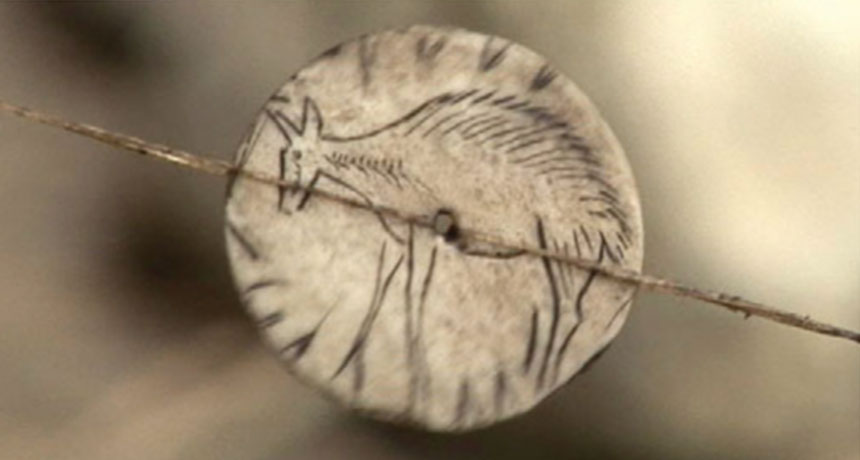
Garroway’s proposal appears likely, especially in light of evidence that more than 10,000 years earlier, people in France and Spain made similar spinning disks decorated with animals that appeared to move as the toy twirled (SN: 6/30/12, p. 12), says archaeologist Michelle Langley of Griffith University in Brisbane, Australia.
Western European finds from as early as 14,000 to 21,000 years ago also may have gone unrecognized as children’s toys, Langley suggests in a paper published this month in the Oxford Journal of Archaeology. One specimen, a cave lion carved out of a reindeer’s antler, displays so much polish from handling that children may have played with the item for years, she says. Some bone spearpoints with broken tips bear signs of unskilled repair, suggesting adults gave the damaged weapons to children to practice bone-working skills and perhaps play with, she adds.
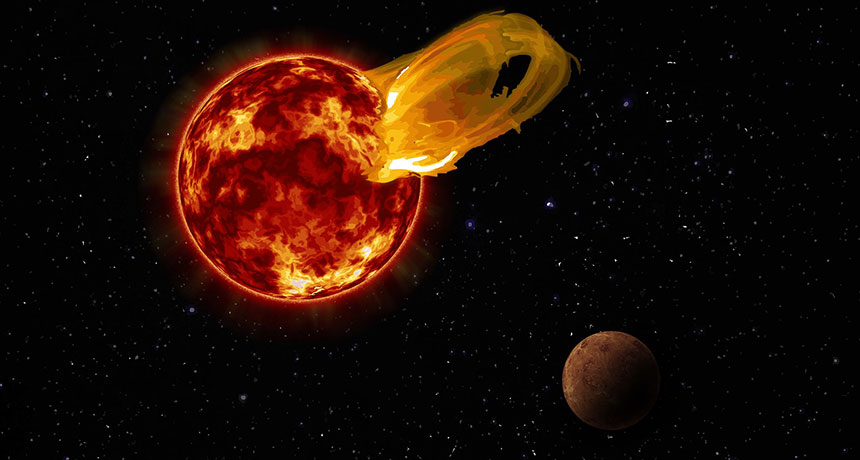
Proxima Centauri has a temper. Earth’s nearest planet-hosting neighbor released a gigantic flare in March 2017, a new analysis of observations of the star shows. And that’s bad news for the potential for life on the star’s planet, Proxima b.
The star got 1,000 times brighter over 10 seconds before dimming again. That can best be explained by an enormous stellar flare, astronomer Meredith MacGregor of the Carnegie Institution for Science in Washington, D.C., and colleagues report February 26 in Astrophysical Journal Letters. Because Proxima b is so much closer to its star than Earth is to the sun, the flare would have blasted Proxima b with 4,000 times more radiation than Earth typically gets from the sun’s flares. “If there are flares like this at all frequently, then [the exoplanet] is likely not in the best shape,” MacGregor says.
Proxima b was one of the most sought-after sites for finding life outside the solar system. Just four light-years away, it has a mass about the same as Earth’s and probably has temperatures suitable for liquid water (SN: 12/24/16, p. 20). But its star is an M dwarf, a class of small dim stars notoriously prone to flares that could rip away their planets’ atmospheres (SN: 6/24/17, p. 18). MacGregor and her colleagues reanalyzed data from a recent study led by astronomer Guillem Anglada of the Institute of Astrophysics of Andalusia in Granada, Spain. Anglada and his colleagues had observed Proxima Centauri with the Atacama Large Millimeter Array telescopes in Chile. The team saw extra light that it interpreted as a ring of dust analogous to the solar system’s Kuiper Belt, scattering the light in all directions, the team reported November 15 in Astrophysical Journal Letters. But Anglada and his colleagues had averaged the amount of light over 10 hours of observations. That smeared out any short-term changes in the star’s brightness — such as a bright flare.
When MacGregor’s team reanalyzed the data, they found that all the excess light came from the same two-minute period on March 24. A massive flare explains all the extra light, she says — none of it was masquerading as a glittering dust ring.
Anglada says he and his colleagues are aware of the March 24 flare and are currently revising their original claim. But he says the flare can’t account for all the extra light, so the dust ring theory might still survive.
Physicist Stephen Hawking, a black hole whisperer who divined secrets of the universe’s most inscrutable objects, died March 14 at age 76. In addition to his scientific research, Hawking, a professor at the University of Cambridge, was known for his popular science books, including the best-selling A Brief History of Time, which captivated readers with lucid explanations of the universe’s birth and the physical laws that rule the cosmos.
In one of his best-known discoveries, Hawking determined that black holes are not truly black. Instead, they emit a faint haze of particles, known as Hawking radiation (SN: 5/31/14, p. 16). This discovery, which arose at the interface of gravity and quantum mechanics, had remarkable consequences. It suggested that black holes are not eternal, but eventually evaporate. That led to a conundrum known as the black hole information paradox (SN: 10/3/15, p. 10): When a black hole disappears, what happens to the information that fell into it? Physicists are still puzzling over that question.
In the face of physical disabilities due to amyotrophic lateral sclerosis, which profoundly limited his mobility and ability to communicate, Hawking became one of science’s most well-known figures, and survived far beyond the timeline initially expected given his condition.
Science News has covered Hawking’s work extensively over the past decades, including his four laws of black hole mechanics, his work on miniature black holes and, most recently, Hawking’s search for a solution to the black hole paradox.
Deep in the Bale Mountains of Ethiopia, wildlife workers trek up above 9,800 feet to save some of the world’s most rare carnivores, Ethiopian wolves.
“It’s cold, tough work,” says Eric Bedin, who leads the field monitoring team in its uphill battle.
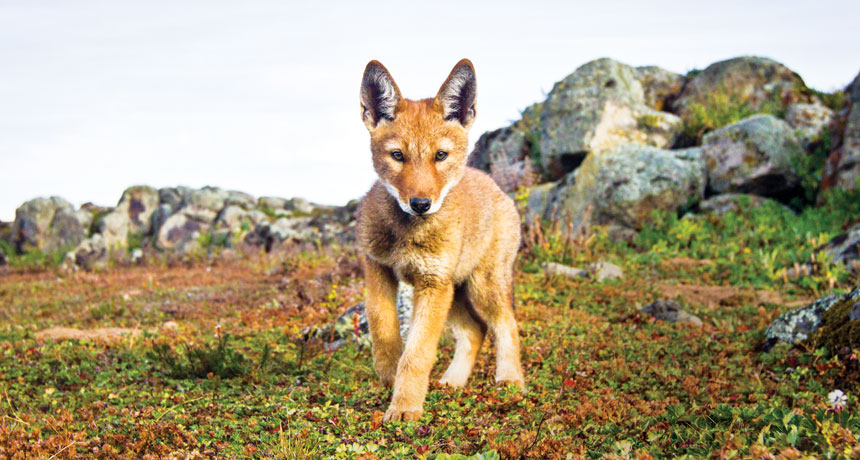
In this sparse, sometimes snowy landscape, the lanky and ginger-colored wolves (Canis simensis) reign as the region’s apex predators. Yet the combined threats of rabies, canine distemper and habitat reduction have the animals cornered.
Bedin and his colleagues, traveling by horse and on foot through dramatically shifting temperatures and weather, track these solitary hunters for weeks at a time. Team members know every wolf in most packs in these mountains. The team has vaccinated some wolves against rabies, only to have hopes dashed when the animals died of distemper months later. “These guys work their asses off to protect these wolves,” says Claudio Sillero, a conservation biologist at the University of Oxford who heads up the Ethiopian Wolf Conservation Programme, of which the field monitoring team is an integral part. Down the line, humans stand to benefit from all this work too.
Sillero and his colleagues have been at this for 30 years. They’ve seen four major outbreaks of rabies alone, each leaving dozens of carcasses across the highlands and cutting some populations by as much as 75 percent.
Today, fewer than 500 Ethiopian wolves exist — around half of them in the Bale Mountains. A new oral rabies vaccine program aims to give the endangered animals a fighting chance. It may be their best hope for survival, Sillero says.
Later this year, if all goes well, oral vaccines hidden in hunks of goat meat will be scattered across wolf ranges and eaten by the animals. One dose every two years should bolster immunity against rabies among these iconic animals immortalized on several of their country’s postage stamps. One Health Vaccinating endangered animals en masse in the wild is rarely attempted. Making the case for vaccination takes years of testing. And even when the case is strong for stepping in, the tools needed to vaccinate wildlife aren’t often available, says Tonie Rocke, an epizootiologist with the U.S. Geological Survey in Madison, Wis. On the opposite side of the globe from Bale, on North America’s Great Plains, Rocke’s lab is testing an oral vaccine to protect prairie dogs and endangered ferrets from plague. A recent synergy has made these new oral vaccine efforts possible: improvements in vaccine technology (developed for humans and domesticated animals) and growing public and scientific interest in “One Health.” The conservation buzzword refers to efforts to help one species that also benefit others, including humans.
The researchers pushing for a green light in Ethiopia point to the one shining success in oral vaccines for wild animals, and to its One Health benefits. From 1978 to 2010, oral vaccines sprinkled across parts of Europe eliminated rabies in red foxes. Europe’s rabies cases in humans and other animals dropped by 80 percent from 1984 to 2014. But rabies is still common in certain parts of the world, including Ethiopia. Worldwide, more than 59,000 people die from the disease each year.
Successes on the plateaus of Bale and the prairies of North America could open the door for other vaccines to protect threatened species. Vaccines against Ebola in great apes and white-nose syndrome in bats are in the works.
But introducing vaccines into natural environments is a hard sell and can come with controversy and unexpected consequences. A last resort To the average U.S. vet or dog owner, vaccination is a no-brainer. But for endangered species, the stakes are high. Some conservationists are reluctant to intervene with disease-preventing vaccines in the wild, says Karen Laurenson, an epidemiologist and veterinarian with the Frankfurt Zoological Society.
Disease has its place in ecosystems. It can control population levels and put pressure on species to develop natural resistance, says Laurenson, who started working with the wolf project in the mid-1990s. Using a vaccine to take a disease out of the mix could leave a population vulnerable to future outbreaks should the vaccine become ineffective or stop being used. In an ecosystem with multiple power players, one vaccinated predator could gain an unnatural advantage over its competitors.
Some vaccines also bring direct risks. Injectable vaccines often require trapping the animal — a costly endeavor that’s stressful and dangerous for both wild animals and the humans doing the vaccinating. Oral vaccines could be scooped up and eaten by other animals. Plus, for an oral or injectable attenuated vaccine, which contains a living but harmless version of a virus, there’s a slim possibility that evolutionary pressure could eventually drive the virus, now distributed through the population, to become lethal again.
Because room for error is slim for a species on the brink of extinction, most instances of vaccine use have been limited to emergency responses during ongoing outbreaks.
Projects that don’t go well can have lasting repercussions. In 1990, researchers tried to vaccinate some packs of endangered African wild dogs (Lycaon pictus) in Tanzania and Kenya against rabies, assuming the disease was behind a recent dip in numbers. Every dog in the study died. The stress of getting vaccinated, shot by dart from a distance, may have made the dogs more susceptible to disease, though that theory was never proven. The incident increased skepticism about vaccines and caused some African countries to tighten vaccine regulations. “It left a terrible legacy,” says veterinarian Richard Kock of the University of London.
The long game The uphill battle faced by Sillero’s team involves more than the challenges of canvassing the Ethiopian highlands. Making a case to government officials that oral vaccines are necessary conservation tools took decades of fieldwork, genetic testing and meetings upon meetings. “The credit really goes to Claudio and the others for persisting,” Laurenson says. “Even when the doors have been shut, sometimes they’ve kept banging.”
Sillero arrived in Ethiopia in 1987 to study the wolves. A rabies outbreak hit in late 1989. Just as it does in dogs and humans, the disease attacks a wolf’s brain, causing aggressive behavior and, eventually, death. Canine distemper appeared in 1992. Marked by severe diarrhea, vomiting and coughing, the disease appears to hit wolves harder than dogs, Sillero says. The Ethiopian packs have faced four more major flare-ups of rabies and two of distemper. Two of the eight populations of wolves he came to study have gone extinct in that time.
“This is a human-caused problem, not a natural dynamic,” Laurenson says. Each year, shepherds and farmers move higher up into the wolves’ habitat, bringing grazing livestock. These people also bring domesticated dogs — the primary carriers of rabies and canine distemper (SN Online: 9/30/16). In one area of Ethiopia, wolf habitat shrunk by 34 percent from 1985 to 2003. Islands of wolf populations persist in remote highland areas surrounded by oceans of free-ranging dogs.
Vaccinating the wolves was plan B, after the lower-risk approach of vaccinating domestic dogs didn’t cut it. Because the dogs roam far and wide, dog vaccination programs didn’t reach enough animals to generate prolonged protection and prevent outbreaks in wolves. “I’m sure we were improving the situation and reducing the chance of spillovers in wild carnivores, but we weren’t preventing them altogether,” Sillero says.
Going with oral vaccines was plan C. In 2003, the government approved use of an injectable vaccine only in response to outbreaks. Sillero’s team first had to collect samples and send them to international labs to confirm that an outbreak was happening. The researchers were always behind. An oral option that proactively protects the animals started to sound like a smart way to go.
Deliver the dose On paper, the wolves look like good candidates for an oral vaccine intervention. Few other animals brave the highlands habitat, so the odds are low that a vaccine distributed in bait would get eaten by the wrong creatures. And not vaccinating is arguably riskier than making the effort. Consecutive rabies and distemper outbreaks recently cut one of the smallest known wolf populations down to two individuals, Sillero’s team reported in December in Emerging Infectious Diseases.
The Ethiopian team chose to test an oral rabies vaccine, called SAG2, that had been used successfully in red foxes. Twenty million baits had been dropped across Europe with no vaccine-induced rabies cases or reported deaths. SAG2 also passed safety tests in a slew of different species, including African wild dogs. “That work was absolutely fundamental,” Laurenson says. Getting the vaccine into the animals is the trickiest part. Animals have to bite into the bait to puncture an internal packet that contains the vaccine, rather than swallow the bait whole. “You’ve got to make the bait such that the [wolf] would chew it,” says Anthony Fooks, a vaccine researcher who runs a U.K. government lab that handles sample tests for the wolf project.
So Sillero and his team launched a series of pilot studies of an oral SAG2. “We set up cafeteria-type experiments, with different baits and delivery methods,” Sillero says. The researchers dropped 445 baits in locations around Bale. Hiding the vaccine in goat meat and distributing the goods at night worked better than other options, the team reported in 2016 in Vaccine. Of 21 wolves trapped a couple of weeks later, 14, or 67 percent, carried a biomarker showing the vaccine was in the wolf’s system. Of those, 86 percent had developed immunity against rabies. The impact on other wildlife was low: Only a few raptors snatched up vaccines meant for the wolves.
With all that data in hand, Sillero’s team finally won over Ethiopia’s Wildlife Conservation Authority in December, receiving an official thumbs-up to move forward. This month, 4,000 vaccines arrived; the mass vaccination program could get off the ground this summer.
It’ll be the first mass oral vaccination program to target an endangered species in the wild. The basic plan: Distribute the oral vaccines at night once every two years, vaccinate at least 40 percent of a chosen wolf population and use motion-sensing cameras to see if each pack’s high-ranking males and females — the primary pup producers — take the bait. It’s important to keep the top producers healthy. Drones and peanut butter Having a readily available oral vaccine for the wolves was a lucky break for the researchers in Ethiopia. A research team in the United States had no such luck. Tonie Rocke and her colleagues had to develop their own oral plague vaccine for prairie dogs. The team devised a raccoon poxvirus that produces plague proteins once inside the prairie dog body. The proteins train the immune system to fight the plague-causing Yersinia bacteria.
Saving plague-ridden prairie dogs (Cynomys spp.) is an indirect way to protect the real target: an endangered predator, black-footed ferrets (Mustela nigripes) of the Great Plains. The ferrets survive on a diet of mostly prairie dogs and had nearly gone extinct in the 1970s due to centuries of habitat loss, prey declines and plague. On top of captive breeding and reintroduction programs to keep the ferret species afloat, the U.S. Fish and Wildlife Service traps and vaccinates wild ferrets directly. But it’s not enough.
Rocke and her colleagues went ahead and developed a peanut butter–flavored oral plague vaccine. They distributed it by drones and four-wheelers in small test plots in seven states to limit prairie dog carriers. (Plague can threaten prairie dog populations too, so everybody wins.)
Last June, the researchers published the results of these successful small-scale field trials in EcoHealth. A prairie dog’s odds of surviving in plague-ridden areas just about doubled. And the peanut butter pellets were as good at reducing plague levels as traditional insecticides that kill plague-carrying fleas. It’s unclear just how many prairie dogs in colonies need to be vaccinated to protect the ferrets from plague.
Getting the vaccine approved wasn’t as tortuous as it has been in Ethiopia. Collaborators at Colorado Parks and Wildlife already had a cheap way to make the baits, and in 2017, Colorado Serum Company licensed the product through the U.S. Department of Agriculture.
This year, Rocke hopes to conduct larger-scale field trials to determine the levels of immunity required for success in a mass vaccination. Ultimately, the application will be limited — just selected populations of prairie dogs that are either in ferret territory or endangered themselves, such as the Utah prairie dog (C. parvidens). Plague infects a handful of humans and domesticated animals each year as well, and the team is looking into using the vaccine in areas where humans spend time, like national parks. Encouraging others Success for one species could be good news for others. Similar preventative strategies might work in other threatened animals, including other members of the dog family dealing with rabies and ungulates like zebras at risk of catching anthrax while grazing. Researchers are testing preventative vaccines to protect wild Hawaiian monk seals from a seal-specific distemper virus.
Oral vaccines aren’t the only nontraditional delivery method. Rocke’s lab is working on a topical vaccine against white-nose syndrome, which threatens bats (SN Online: 3/31/16), and one to combat rabies in common vampire bats (Desmodus rotundus). Vampire bats in particular nuzzle each other during social grooming. “It’s an easy way to get the vaccine distributed amongst members of the colony,” Rocke says.
In October in PLOS Neglected Tropical Diseases, her lab reported that the vaccine works in captured big brown bats (Eptesicus fuscus), but it still hasn’t been tested in vampire bats, key rabies carriers in South America. Rocke and colleagues hope to start trials in vampire bats this year in Mexico and Peru.
Great apes can fall victim to some of the same pathogens as humans, such as measles and Ebola. In March 2017 in Scientific Reports, a research team published successful lab tests of an oral vaccine against Ebola in captive chimpanzees (Pan troglodytes). The vaccine relies on the rabies virus to deliver Ebola proteins that elicit an immune response in chimps, but it hasn’t been tested in the field yet.
Such a vaccine should be used selectively, Kock says. Vaccinating great apes against Ebola in preserves where the animals might encounter human carriers makes sense. But vaccinating gorillas across large forests in the Congo “is just silly,” he says.
Protecting isolated species on the brink of extinction is where vaccines could do the most good. Endangered Amur tigers (Panthera tigris altaica) have been hit hard by canine distemper, their numbers falling to around 500 individuals in their Siberian habitat. Vaccines have been debated as a potential option and injectables have been tested in captive tigers.
Sillero doesn’t expect to see any oral options developed against distemper in the future, because there’s not a big economic incentive. Unlike rabies, the disease doesn’t cause problems in humans. So he’s working with the shots available. Genetic analyses of locally circulating distemper strains published in July 2017 suggest the injectable distemper vaccines should work for the Ethiopian wolves, Fooks says. Sillero’s team is testing one in the field now. Preliminary data suggest the shot elicits a good immune response. What’s good for the wildlife Greater awareness about the overlap of human, livestock and wildlife health on shared lands underlies many of these projects. Ethiopia has one of the highest rabies death rates among humans in the world, and lowering the disease prevalence in any animals that humans come in contact with has benefit.
“This will have positive impacts for the threatened animals, for the welfare of domestic dogs and livestock, and for the health and finance of the human community,” Sillero argues. The One Health mind-set is also behind programs run in a few areas of Ethiopia’s northern highlands, to teach local farmers how to build more efficient stoves that require less firewood, and thus, less foraging in wolf territory.
“Vaccination and eradication of things like rabies … needs a whole of society approach,” Kock says. “It cannot be done piecemeal.”
For Ethiopia’s impending oral vaccine launch that has been so many years in the making, Sillero is optimistic. But he’s still holding his breath.
“I have to see the wolves taking up the baits before I can congratulate the team,” he says. “But I think we’re nearly there.”
Protecting the anonymity of publicly available genetic data, including DNA donated to research projects, may be impossible.
About 60 percent of people of European descent who search genetic genealogy databases will find a match with a relative who is a third cousin or closer, a new study finds. The result suggests that with a database of about 3 million people, police or anyone else with access to DNA data can figure out the identity of virtually any American of European descent, Yaniv Erlich and colleagues report online October 11 in Science. Erlich, the chief science officer of the consumer genetic testing company MyHeritage, and colleagues examined his company’s database and that of the public genealogy site GEDMatch, each containing data from about 1.2 million people. Using DNA matches to relatives, along with family tree information and some basic demographic data, scientists estimate that they could narrow the identity of an anonymous DNA owner to just one or two people.
Recent cases identifying suspects in violent crimes through DNA searches of GEDMatch, such as the Golden State Killer case (SN Online: 4/29/18), have raised privacy concerns (SN Online: 6/7/18). And the same process used to find rape and murder suspects can also identify people who have donated anonymous DNA for genetic and medical research studies, the scientists say.
Genetic data used in research is stripped of information like names, ages and addresses, and can’t be used to identify individuals, government officials have said. But “that’s clearly untrue,” as Erlich and colleagues have demonstrated, says Rori Rohlfs, a statistical geneticist at San Francisco State University, who was not involved in the study.
Using genetic genealogy techniques that mirror searches for the Golden State Killer and suspects in at least 15 other criminal cases, Erlich’s team identified a woman who participated anonymously in the 1000 Genomes project. That project cataloged genetic variants in about 2,500 people from around the world. Erlich’s team pulled the woman’s anonymous data from the publicly available 1000 Genomes database. The researchers then created a DNA profile similar to the ones generated by consumer genetic testing companies such as 23andMe and AncestryDNA (SN: 6/23/18, p.14) and uploaded that profile to GEDMatch.
A search turned up matches with two distant cousins, one from North Dakota and one from Wyoming. The cousins also shared DNA indicating that they had a common set of ancestors four to six generations ago. Building on some family tree information already collected by those cousins, researchers identified the ancestral couple and filled in hundreds of their descendants, looking for a woman who matched the age and other publicly available demographic data of the 1000 Genomes participant.
It took a day to find the right person.
That example suggests scientists that need to reconsider whether they can guarantee research participants anonymity if genetic data are publicly shared, Rohlfs says.
In reality, though, identifying a person from a DNA match with a distant relative is much harder than it appears, and requires a lot of expertise and gumshoe work, Ellen Greytak says. She is the director of bioinformatics at Parabon NanoLabs, a company in Reston, Va., that has helped close at least a dozen criminal cases since May using genetic genealogy searches. “The gulf between a match and identification is absolutely massive,” she says.
The company has also found that people of European descent often have DNA matches to relatives in GEDMatch. But tracking down a single suspect from those matches is often confounded by intermarriages, adoptions, aliases, cases of misidentified or unknown parentage and other factors, says CeCe Moore, a genealogist who spearheads Parabon’s genetic genealogy service.
“The study demonstrates the power of genetic genealogy in a theoretical way,” Moore says, “but doesn’t fully capture the challenges of the work in practice.” For instance, Erlich and colleagues already had some family tree information from the 1000 Genome woman’s relatives, “so they had a significant head start.”
Erlich’s example might be an oversimplification, Rohlfs says. The researchers made rough estimates and assumptions that are not perfect, but the conclusion is solid, she says. “Their work is approximate, but totally reasonable.” And that conclusion that almost anyone can be identified from DNA should spark public discussion about how DNA data should be used for law enforcement and research, she says.
Ross D.E. MacPhee and Peter Schouten (illustrator) W.W. Norton & Co., $35
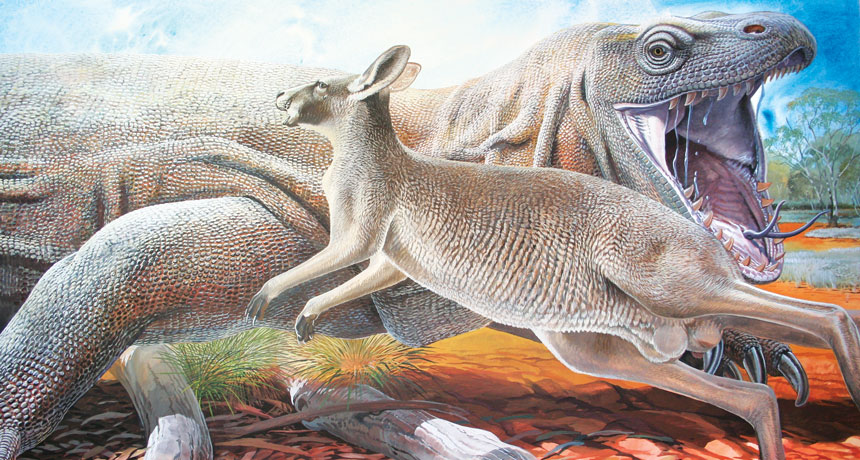
Today’s land animals are a bunch of runts compared with creatures from the not-too-distant past. Beasts as big as elephants, gorillas and bears were once much more common around the world. Then, seemingly suddenly, hundreds of big species, including the woolly mammoth, the giant ground sloth and a lizard weighing as much as half a ton, disappeared. In End of the Megafauna, paleomammalogist Ross MacPhee makes one thing clear: The science on what caused the extinctions of these megafauna — animals larger than 44 kilograms, or about 100 pounds — is far from settled. MacPhee dissects the evidence behind two main ideas: that as humans moved into new parts of the world over the last 50,000 years, people hunted the critters into oblivion, or that changes in climate left the animals too vulnerable to survive. As MacPhee shows, neither scenario matches all of the available data.
Throughout, Peter Schouten’s illustrations, reminiscent of paintings that enliven natural history museums, bring the behemoths back to life. At times, MacPhee slips in too many technical terms. But overall, he offers readers an informative, up-to-date overview of a fascinating period in Earth’s history.
Buy End of the Megafauna from Amazon.com. Science News is a participant in the Amazon Services LLC Associates Program. Please see our FAQ for more details.
Off a gravel road at the edge of a college campus — next door to the town’s holding pen for stray dogs — is a busy test site for the newest technologies in drinking water treatment.
In the large shed-turned-laboratory, University of Massachusetts Amherst engineer David Reckhow has started a movement. More people want to use his lab to test new water treatment technologies than the building has space for.
The lab is a revitalization success story. In the 1970s, when the Clean Water Act put new restrictions on water pollution, the diminutive grey building in Amherst, Mass. was a place to test those pollution-control measures. But funding was fickle, and over the years, the building fell into disrepair. In 2015, Reckhow brought the site back to life. He and a team of researchers cleaned out the junk, whacked the weeds that engulfed the building and installed hundreds of thousands of dollars worth of monitoring equipment, much of it donated or bought secondhand.
“We recognized that there’s a lot of need for drinking water technology,” Reckhow says. Researchers, students and start-up companies all want access to test ways to disinfect drinking water, filter out contaminants or detect water-quality slipups. On a Monday afternoon in October, the lab is busy. Students crunch data around a big table in the main room. Small-scale tests of technology that uses electrochemistry to clean water chug along, hooked up to monitors that track water quality. On a lab bench sits a graduate student’s low-cost replica of an expensive piece of monitoring equipment. The device alerts water treatment plants when the by-products of disinfection chemicals in a water supply are reaching dangerous levels. In an attached garage, two startup companies are running larger-scale tests of new kinds of membranes that filter out contaminants. Parked behind the shed is the almost-ready-to-roll newcomer. Starting in 2019, the Mobile Water Innovation Laboratory will take promising new and affordable technologies to local communities for testing. That’s important, says Reckhow, because there’s so much variety in the quality of water that comes into drinking water treatment plants. On-site testing is the only way to know whether a new approach is effective, he says, especially for newer technologies without long-term track records.
The facility’s popularity reflects a persistent concern in the United States: how to ensure affordable access to clean, safe drinking water. Although U.S. drinking water is heavily regulated and pretty clean overall, recent high-profile contamination cases, such as the 2014 lead crisis in Flint, Mich. (SN: 3/19/16, p. 8), have exposed weaknesses in the system and shaken people’s trust in their tap water. Tapped out In 2013 and 2014, 42 drinking water–associated outbreaks resulted in more than 1,000 illnesses and 13 deaths, based on reports to the U.S. Centers for Disease Control and Prevention. The top culprits were Legionella bacteria and some form of chemical, toxin or parasite, according to data published in November 2017.
Those numbers tell only part of the story, however. Many of the contaminants that the U.S. Environmental Protection Agency regulates through the 1974 Safe Drinking Water Act cause problems only when exposure happens over time; the effects of contaminants like lead don’t appear immediately after exposure. Records of EPA rule violations note that in 2015, 21 million people were served by drinking water systems that didn’t meet standards, researchers reported in a February study in the Proceedings of the National Academy of Sciences. That report tracked trends in drinking water violations from 1982 to 2015. Current technology can remove most contaminants, says David Sedlak, an environmental engineer at the University of California, Berkeley. Those include microbes, arsenic, nitrates and lead. “And then there are some that are very difficult to degrade or transform,” such as industrial chemicals called PFAS.
Smaller communities, especially, can’t always afford top-of-the-line equipment or infrastructure overhauls to, for example, replace lead pipes. So Reckhow’s facility is testing approaches to help communities address water-quality issues in affordable ways. Some researchers are adding technologies to deal with new, potentially harmful contaminants. Others are designing approaches that work with existing water infrastructure or clean up contaminants at their source.
How is your water treated? A typical drinking water treatment plant sends water through a series of steps.
First, coagulants are added to the water. These chemicals clump together sediments, which can cloud water or make it taste funny, so they are bigger and easier to remove. A gentle shaking or spinning of the water, called flocculation, helps those clumps form (1). Next, the water flows into big tanks to sit for a while so the sediments can fall to the bottom (2). The cleaner water then moves through membranes that filter out smaller contaminants (3). Disinfection, via chemicals or ultraviolet light, kills harmful bacteria and viruses (4). Then the water is ready for distribution (5). There’s a lot of room for variation within that basic water treatment process. Chemicals added at different stages can trigger reactions that break down chunky, toxic organic molecules into less harmful bits. Ion-exchange systems that separate contaminants by their electric charge can remove ions like magnesium or calcium that make water “hard,” as well as heavy metals, such as lead and arsenic, and nitrates from fertilizer runoff. Cities mix and match these strategies, adjusting chemicals and prioritizing treatment components, based on the precise chemical qualities of the local water supply.
Some water utilities are streamlining the treatment process by installing technologies like reverse osmosis, which removes nearly everything from the water by forcing the water molecules through a selectively permeable membrane with extremely tiny holes. Reverse osmosis can replace a number of steps in the water treatment process or reduce the number of chemicals added to water. But it’s expensive to install and operate, keeping it out of reach for many cities.
Fourteen percent of U.S. residents get water from wells and other private sources that aren’t regulated by the Safe Drinking Water Act. These people face the same contamination challenges as municipal water systems, but without the regulatory oversight, community support or funding.
“When it comes to lead in private wells … you’re on your own. Nobody is going to help you,” says Marc Edwards, the Virginia Tech engineer who helped uncover the Flint water crisis. Edwards and Virginia Tech colleague Kelsey Pieper collected water-quality data from over 2,000 wells across Virginia in 2012 and 2013. Some were fine, but others had lead levels of more than 100 parts per billion. When levels are higher than its 15 ppb threshold, the EPA mandates that cities take steps to control corrosion and notify the public about the contamination. The researchers reported those findings in 2015 in the Journal of Water and Health.
To remove lead and other contaminants, well users often rely on point-of-use treatments. A filter on the tap removes most, but not all, contaminants. Some people spring for costly reverse osmosis systems. New tech solutions These three new water-cleaning approaches wouldn’t require costly infrastructure overhauls.
Ferrate to cover many bases Reckhow’s team at UMass Amherst is testing ferrate, an ion of iron, as a replacement for several water treatment steps. First, ferrate kills bacteria in the water. Next, it breaks down carbon-based chemical contaminants into smaller, less harmful molecules. Finally, it makes ions like manganese less soluble in water so they are easier to filter out, Reckhow and colleagues reported in 2016 in Journal–American Water Association. With its multifaceted effects, ferrate could potentially streamline the drinking water treatment process or reduce the use of chemicals, such as chlorine, that can yield dangerous by-products, says Joseph Goodwill, an environmental engineer at the University of Rhode Island in Kingston.
Ferrate could be a useful disinfectant for smaller drinking water systems that don’t have the infrastructure, expertise or money to implement something like ozone treatment, an approach that uses ozone gas to break down contaminants, Reckhow says.
Early next year, in the maiden voyage of his mobile water treatment lab, Reckhow plans to test the ferrate approach in the small Massachusetts town of Gloucester. In the 36-foot trailer is a squeaky-clean array of plastic pipes and holding tanks. The setup routes incoming water through the same series of steps — purifying, filtering and disinfecting — that one would find in a standard drinking water treatment plant. With two sets of everything, scientists can run side-by-side experiments, comparing a new technology’s performance against the standard approach. That way researchers can see whether a new technology works better than existing options, says Patrick Wittbold, the UMass Amherst research engineer who headed up the trailer’s design.
Charged membranes Filtering membranes tend to get clogged with small particles. “That’s been the Achilles’ heel of membrane treatment,” says Brian Chaplin, an engineer at the University of Illinois at Chicago. Unclogging the filter wastes energy and increases costs. Electricity might solve that problem and offer some side benefits, Chaplin suggests.
His team tested an electrochemical membrane made of titanium oxide or titanium dioxide that both filters water and acts as an electrode. Chemical reactions happening on the electrically charged membranes can turn nitrates into nitrogen gas or split water molecules, generating reactive ions that can oxidize contaminants in the water. The reactions also prevent particles from sticking to the membrane. Large carbon-based molecules like benzene become smaller and less harmful. In lab tests, the membranes effectively filtered and destroyed contaminants, Chaplin says. In one test, a membrane transformed 67 percent of the nitrates in a solution into other molecules. The finished water was below the EPA’s regulatory nitrate limit of 10 parts per million, he and colleagues reported in July in Environmental Science and Technology. Chaplin expects to move the membrane into pilot tests within the next two years.
Obliterate the PFAS The industrial chemicals known as PFAS present two challenges. Only the larger ones are effectively removed by granular activated carbon, the active material in many household water filters. The smaller PFAS remain in the water, says Christopher Higgins, an environmental engineer at the Colorado School of Mines in Golden. Plus, filtering isn’t enough because the chunky chemicals are hard to break down for safe disposal.
Higgins and colleague Timothy Strathmann, also at the Colorado School of Mines, are working on a process to destroy PFAS. First, a specialized filter with tiny holes grabs the molecules out of the water. Then, sulfite is added to the concentrated mixture of contaminants. When hit with ultraviolet light, the sulfite generates reactive electrons that break down the tough carbon-fluorine bonds in the PFAS molecules. Within 30 minutes, the combination of UV radiation and sulfites almost completely destroyed one type of PFAS, other researchers reported in 2016 in Environmental Science and Technology.
Soon, Higgins and Strathmann will test the process at Peterson Air Force Base in Colorado, one of nearly 200 U.S. sites known to have groundwater contaminated by PFAS. Cleaning up those sites would remove the pollutants from groundwater that may also feed wells or city water systems.
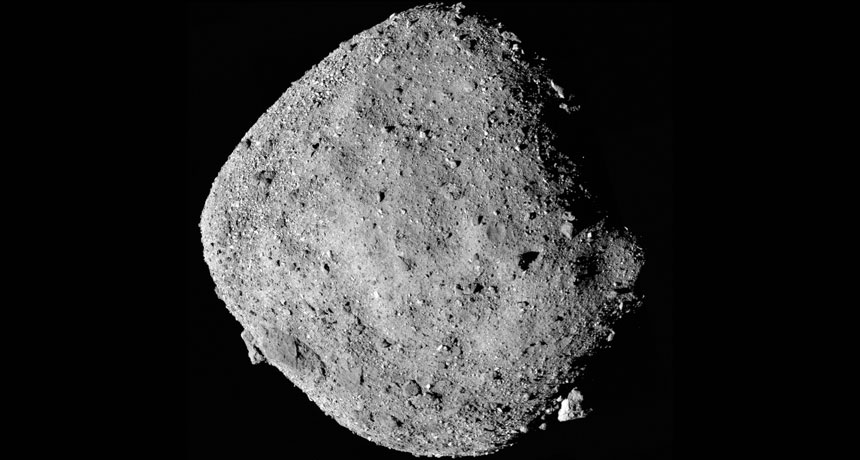
As the asteroid Bennu comes into sharper focus, planetary scientists are seeing signs of water locked up in the asteroid’s rocks, NASA team members announced December 10.
“It’s one of the things we were hoping to find,” team member Amy Simon of NASA’s Goddard Space Flight Center in Greenbelt, Md., said in a news conference at the American Geophysical Union meeting in Washington, D.C. “This is evidence of liquid water in Bennu’s past. This is really big news.” NASA’s OSIRIS-REx spacecraft just arrived at Bennu on December 3 (SN Online: 12/3/18). Over the next year, the team will search for the perfect spot on the asteroid to grab a handful of dust and return it to Earth. “Very early in the mission, we’ve found out Bennu is going to provide the type of material we want to return,” said principal investigator Dante Lauretta of the University of Arizona in Tucson. “It definitely looks like we’ve gone to the right place.”
OSIRIS-REx’s onboard spectrometers measure the chemical signatures of various minerals based on the wavelengths of light they emit and absorb. The instruments were able to see signs of hydrated minerals on Bennu’s surface about a month before the spacecraft arrived at the asteroid, and the signal has remained strong all over the asteroid’s surface as the spacecraft approached, Simon said. Those minerals can form only in the presence of liquid water, and suggest that Bennu had a hydrothermal system in its past.
Bennu’s surface is also covered in more boulders and craters than the team had expected based on observations of the asteroid taken from Earth. Remote observations led the team to expect a few large boulders, about 10 meters wide. Instead they see hundreds, some of them up to 50 meters wide.
“It’s a little more rugged of an environment,” Lauretta said. But that rough surface can reveal details of Bennu’s internal structure and history. If Bennu were one solid mass, for instance, a major impact could crack or shatter its entire surface. The fact that it has large craters means it has survived impacts intact. It may be more of a rubble pile loosely held together by its own gravity. The asteroid’s density supports the rubble pile idea. OSIRIS-REx’s first estimate of Bennu’s density shows it is about 1,200 kilograms per cubic meter, Lauretta said. The average rock is about 3,000 kilograms per cubic meter. The hydrated minerals go some way towards lowering the asteroid’s density, since water is less dense than rock. But up to 40 percent of the asteroid may be full of caves and voids as well, Lauretta said.
Some of the rocks on the surface appear to be fractured in a spindly pattern. “If you drop a dinner plate on the ground, you get a spider web of fractures,” says team member Kevin Walsh of the Southwest Research Institute in Boulder, Colo. “We’re seeing this in some boulders.”
The boulders may have cracked in response to the drastic change in temperatures they experience as the asteroid spins. Studying those fracture patterns in more detail will reveal the properties of the rocks.
The OSIRIS-REx team also needs to know how many boulders of various sizes are strewn across the asteroid’s surface. Any rock larger than about 20 centimeters across would pose a hazard to the spacecraft’s sampling arm, says Keara Burke of the University of Arizona. Burke, an undergraduate engineering student, is heading up a boulder mapping project. “My primary goal is safety,” she says. “If it looks like a boulder to me, within reasonable guidelines, then I mark it as a boulder. We can’t sample anything if we’re going to crash.”
The team also needs to know where the smallest grains of rock and dust are, as OSIRIS-REx’s sampling arm can pick up grains only about 2 centimeters across. One way to find the small rocks is to measure how well the asteroid’s surface retains heat. Bigger rocks are slower to heat up and slower to cool down, so they’ll radiate heat out into space even on the asteroid’s night side. Smaller grains of dust heat up and cool down much more quickly.
“It’s exactly like a beach,” Walsh says. “During the day it’s scalding hot, but then it’s instantly cold when the sun sets.”
Measurements of the asteroid’s heat storage so far suggest that there are regions with grains as small as 1 or 2 centimeters across, Lauretta said, though it is still too early to be certain.
“I am confident that we’ll find some fine-grained regions,” Lauretta said. Some may be located inside craters. The challenge will be finding an area wide enough that the spacecraft’s navigation system can steer to it accurately.